

Daily Dose Of Jazz…
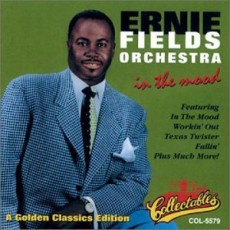
Ernie Fields was born Ernest Lawrence Fields on August 28, 1904 in Nacogdoches, Texas, though raised in Taft, Oklahoma. He attended Tuskegee Institute before moving to Tulsa. From the late 1920s, he led the Royal Entertainers, and eventually began touring more widely from Kansas City, Kansas to Dallas, Texas, and recording. Fields’ band became the first African-American band to play at Tulsa’s landmark Cain’s Ballroom.
A 1939 invite to New York by John Hammond to record for Vocalion. He began touring nationally, never became a star but continued to work steadily, recording for smaller labels, and gradually transforming his sound through a smaller band and a repertoire shift from big band and swing to R&B. During WWII he entertained troops both at home and abroad.
Continuing to straddle these styles into the 1950s, Ernie played swing standards such as “Tuxedo Junction” and “Begin The Beguine” in a rocking R&B style. In the late 1950s he moved to Los Angeles, California and joined the Rendezvous Records and ran the house band In 1959 this band had an international hit with an R&B version of Glenn Miller’s “In The Mood” that reached #4 on the Billboard chart, selling over a million copies. He would go on to record instrumentals under a variety of names including B. Bumble and the Stingers, The Marketts and The Routers.
After Rendezvous Records folded in late 1963, trombonist, pianist, arranger and bandleader Ernie Fields retired and returned to Tulsa. He died on May 11, 1997, at the age of 92.

Put A Dose In Your Pocket
More Posts: arranger,bandleader,piano,trombone
Daily Dose Of Jazz…
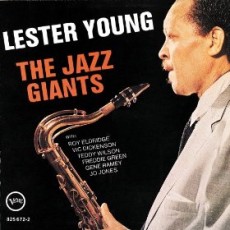
Lester Willis Young was born on August 27, 1909 in Woodville, Mississippi and grew up in a musical family. His father, Willis Handy Young, was a respected teacher, his brother Lee Young was a drummer, and several other relatives performed music professionally. His family moved to New Orleans, Louisiana when he was an infant, then later to Minneapolis, Minnesota. His father was a musician, who would teach his son to play the drums, trumpet and violin in addition to the saxophone.
Playing in his family’s band, known as the Young Family Band, vaudeville and carnivals were their circuit but in 1927 he left, refusing to play the Southern states under the racial segregation of Jim Crow laws.
Settling in Kansas City, Missouri in 1933, he briefly played in several bands, then rose to prominence with Count Basie. He would leave Basie to replace Coleman Hawkins in the Fletcher Henderson orchestra, followed by a stint with Andy Kirk, then back to Basie. Lester made small group recordings for Commodore Records, and the sessions became known as the Kansas City Sessions by the Kansas City Seven, playing clarinet and tenor.
After Young’s clarinet was stolen in 1939, he abandoned the instrument until about 1957. He left the Basie band in late 1940, subsequently led a number of small groups that often included his brother, accompanied Billlie Holiday in a couple of studio sessions in 1940 and 1941 and also made a small set of recordings with Nat King in June 1942. It was Holiday who gave Young the nickname “Pres”, short for President.[
In December 1943 Young returned to the Basie fold for a 10-month stint, drafted into the army during WWII and after discharge joined Norman Granz’s Jazz at the Philharmonic troupe in 1946 and for the next 12 years toured regularly with them. He recorded for Verve, Aladdin and Savoy records through the Forties.
From around 1951 Young’s level of playing declined more precipitously as his drinking increased. His playing showed reliance on a small number of clichéd phrases and reduced creativity and originality. His playing and health went into a crisis, culminating in a 1955 hospital admission following a nervous breakdown, emerging improved in 1956. He recorded and toured with Miles Davis and the Modern Jazz Quartet through Europe and had a successful stint in Washington, DC with the Bill Potts Trio.
By 1957 Lester appeared with Billie Holiday, at a time when both were in their declining years, but both gave brilliant and moving performances with Holiday’s tune “Fine and Mellow”. By this time his alcoholism had a cumulative effect and he was eating significantly less, drinking more and more, and suffering from liver disease and malnutrition.
He made his final studio recordings and live performances in Paris in 1959 with drummer Kenny Clarke at the tail end of an abbreviated European tour during which he ate next to nothing and virtually drank himself to death. He died in the early morning hours of March 15, 1959, only hours after arriving back in New York, at the age of 49.
Give The Gift Of Knowledge

Daily Dose Of Jazz…
Born August 26, 1943, Dorival Tostes Caymmi, the son of famous Brazilian musicians Dorival Caymmi and Stella Maris. He began playing piano at age eight, studied music theory at the Conservatorio Lorenzo Fernandez and in 1959 made his professional debut accompanying his sister, Nana.
In 1960 Dori became a member of Groupo dos Sete, writing music for plays aired on Brazilian television. He co-directed and played viola in the play Opinião, an important transitional work between the styles of bossa nova and MPB and directed the play Arena Conta Zumbi. For a time he produced Edu Lobo, Eumir Deodato and Nara Leao, co-wrote the prize winning song “Saveiros” with Nelson Matta, a collaboration that lasted many years and produced some of Brazil’s biggest hits.
Caymmi played and toured with Paul Winter, arranged and directed albums by Caetano Veloso, Gal Costa and Gilberto Gil, and was involved with the tropicalia movement of the late 1960s, but did not record in this style himself due to his distaste for Euro-American pop music. He wrote scores for numerous films and television shows in the 1970s and 1980s, moved to Los Angeles, California in 1989 and has since played or recorded with Dionne Warwick, Toots Thielemans, Marilyn Scott, Oscar Castro-Neves, Eliane Elias, Richard Silveira and Edu Lobo; was a collaborator celebrating Tom Jobim at Carnegie Hall and arranged the music for Spike Lee’s film, Clockers.
Dori Caymmi has been nominated for Latin Grammys several times and is a two-time Grammy Award winner for Best Latin Song and Best Latin Samba Recording. The Brazilian singer, guitarist, songwriter, arranger, and producer has an extensive discography dating back to 1964 and he continues to perform and record.
Take A Dose On The Road
More Posts: arranger,composer,guitar,songwriter,vocal
Daily Dose Of Jazz…
Wayne Shorter was born August 25, 1933 in Newark, New Jersey and attended Newark Arts High School where his love of music flourished under the encouragement of his father to take up the saxophone. In his youth Shorter had acquired the nickname “Mr. Gone”, which later became an album title for Weather Report.
Graduating in 1952, he matriculated through New York University in 1956, spent two years in the Army, during which he briefly played with Horace Silver and after his discharge, he played with Maynard Ferguson.
In 1959, Shorter became a Messenger joining Art Blakey, stayed five years and became the bands musical director. When Coltrane left Miles Davis’ band he proposed Wayne, as his replacement but his unavailability di not release him from Blakey until 1964. Along with Herbie Hancock, Ron Carter and Tony Williams, the Second Great Quintet was born.
During his tenure with Miles, Wayne would compose “Prince of Darkness”, “E.S.P.”, “Footprints”, “Sanctuary”, “Nefertiti”, and many others; often providing half of the compositions on an album, typically hard bop workouts with long, spaced-out melody lines above the beat. He remained in Davis’s band after the breakup of the quintet in 1968, playing on the early jazz-fusion recordings including “In A Silent Way” and “Bitches Brew”.
Until 1968, he played the tenor saxophone exclusively but the next year he put down the tenor after his final Davis recording of Filles de Kilimanjaro and began playing the soprano, which he used on his own Super Nova release with Chick Corea and John McLaughlin. By the early 1970s, however, he chiefly played soprano.
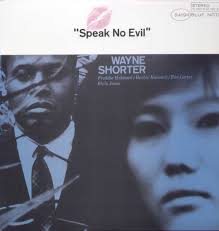
Shorter recorded eleven albums for Blue Note Records featuring almost exclusively his own compositions, with a variety of line-ups, quartets and larger groups. He would enlist the talents of Freddie Hubbard, Lee Morgan, McCoy Tyner, Reggie Workman and Elvin Jones.
Juju, Speak No Evil and Adam’s Apple The All Seeing Eye and Schizophrenia played in the spaces between free-jazz and carefully constructed melodies. Hey incorporated old friends like Hancock, Carter, Curtis Fuller and Joe Chambers. He recorded occasionally in the sideman slot with Donald Byrd, McCoy tyner, Grachan Moncur III, Hubbard, Morgan, Hancock and Williams.
In 1970, Shorter formed the fusion group Weather Report with Joe Zawinul and Miroslav Vitous, Airto Moreira and Alphonse Mouzon. They lasted until 1985. One of the most notable alumni included revolutionary bassist Jaco Pastorious and the band produced funk, bebop, Latin jazz, ethnic music and futuristic recordings.
He would record with Milton Nascimento, Carlos Santana, V.S.O.P Quintet, Joni Mitchell, Steely Dan’s Aja, Terri Lynne Carrington, Marilyn Mazur, Jim Beard, Don Henley, Wallace Roney, and can be heard on the Harrison Ford film soundtrack of The Fugitive. By the mid 90s Wayne released his Verve Records debut High Life and received a Grammy for Best Contemporary Jazz Album in 1997.
Into the millennium Shorter has continued to receive wide acclaim working with Hancock once again in 1997, on the much acclaimed and heralded album 1+1. The song “Aung San Suu Kyithem won them both a Grammy Award. He continues to work in a number of group configurations and winning Grammys for his Beyond The Sound Barrier & Alegria – Best Instrumental Jazz Album amongst his 10 Grammy Awards, and has been a Down Beat reigning critics’ poll winner for ten consecutive years and the readers’ for 18. The soprano saxophonist has amassed an impressive discography and continues to compose, reinvent his music, perform and tour.
Dose A Day – Blues Away
More Posts: saxophone
Daily Dose Of Jazz…
Paul Webster, born August 24, 1909 in Kansas City, Kansas attended Fisk University and worked as an embalmer before switching to music. He played in bands led by George E. Lee, Bennie Moten, Tommy Douglas and Eli Rice through the 1920s.
In 1931 he joined Jimmie Lunceford’s outfit, left and then returned to play from 1935 to 1944. It was here he took over Tommy Stevenson’s spot and the high-note trumpet player found his fame during this period of his career. It has been noted that he had a big influence on a young Stan Kenton, who later featured high note trumpeters in many of his bands.
Following this Webster played lead trumpet in bands led by Cab Calloway, Charlie Barnet, Sy Oliver, Ed Wilcox, and Count Basie through the war years to the end of the decade. After 1953 he played trumpet only part-time, contributed to ‘Paul Curry Presents the Friends of Fats’ LP in 1959 on the Golden Crest Label, but still occasionally played with Sy Oliver’s band into the 1960s. Jazz trumpeter of the big band era, Paul Webster passed away 0n May 6, 1966.
Inspire A Young Mind
More Posts: trumpet