

Daily Dose Of Jazz…
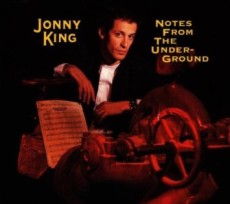
Jonny King was born Jonathan Z. King on February 2, 1965 in New York City, New York. Raised in New York City, he graduated from Princeton and Harvard Law School. A jazz pianist primarily self-taught, he has neither received any formal music education nor attended any jazz schools. His school of music was life – obsessively listening to records, going to jam sessions and soaking up as much live and recorded music as possible from traditional to avant-garde.
He credits pianist Mulgrew Miller and Tony Aless as his important influences, mentors and personal teachers. As well as recording under his own name, he has performed with, among others Roy Hargrove, Kenny Garrett, Bobby Watson, Christian McBride, Joe Lovano, Ira Coleman, Billy Drummond, Mark Turner, Vincent Herring, Steve Nelson, Peter Washington, Joshua Redman, Steve Davis, David Sanchez, Milton Cardona and Larry Grenadier.
He has released three albums in the 90s on the Criss Cross and Enja labels – In From the Cold, Notes From The Underground and Meltdown. In between his duties as an attorney at a copyright practice, he continues to approach music the way he learned, both as a performer and composer.

Give A Gift Of Jazz – Share
More Posts: piano
Daily Dose Of Jazz…
Steve Wiest was born John Stephen Wiest on January 26, 1957 in Cleveland, Ohio. Taking up the trombone in his youth he attended Blair High School and played in the band. He went on to matriculate through University of Southern Mississippi and then through University of North Texas.
From 1981 to 1985, Steve was a featured trombonist and arranger with the Maynard Ferguson Band, he has been a professor for twenty-six of the thirty-four years that he has been a professional trombonist, composer, and arranger. From 2006 to 2014, he was Associate Professor of Music in Jazz Studies at the University of North Texas College of Music and during that time he was also the director of the One O’Clock Lab Band.
A three-time Grammy nominee individually, for composing and collaboratively for ensemble, Steve Wiest has in excess of two dozen albums to his name and 58 arrangements and compositions to his credit, which include 10 original compositions from his current project, The Dover Stone: Concerto for Folded Space.
His resume of performances or recordings reads like a who’s who list with Weather Report, Sarah ‘Vaughan, Bill Cosby, Buddy Rich, Freddie Hubbard, McCoy tner, Al Foster, Eddie Gomez, Slide Hampton, Dizzy Gillespie, Chick Corea and the Gil Evans Orchestra on it, just to name a few.
Trombonist and educator Steve Wiest is currently in his first year as Associate Professor of Jazz Studies and Commercial Music at the University of Denver Lamont School of Music, and is the Coordinator of the 21st Century Music Initiative at the school. He continues to perform, compose and arrange jazz and big band.
Give A Gift Of Jazz – Share
More Posts: trombone
Daily Dose Of Jazz…
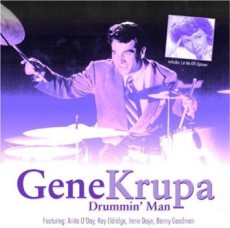
Gene Krupa was born Eugene Bertram Krupa on January 15, 1909 in Chicago, Illinois. Originally groomed for the priesthood by his parents, he He spent his grammar school days at various parochial schools and upon graduation, attended Saint Joseph’s College for a year, but later decided it was not his vocation. He studied with Sanford A Moeller and began playing drums professionally in the mid-1920s with bands in Wisconsin.
Gene broke into the Chicago scene in 1927, when he was picked by MCA to become a member of Thelma Terry and Her Playboys, the first notable American Jazz band to be led by a female musician. The Playboys were the house band at The Golden Pumpkin nightclub in Chicago and also toured extensively throughout the eastern and central United States.
Making his first recordings in 1927 with a band under the leadership of guitarist Eddie Condon and Red McKenzie, Krupa recorded others on the Chicago scene such as Bix Beiderbecke. His big influences during this time were Tubby Hall, Zutty Singleton and Baby Dodds.
By 1934 he joined Benny Goodman’s band, where his featured drum work made him a national celebrity. His tom-tom interludes on their hit “Sing, Sing, Sing” were the first extended drum solos to be recorded commercially. He made a cameo appearance in the 1941 film, Ball of Fire, in which he and his band performed an extended version of the hit Drum Drum Boogie, which he had composed with trumpeter Roy Eldridge. He also appeared in The Best Years Of Our Lives in 1946 during the waning years of the big band era.
1951 saw Gene leading a trio or quartet, appeared regularly with the Jazz At The Philharmonic band, never quite adjusted to be-bop, and by the end of the decade returned to Hollywood appearing in such films as The Glenn Miller Story, The Benny Goodman Story and had a biography starring Sal Mineo titled The Gene Krupa Story, featuring a cameo appearance by Red Nichols.
During the 1960s he played clubs in Washington, DC and New York but increasingly troubled by back pain, he retired in the late 1960s and opened a music school. He would give instruction to future KISS drummer Peter and Jerry Nolan of the New York Dolls. He occasionally played in public in the early 1970s until shortly before his death. Gene Krupa, big band drummer, band leader, actor and composer, known for his highly energetic and flamboyant style passed away on October 16, 1973.
Take A Dose On The Road
More Posts: drums
Daily Dose Of Jazz…
Born January 14, 1982 in California, Ben Stapp grew up as a brass musician before turning to jazz. Studying with his mentor, the late Tommy Johnson, the voice of the Jaws’ theme, at UCLA, he was awarded a fellowship during this period to play principal tuba in the Henri Mancini Orchestra. He obtained his masters from RNCM in Manchester, England where he studied with tuba legend Roger Bobo, and for composition, Anthony Gilbert.
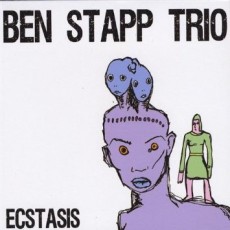
While living in Europe, he played in numerous Euro/international festivals including Festival do Sodeste, Gulbenkian August Music Festival, Festival of New Music in Krems and the Barcelos Music Festival. Back in New York, tubist and composer Stapp hit the forefront in city’s creative music scene. His debut CD release, Ecstasis featuring Tony Malaby and Satoshi Takeishi, has received a critical acclaim from the New York Times and All About Jazz.
He has recorded for Clean Feed in Portugal, Dakah Hip Hop Orchestra in LA, Franz Hautzinger in Austria, James Gourlay in England, and has appeared with the NYJA All Stars on CNBC. Ben Stapp now plays and subs with such tuba luminaries like Howard Johnson and Bob Stewart. He also directs and composes for his large ensemble, the Zozimos Collective and continues to perform and tour.
Dose A Day – Blues Away
More Posts: tuba
Daily Dose Of Jazz…
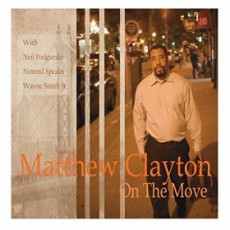
Matthew Clayton was born in Philadelphia, Pennsylvania on January 10, 1980. Picking up the saxophone at age ten his love of jazz was fueled playing in big bands in middle school when he played lead alto. It was during this time that he began venturing into improvisation. By high school he was a member of the National Grammy All Star High School Jazz Band, played the Village Vanguard, Birdland and Carnegie Hall in New York City. While there he also met and gigged with Grover Washington, Jr. and Al Grey, and was a featured performer at a winter jazz festival in Paris, France.
Matriculating through Yale University, Matthew went on to get his Masters and Ph.D. from Harvard University specializing in ethnomusicology, with an emphasis on the study of jazz. While at Harvard, Clayton directed the Harvard Graduate School Big Band and performed with students from the nearby Berklee College of Music, taught saxophone privately and at the Litchfield Summer Jazz Camp in Connecticut and privately while completing his studies.
Dr. Matthew Clayton is currently on the faculty of the prestigious Nelly Berman School of Music, is the Director of Jazz Combos at the University of Pennsylvania, has released his debut album “On The Move” last year and continues to perform.
Jazz Is Global – Share
More Posts: saxophone