

Daily Dose Of Jazz…
Nigel Hitchcock was born in Rustington, England on January 4, 1971 and began to play alto sax at the age of eight. In 1982 he and his elder brother Clive joined the National Youth Jazz Orchestra and after one year he took the lead alto chair, holding it for five years. During this time the orchestra toured with different musicians such as Vic Damone, Buddy Greco and Al Martino.
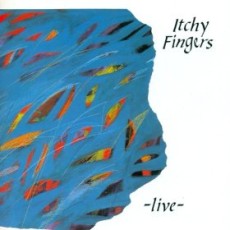
By 16, Hitchcock moved to London and began his career as a session musician and also had recorded TV jingles, movie soundtracks and pop solos. 1989 saw him joining the contemporary saxophone quartet Itchy Fingers and touring throughout Europe and Southeast Asia for 18 months. While with the group he received three jazz awards: the Schlitz Awar for Rising Star; the Cleo Laine Personal Award for Best Young Musician; and the Pat Smythe Trust Award.
With that behind him Nigel left the band and returned to continue working as a pop and session musician. This has given him the opportunity to work with many artists, among other, Tom Jones, Wet Wet Wet, Beverly Craven, Ray Charles, Swing Out Sister, Joe Cocker, Cher, Robbie Williams, Claire Martin, Mark Isham, Mark Knopfler and the London Symphony Orchestra. He has also released his debut solo album “Snake Ranch Sessions”.

Give A Gift Of Jazz – Share
More Posts: saxophone
Daily Dose Of Jazz…
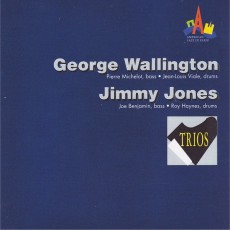
Jimmy Jones was born James Henry Jones on December 30, 1918 in Memphis, Tennessee and learned guitar and piano as a child. By the late 1920 he was playing in various orchestras in Chicago and played a trio with Stuff Smith in the mid 40s.
Following this period Jones would play with Don Byas, Dizzy Gillespie, J.C. Heard, Buck Clayton, Etta Jones and Sarah Vaughan into the early Fifties. He recorded with Clifford Brown in 1954 and toured Europe. During the Sixties he would play with Anita O’Day, Helen Merrill, Gil Evans, Dakota Staton, Morgana King, Harry Belafonte, Johnny Hodges, Clark Terry, Duke Ellington, Kenny Burrell and Cannonball Adderley on the short list.
Jimmy had a prolific career also as an arranger, working with Wes Montgomery, Nancy Wilson, Shirley Horn, Joe Williams, Billy Taylor and Chris Connor and recorded with Harry “Sweets” Edison, Ben Webster, Coleman Hawkins, Frank Wess, Milt Jackson and others. His recording catalog was limited as a leader releasing two album for the Riverside label in 1946. Jimmy Jones passed away on April 29, 1982 in Los Angeles, California.
Take A Dose On The Road
More Posts: piano
Daily Dose Of Jazz…
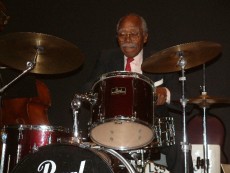
Butch Ballard was born George Edward Ballard on December 26, 1918 in Camden, New Jersey but grew up in Frankford, Pennsylvania. Following American Legion parades near his home, as a child he focused on the drummer and around 10 years old, his father bought him a set of drums. He took lessons for 75 cents each and continued his musical education Northeast High School in Philadelphia.
By 16 Ballard saw Herb Thorton, sat in and played and was invited to join a band by a man who heard him, and over the next few months rehearsed and played. In 1938, he started playing with Louis Armstrong’s band The Dukes, followed by stints with Cootie Williams, Ella Fitzgerald, Sarah Vaughan, Dinah Washington and Pearl Bailey.
Butch served in the Navy during WWII, then went to New York and worked with Eddie “Lockjaw” Davis, Eddie Vinson, Arnett Cobb and Clark Terry. He replaced Shadow Wilson in the Basie band in the late 1940s. The Fifties saw him touring Europe with the Ellington outfit and playing with Harry Carney, Paul Gonsalves, Billy Strayhorn, Kay Davis and Wendell Marshall. He declined the invite to join permanently because he didn’t want to change his drumming style to suit Duke, though he did record with him on such tunes as Satin Doll.
By the Sixties he was back in Philadelphia leading his own band and over the course of his career worked with the likes of John Coltrane, Harry “Sweets” Edison, Cat Anderson, Fats Waller, Lucky Millinder, Bootsie Barnes and Mercer Ellington among others.
In his later years he became a music teacher and played with the Philadelphia Legends of Jazz Orchestra and was honored with the Mellon Jazz Community Award for his continued education of young jazz musicians. Butch Ballard, who got the nickname after Machine Gun Butch, a character in the 1930 film The Big House, passed away on October 1, 2011.
Jazz Is Global – Share
More Posts: drums
Daily Dose Of Jazz…
Reunald Jones Sr. was born December 22, 1910 in Indianapolis, Indiana and studied trumpet at the Michigan Conservatory. He played with territory bands such as Speed Webb’s outfit and then into the 30s worked with Charlie Johnson, the Savoy Bearcats, Chick Webb, Sam Wooding, Claude Hopkins and others.
By the 1940s he would work with Erskine Hawkins, Duke Ellington, Jimmy Lunceford, Lucky Millinder and Sy Oliver; and worked extensively as a studio musician. During the Fifties, Jones toured with Woody Herman, and played lead trumpet with the Count Basie Orchestra gaining some fame due to his “one-handed” solo style of playing, but was rarely featured.
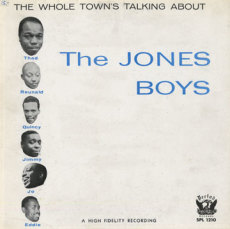
However, Jones was featured as a member of the Quincy Jones group, “The Jones Boys” from 1956-58, a session conceived by Leonard Feather featuring a number of musicians named “Jones,” though none of them were related.
The Sixties saw him playing and touring with George Shearing and with orchestra accompanying Nat King Cole. By the 70s he was playing less and on February 26, 1989 he passed away.
Dose A Day – Blues Away
More Posts: trumpet
Daily Dose Of Jazz…
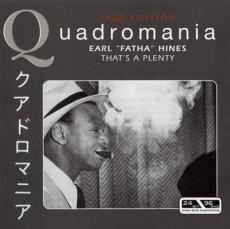
Cecil Irwin was born December 7, 1902 in Chicago, Illinois. Learning to play clarinet and tenor saxophone, his career began playing with Carroll Dickerson, Erskine Tate and Junie Cobb. He would then join Earl “Fatha” Hines in 1928 in the reed section and arranging for the big band.
During this period Cecil recorded on more than a dozen sessions with Hines in a variety of ensembles with which his playing and arranging is prominent. Irwin also freelanced as a sideman working and recording with New Orleans notables Johnny Dodds, Jabbo Smith, King Oliver, and also with Stephane Grappelli and Joe Venuti.
While on tour driving outside Des Moines, Iowa, tenor saxophonist and arranger Cecil Irwin perished in a car accident at the age of 32 on May 3, 1935, cutting short a promising career.
Dose A Day – Blues Away