

Daily Dose Of Jazz…
George Dorman “Scoops” Carry was born on January 23, 1915 in Chicago, Illinois. His mother a music teacher, his brother Ed a Chicago based bandleader and guitarist put Scoops in good company during his childhood. Starting on horn at the age of eight, he later went on to study at the Chicago College of Music and Iowa University.
He worked with Cassino Simpson, the Midnight Revellers and Boyd Atkin’s Firecrackers in the late 1920s and 30s while still a teenager. In 1931 Carry played with Lucky Millinder in RKO theater palaces. Reuniting with his brother in 1932, the pair co-led an orchestra through the middle of the 1930s. Following this, Scoops played with Zutty Singleton, Fletcher Henderson and Roy Eldridge. By 1938 he was with Art Tatum, a year later with Horace Henderson and at the end of the decade he worked briefly with Darnell Howard before joining Earl Hines’s band in 1940.
Carry remained in Hines’s employ until 1946, working with him in both large and small ensemble settings. After his tenure with Hines, Carry left music and entered law school in 1947, eventually working in the office of the Illinois state attorney.
Scoops Carry, alto saxophonist and clarinetist during the swing era, passed away on August 4, 1970.
Daily Dose Of Jazz…
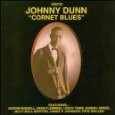
Johnny Dunn was born on February 19, 1897 in Memphis, Tennessee and learned to play trumpet as a youth. He attended Fisk University in Nashville and had a solo act in Memphis before he was discovered by W.C. Handy and traveling to New York with him in 1917. After a three-year association featured playing cornet, Johnny joined Mamie Smith’s Jazz Hounds, recording with her band before leaving a year later to lead his Original Jazz Hounds.
During the 1920s he ventured to Europe with the Will Vodery band, recorded with Noble Sissle in France, played and recorded with Willie “The Lion’ Smith and memorable sessions with Jelly Roll Morton in New York, had a hit song “Sergeant Dunn’s Bugle Call Blues”.
By the 30s Dunn was working steadily in Europe and often residing there for periods of time in the Netherlands. He was among the best of the musicians playing in the immediate pre-jazz years and he influenced many of his contemporaries. Overshadowed though he was by the arrival of Louis Armstrong, Dunn was still an able and gifted player, showing subtle power and using complex patterns that never descended into mere showmanship.
His stylistic roots became outmoded during the 30s but his decision to remain in Europe and his early death on August 20, 1937, in Paris, meant that his reputation never suffered and is recognized as having been a highly accomplished trumpeter.
More Posts: trumpet
Daily Dose Of Jazz…
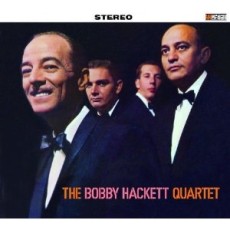
Bobby Hackett was born January 31, 1915 and raised in Providence, Rhode Island. At an early age he played the ukulele and by the time he was twelve, he was playing guitar, violin and had bought his first cornet. Leaving high school after his freshman year he took a steady job with a band that performed seven days a week at the Port Arthur and playing guitar regularly at the Rhodes and Arcadia ballrooms that often broadcasted on Providence radio and when Cab Calloway arrived short-handed and invited him to fill in.
In the fall of 1932 Bobby was recruited by The Herbie Marsh Orchestra, spent the summer of 1933 playing with Payson Re’s band, met Pee Wee Russell, by 1934, and playing college gigs with his band The Harvard Gold Coast Orchestra on weekends between Providence and Boston throughout 1935 and 36.
He worked with a new band at Nick’s in Greenwich Village, with Benny Goodman, Eddie Condon, Jack Teagarden and Teddy Wilson, played the new York World’s Fair in 1939, did the club circuit in New York, toured, recorded with his own band on MCA, took a seat with the Horace Heidt Musical Knights and recorded on the soundtrack of Fred Astaire vehicle “Second Chorus”.
After a dental surgery Bobby’s lip was in bad shape making it difficult for him to play, however, Glenn Miller offered him a job as a guitarist with the Miller Band and playing short trumpet solos. During the 1950s, he made a series of albums of ballads with a full string orchestra, produced by Jackie Gleason, in the Sixties toured with singer Tony Bennett, and by the early 1970s, Hackett performed separately with Dizzy Gillespie and Teresa Brewer. In his later years, he continued to perform in a Dixieland style even as trends in jazz changed.
Trumpeter Bobby Hackett passed away on June 7, 1976 from a heart attack. In 2012, he was selected to be inducted into the Rhode Island Music Hall of Fame.
More Posts: bandleader,cornet,guitar,trumpet
Daily Dose Of Jazz…
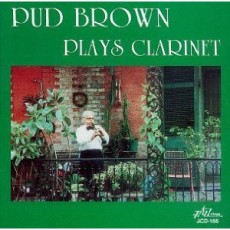
Pud Brown was born Albert Francis Brown on January 22, 1917 in Wilmington, Delaware but was raised in Shreveport, Louisiana. Brown was fluent on saxophone by age five, and toured throughout North America in a family band at the age of seven, playing the circus, nightclub and minstrel show circuits in the mid 1920s.
After moving to Chicago, Pud found work in Phil Lavant’s orchestra in 1938 and then in Lawrence Welk’s band. In 1941 he married, left music to run a motorcycle shop in Shreveport – a failed endeavor, relocated to Los Angeles and found work as a jazz musician.
Brown career exploded over the next several decades working with such jazz musicians as Les Brown, Coleman Hawkins, Doc Cheatham, Danny Barker, Kid Ory, Percy Humphrey and Louis Armstrong among others. He returned to New Orleans in 1975 and became a mainstay of the local scene playing with Clive Wilson’s Original Camelia Brass Band in the 1980s, holding a regular gig at the French Quarter’s Palm Court Jazz Cafe.
Pud Brown, clarinetist, reed player and active as an educator in local schools until his death, passed away on May 27, 1996 in Algiers, Louisiana.
Daily Dose Of Jazz…
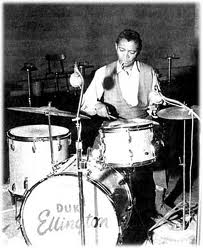
Sam Woodyard was born January 7, 1925 in Elizabeth, New Jersey. He learned to play the drums by teaching himself, with no instruction. He began playing locally around Newark, New Jersey area in the 1940s. Sam gigged with Paul Gayten in an R&B group, moving on in the early 50s to play with Joe Holiday, Roy Eldridge, and Milt Buckner. It was in 1955 that Woodyard would join Duke Ellington’s orchestra, remaining the ensemble’s drummer until 1966.
After his time with Ellington, Sam played behind Ella Fitzgerald prior to moving to Los Angeles, California. In the 1970s he played less due to health problems, but recorded with Buddy Rich and toured with Claude Bolling. In 1983 he played in a band with Teddy Wilson, Buddy Tate and Slam Stewart. His last recording was on Steve Lacy’s 1988 album “The Door”.
A little more than a month after this recording was completed, drummer Sam Woodyard passed away on September 20, 1988 in Paris, France.
More Posts: drums