

Daily Dose Of jazz…
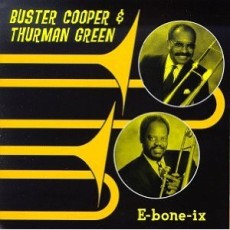
George “Buster” Cooper was born on April 4, 1929 in St. Petersburg, Florida and took up the trombone. He played in a Texas territory band with Nat Towles in the late 1940s, and gigged with Lionel Hampton in 1953.
During the mid-1950s he played in the house band at Harlem’s Apollo Theater in New York City followed by playing with Benny Goodman. By the late 1950s, he and his brother Steve had formed The Cooper Brothers Band but by the early Sixties through the decade Buster was a trombone fixture in Duke Ellington’s Orchestra.
In 1973 he moved to Los Angeles and played in various jazz orchestras there over the next several decades; among them were “The Juggernaut” and “Bill Berry’s L.A. Band”.
Over the course of his career, Buster Cooper, the extroverted trombonist with a witty style that often involved hitting repeated, humorous high notes at the conclusion of a song never recorded as a leader until he paired with trombonist Thurman Green and released E-Bone-ix in 1997. At 85 years, he currently leads the Buster Cooper Trio, playing The Garden Restaurant in his hometown of St. Petersburg.
More Posts: trombone
Daily Dose Of Jazz…
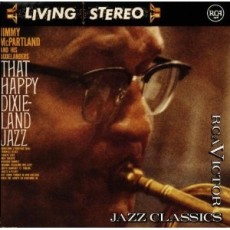
James Dugald McPartland was born on March 15, 1907 in Chicago, Illinois and due to family problems caused Jimmy and his siblings to be partly raised in orphanages. After being kicked out of one orphanage for fighting, he got in further trouble with the law. Fortunately, he had started violin at age 5, then took up the cornet at 15 and credits music with turning him around.
A member of the legendary Austin High Gang in the 920s, they would study and attempt duplication of recordings by The New Orleans Rhythm Kings and visit with Louis Armstrong and King Oliver’s Creole Jazz Band at Lincoln Gardens. After playing through high school, their first musical job was under the name The Blue Friars. In 1924, at age 17, McPartland was then called to New York to take Bix Beiderbecke’s place in the Wolverine Orchestra and who gave him a cornet he would play throughout his career.
From 1926 to the end of the decade, Jimmy worked with Art Kassel, the McKenzie-Condon Chicagoans, Ben Pollack and Benny Goodman, moonlighted in Broadway pit bands and played in a number of small combos. By the thirties he was back in Chicago working with his brother at the Three Deuces and working with other bands around the city. He spent time in South America, returned and led his own bands until drafted into WWII.
Upon his return McPartland worked with Willie “The Lion” Smith’s band that won a Grammy for the soundtrack to the 1954 film After Hours. He soon met and married Marian, encouraged her to form her own group and subsequently landed a long residency at the Hickory House. Jimmy went on to try his hand at acting resulting in a featured role in a Sal Mineo and Ralph Meeker episode “The Magic Horn” on The Alcoa Hour in 1956.
Over the course of his career James McPartland has played with Gene Krupa, Jack Teagarden, Eddie Condon, Pee Wee Russell, Bud Freeman, Glenn Miller, Benny Goodman, Lil Armstrong and George “Pops” Foster to name a few while also guest starring with many bands and at festivals around the world. Although he and Marian divorced in 1970, they remained friends, worked together and remarried shortly before his death of lung cancer on March 13, 1991 in Port Washington, New York, two days shy of his 84th birthday.
More Posts: cornet
Daily Dose Of Jazz…
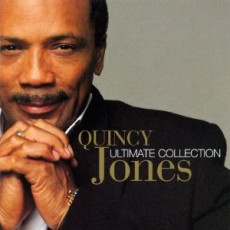
Quincy Delight Jones, Jr. was born on March 14, 1933 in Chicago, Illinois. When he was ten, his family moved to Bremerton, Washington, a suburb of Seattle. He first fell in love with music when he was in elementary school, and tried nearly all the instruments in his school band before settling on the trumpet. While barely in his teens attending Garfield High, Quincy befriended then-local singer-pianist Ray Charles and the two youths formed a combo, eventually landing small club and wedding gigs.
At 18, the young trumpeter won a scholarship to Berklee College of Music in Boston, Massachusetts but dropped out abruptly when he received an offer to go on the road with bandleader Lionel Hampton. The stint with Hampton led to work as a freelance arranger and settling in New York, throughout the 1950s he wrote charts for Tommy Dorsey, Gene Krupa, Sarah Vaughan, Count Basie, Duke Ellington, Dinah Washington, Cannonball Adderley and Ray Charles.
In 1964 Quincy won his first Grammy for Best Instrumental Arrangement of “I Can’t Stop Loving You”, in 1968 he won his second Grammy for Best Instrumental Performance with “Walking In Space” and that same year along with his songwriting partner Bob Russell became the first African Americans to be nominated for an Academy Award for Best Original Song for “The Eyes Of Love” and he became the first African American to be nominated twice within the same year when for Best Original Score for the 1967 film In Cold Blood.
His firsts would continue in 1971 when named musical director/conductor of the Academy Awards ceremony, being first to win the Academy’s Jean Hersholt Humanitarian Award, and He is tied at 7 with sound designer Willie D. Burton as the most Oscar-nominated African American.
His musical achievements are too numerous to list as they span the gambit from film scores such as The Pawnbroker, In The Heat of the Night, The Italian Job, MacKenna’s Gold, The Getaway and The Color Purple to his jazz works “Body Heat” and “Big Band Bossa Nova” from which Soul Bossa Nova was used in the Austin Powers movies to his crowning glories with Miles Davis last release “Live at the Monteux Jazz Festival”, his work with Michael Jackson’s “Thriller” and the charity song “We Are The World”. He continues to produce, conduct, arrange and compose.
More Posts: drums,french horn,piano,synthesizer,trumpet,vocal
Daily Dose Of Jazz…
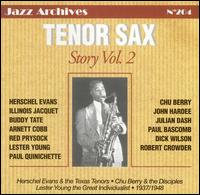
Herschel “Tex” Evans was born March 9, 1909 in Denton, Texas but spent much of his childhood in Kansas City, Kansas learning to play alto saxophone. It was his trombone and guitar-playing cousin, Eddie Dunham who convince him to switch to the tenor, which ultimately established his reputation.
After perfecting his craft in the famous jam sessions held in the jazz district between 12th and 18th streets in Kansas City, Evans returned to Texas in the 1920s and joined the Troy Floyd orchestra in San Antonio in 1929. He stayed with the band until it dispersed in 1932. Evans performed for a time with Lionel Hampton and Buck Clayton in Los Angeles, and in the mid-1930s returned to Kansas City to become a featured soloist in Count Basie’s big band.
For the next three years Herschel’s reputation as a tenor saxophonist was at its peak. His musical duels with fellow band member Lester Young are considered jazz classics. Count Basie’s popular “One O’Clock Jump” featured the contrasting styles of the two musicians and brought to each the praise of both critics and the general public. Evans’s greatest single success was his featured solo on Basie’s hit “Blue and Sentimental”.
Evans also made records with such notable jazz figures as Harry James, Teddy Wilson and Lionel Hampton. Evans has been credited with influencing fellow tenorists Buddy Tate, Illinois Jacquet, and Arnett Cobb. Although not a prolific composer, Evans wrote a number of popular works including the hits “Texas Shuffle” and “Doggin’ Around”. On February 9, 1939, at the age of 29, he died of heart disease in New York City.
More Posts: saxophone
Daily Dose Of Jazz…
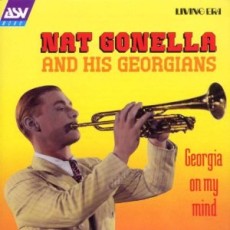
Nathaniel Charles Gonella was born March 7, 1908 in East London, England and took up cornet as a child while at St. Mary’s Guardian School, an institution for underprivileged children. His first professional job interrupted his stint as a furrier’s apprentice when he joined Archie Pitt’s Busby Boy’s Band in 1924. He remained with the band until 1928, and it was during this period that he became acquainted with the early recordings of Louis Armstrong and the New Orleans jazz style.
Nat played and recorded with many prominent jazz musicians, including Billy Cotton, Archie Alexander, Digby Fairweather, Lew Stone, Bob Bryden and Roy Fox. His distinctive vocal style was reminiscent of his idol, Louis Armstrong, though his voice was often eclipsed by his achievements as a bandleader and trumpeter.
Gonella’s standing grew even more quickly after the formation of his own band, “The Georgians”, in 1935, taking the name from his highly popular recording of “Georgia On My Mind” in 1932. He later formed a big band and quickly became a headliner on the variety circuit.
Nat flirted briefly with bebop but returned to the variety stage until a revival of tradition jazz came in the late Fifties. His performing and recording success lasted until the advent of The Beatles in the Sixties, however he toured the northern club circuit and over the next thirty years he continued to sing occasionally with various bands until his death in Gosport on August 6, 1998 at age 90.
More Posts: bandleader,mellophone,trumpet,vocal