


Daily Dose Of Jazz…
Roberto Menescal was born on October 25, 1937 in Vitoria (ES) Brazil and by eighteen the guitarist and vocalist was making his debut as a professional along with Elis Regina, Silvia Telles and others. By the late 50s he spawned a brilliant career as a composer being in good company with Carlos Lyra, Tom Jobim and Ronaldo Boscoli.
Menescal was important to the founding of the Bossa Nova movement in which many of his songs are references to the sea, such as his best-known composition “O Barquinho” (“Little Boat”). He was one of the musicians who promoted the swing of bossa nova around the world with his compositions “The Barquinho”, “You” and “We and the Sea” and was a part of the famous 1962 Bossa Nova Concert at Carnegie Hall in New York City.
Choosing to return to Brazil to raise a family, his fame is mostly relegated to his home country and with bossa nova fans around the world. Roberto very easily moves between musical mediums playing Latin, Brazilian pop, Musica Popular Brasiliera, Bossa Nova and Samba. He provided music for the film Bye Bye Brasil and was nominated for a Latin Grammy for his work with his son’s bossa group Bossacucanova in 2002.
With a career spanning over 50 years, he has worked with the likes of Paul Winter, Toots Thielemans, Herbie Mann, Lucio Alves, Caetano Veloso, Joao Bosco, Maysa and Alcione. Donning his producer and arranger hats he has recorded Elis Regina, Leila Pinheiro, Wanda Sa, Chico Buarque, Emilio Santiago, Fagner, Gal Costa, Nara Lion, Jeanne, Ivan Lins and Oswaldo Montenegro who are a fraction of a long list of artists.
From 1970 to 1985, Menescal was at Polygram Records as producer, director and general manager but left to found his own production company – Albatross. Since the late Nineties he has been a part of “Tokyo-River Road” to Japan, was musical director for “Nara – A Lady Say” that ran five months in Rio de Janiero, and released a three instrumental CD “Zen” set of bossa nova, bolero and jazz.
In 2008 Roberto not only celebrated his 50 years of bossa nova but also the 50th anniversary of the music genre. That same year he was the musical director for the show “50 Years of Bossa Nova” held on Ipanema Beach to an audience of over 60,000 people. Composer, producer, arranger, guitarist and vocalist Roberto Menescal is also an educator, who between performances and recordings conducts numerous workshops at universities, conferences and musical events around the world.

Daily Dose Of Jazz…
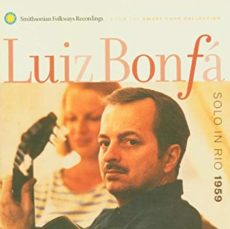
Luiz Floriano Bonfá was born on October 17, 1922 in Rio de Janeiro, Brazil. He studied weekly with Uruguayan classical guitarist Isaías Sávio from the age of 11, spending five hours traveling to and from the guitarist’s Santa Teresa home. However his extraordinary dedication and talent for the guitar, Sávio excused the youngster’s inability to pay for his lessons.
Bonfá first gained widespread exposure in Brazil in 1947 when he was featured on Rio’s Rádio Nacional. He was a member of the vocal group Quitandinha Serenaders in the late Forties. As a composer his first compositions such as Ranchinho de Palha and O Vento Não Sabe were recorded and performed by Brazilian crooner Dick Farney in the 1950s. His first hit song was De Cigarro em Cigarro, recorded by Nora Ney in 1957.
Farney introduced Luiz to Antônio Carlos Jobim and Vinicius de Moraes, the leading songwriting team behind the worldwide explosion of Brazilian jazz/pop music in the late 1950s and 1960s. He collaborated with them and with other prominent Brazilian musicians and artists in productions of de Moraes’ anthological play Orfeu da Conceição, which several years later gave origin to Marcel Camus’ film Black Orpheus (Orfeu Negro).
Bonfá wrote some of the original music featured in the film, including the numbers “Samba de Orfeu” and his most famous composition, “Manhã de Carnaval” (of which Carl Sigman later wrote a different set of English lyrics titled “A Day in the Life of a Fool”), which has been among the top ten standards played worldwide.
As a composer and performer, he was at heart an exponent of the bold, lyrical, lushly orchestrated, and emotionally charged samba-canção style that predated the arrival of João Gilberto’s more refined and subdued bossa nova style. Bonfá became a highly visible ambassador of Brazilian music in the United States beginning with the famous November 1962 Bossa Nova concert at New York’s Carnegie Hall.
Luiz worked with Quincy Jones, George Benson, Stan Getz, and Frank Sinatra, and Elvis Presley sang his composition Almost in Love with lyrics by Randy Starr in the 1968 MGM film Live a Little, Love a Little. His composition The Gentle Rain with lyrics by Matt Dubey, and Sambolero have been recorded by numerous jazz musicians of the decades.
Guitarist and composer Luiz Bonfá, who played in a polyphonic style, harmonizing melody lines in a manner similar to that made famous by Wes Montgomery, passed away at 78 in Rio de Janeiro on January 12, 2001.

More Posts: guitar