

Daily Dose Of Jazz…
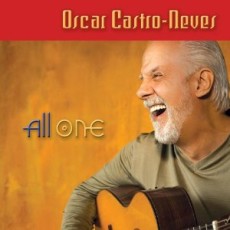
Oscar Castro-Neves was born one of triplets on May 15, 1940 in Rio de Janiero. Discovering his interest in music at an early age, by six he was playing the little viola and the cavaquinho and forming a band with his brothers. He found his musical interest in the synthesis of European classical influenced altered chords with the bittersweet samba-cancao.
He would learn from Johnny Alf who was deeply influenced by jazz, as would all musicians who chose the path to bossa nova. However it wasn’t until the 60s that it would catch on and in 1962 he was part of the historic Carnegie Hall Bossa Nova Festival.
Soon after he befriended Paul Winter and recorded his debut Oscar! on Paul’s label Living Music. That recording led to other sessions as a leader and performances with the likes of Vinicius de Moraes, Dorival Caymmi, and Quarteto em Cy. In 1966 he recorded with Tom Jobim on his Apresenta album before joining Sergio Mendes and Brazil 66 and recording Fool On The Hill. Having recorded three albums, he had already gained immediate fame blending commercially Brazilian, jazz and American pop.
As an arranger he has worked for Quincy Jones, Flora Purim, Laurindo Almeida, Joao Gilberto, played with Yo Yo Ma, Michael Jackson, Barbra Streisand, Toots Thielemans, Stevie Wonder, John Klemmer and Stan Getz and been involved in projects with Dave Grusin, Herbie Hancock and Michael Brecker.
Guitarist Oscar Castro-Neves continues to record, compose, arrange, score movies and television, perform and tour worldwide.
Daily Dose Of Jazz…
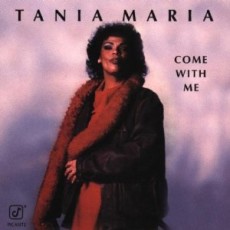
Tania Maria was born on May 9, 1948 in Sao Luis, Maranhao in northern Brazil. She began playing piano at 7, became a leader at 13 of a band organized by her father, won first place in a local music contest and began playing dances, in clubs and on the radio. It was her father who encouraged her to study piano so that she could play in his weekend jam sessions. By doing so she absorbed the rhythms and melodies of samba, jazz, pop and Brazilian chorinho. Since then she has never worked in anyone else’s group.
Tania released her first album ”Apresentamos” in 1969 with a second in 1971 but it was her move to France that exploded her on the international scene. She began touring and while performing in Australia she caught the ear of guitarist Charlie Byrd who recommended her to Concord Records.
Tania’s formidable musical precision and freewheeling spirit has been heard at virtually every important jazz festival in the world and has appeared on countless television and radio shows. She has recorded numerous albums, has been nominated for a Grammy in the category of “Best Jazz Vocal Performance, Female, and has played with such greats as Steve Gadd, Anthony Jackson, Sammy Figueroa and Eddie Gomez to name a few.
The Brazilian artist, singer, composer, bandleader and pianist also has a law degree She sings mostly in Portuguese but also English. Her music is sometimes pop, jazz, and unmistakably Brazilian. Whether playing fiery samba, tranquil bossa or any other style, Tania Maria maintains a style that is uniquely her own. Her vibrant voice, brilliant piano work and outstanding performances have made an artist of increasing international popularity.
Daily Dose Of Jazz…
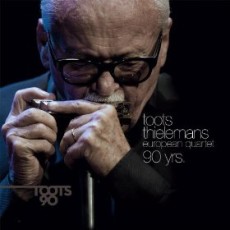
Jean-Baptiste Frédéric Isidor Baron Thielemans was born on April 29, 1922 in Brussels, Belgium. Known to the world as Toots, he began his musical training on accordion at age three. Not playing harmonica until he was seventeen, Toots original reputation was made as a guitarist greatly influenced by Django Reinhardt. By 1949 he was sharing the Paris Jazz Festival bandstand with Charlie Parker, Miles Davis, Max Roach and Sidney Bechet for a jam session. That same year he began touring Europe with Benny Goodman and making his recording debut with Zoot Sims.
Moving to the US in 1952 he joined Charlie Parker’s All-Stars and worked with Miles Davis and Dinah Washington. He played and recorded with names like Ella Fitzgerald, Peggy Lee, George Shearing, Quincy Jones, Oscar Peterson, Bill Evans, Paul Simon, Billy Joel, The Happenings, Astrud Gilberto, Shirley Horn, Elis Regina and others.
His composition “Bluesette”, recorded in 1962, where he introduced whistling and guitar in unison, has become a jazz standard. Norman Gimbel later penned the lyrics and the tune became a worldwide hit for several singers and is still highly requested.
His trademark harmonica playing and whistling has been heard in movie scores, television series and commercials. He has been a proponent of world music releasing a French flavored album Chez Toots and the two-volume Brasil Project. He has received honorary doctorates, made a baron by King Albert II of Belgium, and in 2008 became a NEA Jazz Master.
Apart from his popularity as an accomplished musician, he is well liked for his modesty and kind demeanor. The composer and musician continued to play and record until he passed away on August 22, 2016 in Braine-l’Alleud, Belgium. He is credited with single-handedly introducing the chromatic harmonica as a jazz instrument in the Fifties, playing with the dexterity of a saxophone.
More Posts: harmonica
Daily Dose Of Jazz…
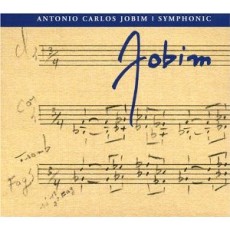
It has been said that Antonio Carlos Jobim was the George Gershwin of Brazil, and there is a solid ring of truth in that, for both contributed large bodies of songs to the jazz repertoire, both expanded their reach into the concert hall, and both tend to symbolize their countries in the eyes of the rest of the world.
Born Antônio Carlos Brasileiro de Almeida Jobim on January 25, 1927 in Tijuca neighborhood of Rio de Janiero studied to become an architect but the lure of music was too strong being firmly rooted in the music of Pixinguinha, who began modern Brazilian music in the 1930’s. By twenty he started playing piano in nightclubs and working recording sessions. He cut his first record in 1954 leader his group Tom and His Band, backing singer Bill Farr.
Tom, a nickname he affectionately carried throughout his life, was firmly planted in jazz having been impacted by Gerry Mulligan, Chet Baker, Barney Kessel and other West Coast musicians. He also gleaned influence upon his harmonies from Claude Debussy and Samba gave his music an exotic rhythmic underpinning. His piano is simple and melodic, his guitar gentle and his singing hauntingly emotional. Among his many themes his lyrics talked of love, political repression, betrayal, the natural beauties of Brazil and his home city of Rio.
Jobim first found fame in 1956 when he teamed with poet and diplomat Vinicius de Moraes to score part of the play Orfeo do Carnival, which would later gain them worldwide acclaim at Cannes when Black Orpheus debut in 1959.
In 1958, an unknown Brazilian singer João Gilberto recorded some of Jobim’s songs, which effectively launched bossa nova. Yet, Jobim’s breakthrough outside Brazil occurred in 1962 when Stan Getz and Charlie Byrd scored a surprise hit with his tune “Desafinado” – and later Getz teamed with Joao Gilberto and his wife Astrud resulting in Getz/Gilberto in 1963 and Getz/Gilberto 2 in 1964. The ’63 album became one of the best selling jazz albums of all time and grabbed 4 Grammy Awards. With their gracefully urbane, sensuously aching melodies and harmonies, Jobim’s songs gave jazz musicians in the 1960s a quiet, strikingly original alternative to their traditional Tin Pan Alley source.
Grammy award winning songwriter, composer, arranger, singer, pianist and guitarist while driving home after finishing recording for his next album Tom Jobim, collapsed and passed away of heart failure in New York City on December 8, 1994.

Daily Dose Of Jazz…
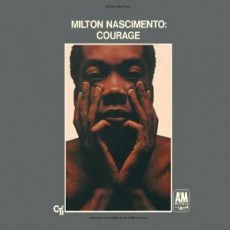
Milton Nascimento was born October 26, 1942 in Rio de Janiero, Brazil and as a baby was adopted by his mother’s former employers after her death when he was just 18 months. Growing up in Três Pontas, Minas Gerais he would soon become an occasional deejay on a radio station that his father once ran.
In the early stages of his career, Nascimento played in two samba groups: Evolussamba and Sambacana. By 1963, he moved to Belo Horizonte, struck a friendship with Lô Borges led to the Clube de Esquina (“corner club”) movement that included Beto Guedes, Toninho Horta, Wagner Tiso, and Flávio Venturini, with whom he shared compositions and melodies. One composition was “Canção do Sal”, which was first interpreted by Elis Regina in 1966 and led to a television appearance with Nascimento. A subsequent collective released Clube da Esquina in 1972 with several hit singles.
Famous for his falsetto and tonal range, Nascimento is regarded for his highly acclaimed songs such as “Maria, Maria”, “Canção da América” (“Song from America”/”Unencounter”), “Travessia”, “Bailes da Vida” and “Coração de Estudante” (“Student’s Heart”). The lyrics often social and political in nature have become hymns for both campaigns and funerals.
Milton’s international breakthrough came with his appearance on jazz saxophonist Wayne Shorter’s 1974 album “Native Dancer” that led to widespread acclaim. Collaborations with stars such as Paul Simon, Cat Stevens, George Duke, Quincy Jones and Earth, Wind and Fire would follow. Angelus, released in 1994 features appearances by Pat Metheny, Ron Carter, Herbie Hancock, Jack DeJohnette, Nana Vasconcelos, Jon Anderson, James Taylor, Peter Gabriel and Duran Duran.
Nascimento contributed the song “Dancing” to the AIDS-Benefit Album “Red Hot + Rio”, worked with the Brazilian Heavy Metal band Angra, and collaborated with Jason Mraz on the latter’s album. The singer/songwriter and guitarist has recorded over two-dozen albums and continues to record, perform and tour.