

Daily Dose Of Jazz…
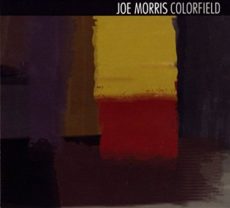
Joseph Francis Michael Morris was born September 13, 1955 in New Haven, Connecticut. Starting on guitar he was primarily self-taught with only a few lessons, and played his first professional gig in 1969 . Jimi Hendrix and other guitarists of that period inspired him to learn to play the blues and John Coltrane’s Om inspired him to learn about jazz. From the age of 17 he worked to establish his guitar voice in the free jazz context, inspired by Cecil Taylor, Eric Dolphy, Leroy Jenkins and Thelonious Monk. After high school he performed in rock bands, rehearsed in jazz bands, and played improvised music until 1975, when he moved to Boston, Massachusetts.
By 1983 he formed his own record company, Riti, and recorded his first album, Wraparound. An early mentor and playing partner was pianist Lowell Davidson. Between 1989 and 1993 he performed and recorded with his electric trio Sweatshop and electric quartet Racket Club. 1994 saw Joe become the first guitarist to lead his own session in the twenty-year history of Black Saint/Soul Note with the trio recording Symbolic Gesture.
Morris has continued to record extensively for Leo, Knitting Factory, AUM Fidelity, Hathut, Clean Feed, ESP and RogueArt record labels. He has led his own groups and has recorded and performed with Matthew Shipp, William Parker, John Zorn, Joe Maneri, Rob Brown, Ivo Perelman, Ken Vandermark and DKV Trio, Jim Hobbs, Steve Lantner, Daniel Levin, Petr Cancura and David S. Ware among others.
He has lectured and conducted workshops throughout the United States and Europe, is a former member of the faculty of Tufts University Extension College and is currently on the faculty at New England Conservatory in the jazz and improvisation department. Guitarist, bassist, improviser and composer Joe Morris continues to perform and record.

Daily Dose Of Jazz…
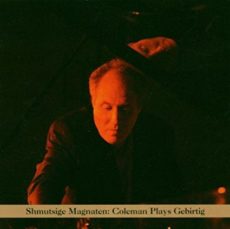
Anthony Coleman was born on August 30, 1955 in New York City and didn’t begin to study piano until the age of thirteen with Jaki Byard. He attended the New England Conservatory of Music and studied with George Russell, Donald Martino and Malcolm Peyton.
Coleman has collaborated with guitarist Elliott Sharp, trumpeter Dave Douglas, accordion player Guy Klucevsek, composer David Shea, former Captain Beefheart band member Gary Lucas, classical and klezmer clarinetist David Krakauer, guitarist Marc Ribot, bassist Greg Cohen, drummer Joey Baron and saxophonist Roy Nathanson.
He has toured with his groups Sephardic Tinge and Selfhaters throughout Europe, in the 1990s and the early 2000s. His Disco by Night was his first major solo record released by Japan’s Avant Records in 1992. He released duo albums, The Coming Great Millenium, Lobster & Friend, and I Could’ve Been a Drum with Roy Nathanson, that typify his free playing style as well as his multi-instrumental capability. Coleman and Nathanson have performed all over the U.S. and Europe. His album The End of Summer features his NEC Ensemble Survivors Breakfast.
Avant-garde pianist Anthony Coleman has released 15 albums as a leader, 33 as a sideman, appeared in four documentaries, has written four compositions, has taught theory and composition at Bennington College, is on the faculty of the New England Conservatory of Music and Mannes College New School for Music, writes articles for All About Jazz and Bomb magazine and continues to perform, compose and record.
More Posts: piano
Daily Dose Of Jazz…
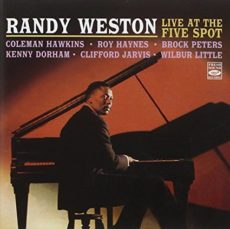
Clifford Jarvis was born on August 26, 1941 in Boston, Massachusetts and studied at Berklee College of Music in the 1950s. Moving to New York City, he established himself in jazz between 1959 and 1966 by recording with Chet Baker, Randy Weston, Yusef Lateef, Freddie Hubbard, Barry Harris, Jackie McLean, and Elmo Hope, and playing with Grant Green and Rahsaan Roland Kirk.
From 1962 to 1976 Jarvis performed and recorded with Sun Ra. He also played and recorded with Pharoah Sanders, Sonny Simmons, Alice Coltrane, Kenny Drew, Walter Davis, Archie Shepp and recorded with organist John Patton on the Blue Note album That Certain Feeling in 1968.
By the 1980s Jarvis moved to London, England, where he played with emerging musicians such as Courtney Pine. He worked in music education at Chats Palace Arts Centre in London and was senior drum tutor at Pyramid Arts Development, Dalston, from 1984 to 1994.
Hard bop and free jazz drummer Clifford Jarvis was an educator and performer until his passing on November 26, 1999 in London.

More Posts: drums
Daily Dose Of Jazz…
Eric Boeren was born in Baarle-Nassau, Netherlands on August 22, 1959 and started out playing euphonium and tuba in the Ulicoten fan fair. He took workshops with Arnold Dooijeweerd in the Bimhuis, from which the Amsterdam Creative Ensemble originated.
In 1983 Eric replaced trumpeter Jimmy Sernesky in the group Available Jelly, for which he also composed. In the Eighties he was part of several groups with Maarten Altena, Kenny Wheeler, Willem van Manen, JC Tans, Sean Bergin, and by the end of the decade joined Ab Baars and Paul Termos.
1990 saw Boeren joining Michiel Braam’s Bik Bent Braam, an association that continues today. In 1993, he founded his first group as a leader, Specs, which was short-lived. During the 1990s he played with Franky Douglas, Martin van Duynhoven, and Guus Janssen.
In 1995 he organized a series of PH31 concerts in Amsterdam with his trio trio comprised of Michael Vatcher and Wilbert de Joode. He enlisted another saxophone to play Ornette Coleman’s early quartet music. He also played Coleman’s music in the Bimhuis with the eleven-member band Go Dutch. He founded the Quartet Boers! That later became the Eric Boeren 4tet. His love for Coleman’s music resulted in two CDs – Cross Breeding and Joy of a Toy.
Boeren went on to play into the new millennium with the band NEWS with Cor Fuhler, bassist Nate McBride and drummer Mike Reed, and the quintet HO & I, that included Douglas and Paul Pallesen. Trumpeter Eric Boeren is one of the initiators of the music collective foundation dOeK (De Exercise de Kunst) and he currently performs, records and tours with his quartet Boerenbond, features Peter Evans, Tobias Delius and Jason Adasiewicz.

More Posts: trumpet
Daily Dose Of Jazz…
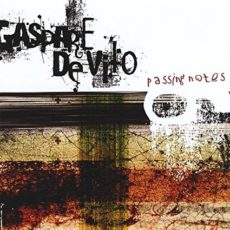
Gaspare De Vito was born on August 17, 1978 in Naples, Italy. He studied with Gianluigi Troversi, Eugenio Columbo and musical composition with Giancarlo Schiaffini. An auspicious meeting of Steve Grossman and Greg Osby was fundamental to the freedom of his original music.
Blending his Neopolitan and Meditteranean roots with hip-hop in his early teens, he would go through funk, jazz, Cuban traditional and South African music gave him the basis for his music. He has performed and recorded as a leader and a session player throughout Europe.
He has performed and recorded with Butch Morris, Alvin Curran, Tristan Hosinger, Giancarlo Schiaffini, Eugenio Colombo, Francesco Bearzatti, Fabrizio Puglisi, Vincenzo Vasi, Nicola Guazzaloca, Pasquale Mirra, Marco Dal Pane, Luisa Cottifogli, Maisha Grant and numerous others.
Alto saxophonist, flautist and composer Gaspare De Vito who has been voted Best Italian saxophonist in 2007 and co-founded the Suoniforme record label, continues to record, tour and perform internationally.
