

Daily Dose Of Jazz…
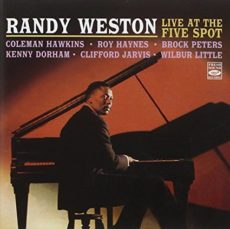
Clifford Jarvis was born on August 26, 1941 in Boston, Massachusetts and studied at Berklee College of Music in the 1950s. Moving to New York City, he established himself in jazz between 1959 and 1966 by recording with Chet Baker, Randy Weston, Yusef Lateef, Freddie Hubbard, Barry Harris, Jackie McLean, and Elmo Hope, and playing with Grant Green and Rahsaan Roland Kirk.
From 1962 to 1976 Jarvis performed and recorded with Sun Ra. He also played and recorded with Pharoah Sanders, Sonny Simmons, Alice Coltrane, Kenny Drew, Walter Davis, Archie Shepp and recorded with organist John Patton on the Blue Note album That Certain Feeling in 1968.
By the 1980s Jarvis moved to London, England, where he played with emerging musicians such as Courtney Pine. He worked in music education at Chats Palace Arts Centre in London and was senior drum tutor at Pyramid Arts Development, Dalston, from 1984 to 1994.
Hard bop and free jazz drummer Clifford Jarvis was an educator and performer until his passing on November 26, 1999 in London.

More Posts: drums
Daily Dose Of Jazz…
Cecil Brooks III was born on August 16. 1959 in Pittsburgh, Pennsylvania and started playing drums at age 5, studying with his father Cecil Brooks, Jr., a renowned jazz drummer. His father introduced him to Art Blakey, Max Roach, Philly Joe Jones and the jazz drumming tradition. He would go on professional performances with his father and by the age of 14 he was performing professional gigs on his own.
Awarded a full music scholarship at Mt. Aloysius College and Duquesne University and after receiving his degree, he played around the metropolitan city with visiting heavyweights. Cecil was virtually reviewed in every major music publication and newspaper as well as on Pittsburgh television and radio.
In 1984, Brooks moved to New York City where his first gigs were with Houston Person and Etta Jones. He toured and recorded with the duet for several years. During the same time he also performed with Oliver Lake, Mingus Dynasty/Big Band, Terence Blanchard, David Murray, Terumasa Hino, Greg Osby, Andrew Hill, Michelle Rosewoman, Nat Adderley and many others.
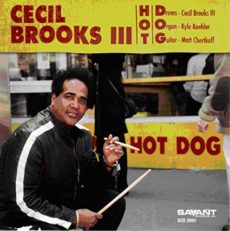
Brooks has released 9 CDs as a leader starting with The Collective to his latest Hot D.O.G. where he holds down with crisp and powerful drumming on the recording. He has performed and/or recorded with Jack McDuff, Andrew Hill, Hannibal Peterson, Groove Holmes, Don Braden, Jack Walrath and many more. He has produced John Hicks, Jimmy Ponder, Hannibal Peterson, Winard Harper, Darrell Grant, Bruce Williams, Radam Schwartz, Leon Lee Dorsey, Akua Dixon Turre, Russell Gunn Jr, Ron Jackson, Nat Simpkins, Eric Johnson, Roseanna Vitro, Arthur Blythe, Chris White, Don Braden, Talib Kibwe, and the list goes on.
For nine years beginning in 2003 he was the proprietor of Cecil’s Jazz Club in West Orange, New Jersey. IHe has had Cecil’s Monday Night Big Band featured ABC’s Nightline, has hosted visiting jazz greats and pros who live in the area. Home to bassist Christian McBride, pianist Geri Allen, saxophonist Don Braden, trombonist Steve Turre, and Herbie Hancock were all were regulars at the club and Bill Cosby launched the grand opening.
He has been the subject of many articles and reviews: Jazziz, DownBeat, Modern Drummer, JazzTimes, Hot House, The New York Times, BET Jazz Central, Time Warner Cable TV 90 minute documentary Cecil Brooks III The Third Generation, and many other major publications worldwide. He has toured throughout Europe, South America, Japan, the United States and Canada. Drummer, composer, arranger, producer and educator Cecil Brooks continues to swing as he performs, records and tours.
More Posts: drums
Daily Dose Of Jazz…
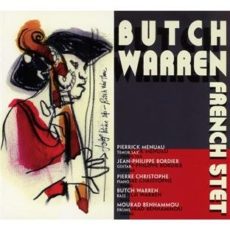
Butch Warren was born Edward Warren on August 9, 1939 in Washington, D.C. and began playing professionally at age 14 in a local Washington, D. C. band led by his father, Edward Warren. He later worked with other local groups, including Stuff Smith as well as with altoist and bandleader Rick Henderson at the historic Howard Theatre on 7th and T Streets.
Moving to New York City in 1958 Butch played first with Kenny Dorham and appeared on his first recording in 1960 along with saxophonist Charles Davis, pianist Tommy Flanagan and drummer Buddy Enlow. During his stay in New York City he became house bassist for Blue Note Records.
As a sideman, he recorded with Miles Davis, Hank Mobley, Donald Byrd, Sonny Clark, Dexter Gordon, Elmo Hope, Grant Green, Slide Hampton, Booker Ervin, Walter Bishop Jr. Horace Parlan, Bobby Timmons, Don Wilkerson, Herbie Hancock, Joe Henderson, Jackie McLean, and Stanley Turrentine. He played with Thelonious Monk in 1963 and 1964 before moving back to Washington, D.C.
Back home he briefly worked in television before becoming seriously ill. Following the onset of his illness he played professionally only occasionally, including a regular gig at the jazz club Columbia Station in the Adams Morgan neighborhood. Bassist Butch Warren, whose solos were inventive and played in the hard bop genre, passed away October 5, 2013.
Sponsored By


#preserving genius
More Posts: bass
Daily Dose Of Jazz…
Arthur Edgehill was born July 21, 1926 in Brooklyn, New York and studied drumming during his youth. His first professional work came while touring with Mercer Ellington in 1948, and in 1953 he toured with Ben Webster. He went on to play with Kenny Dorham’s Jazz Prophets in 1956 and with Gigi Gryce and in 1957-58 toured with Dinah Washington.
He would go on to become a member of Eddie “Lockjaw” Davis’ quartet with George Duvivier and/or Wendell Marshall, and recorded with Shirley Scott, not only on her debut album, Great Scott! In 1958, but also on her Very Saxy album in 1959 with Eddie “Lockjaw” Davis, Buddy Tate, Coleman Hawkins, and Arnett Cobb on tenors.
Edgehill played in quartets led by Horace Silver, one featuring Cecil Payne, and at Minton’s with Hank Mobley and Doug Watkins, and jammed with Charlie Parker and Annie Laurie.
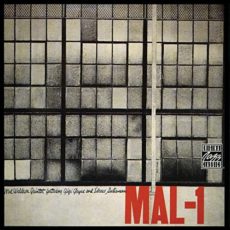
Hard bop jazz drummer Arthur Edgehill, originally spelt Edghill, not retired at the age of 90, was active from the 1950s through the 1970s. He appeared on several of the Prestige recordings from the Van Gelder Studios in Hackensack and Englewood Cliffs, New Jersey. He recorded on Mal Waldron’s debut album Mal-1 in 1956 and continued recording with Little Jimmy Scott, Mildred Anderson and David Amram among others.
Sponsored By

#preserving genius
More Posts: drums
Daily Dose Of Jazz…
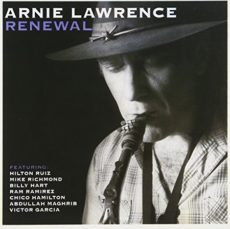
Arnie Lawrence ,was born Arnold Lawrence Finkelstein on July 10, 1938 in Brooklyn, New York. He studied clarinet in his youth before switching to saxophone and from the age of 12 he was playing in clubs in the Catskills, and by age 17 was performing at Birdland, at one point working a double bill with John Coltrane.
He played with Charles Mingus, Thad Jones, Maynard Ferguson, Clark Terry and Duke Pearson but did not make his first recordings until 1966, playing on Chico Hamilton’s The Dealer. Working for several years with Hamilton and becoming a soloist on The Tonight Show from 1967 to 1972, Arnie made his first records as a leader in 1968.
In the early 1970s Lawrence played with Willie Bobo, then joined Blood, Sweat & Tears in 1974. He did a world tour with Liza Minnelli in 1978–79, and released a few more records under his own name before touring with Louie Bellson and Elvin Jones in the early 1980s. He composed a symphony he titled Red, White and Blues, which was premiered by an orchestra in Williamsburg, Virginia. It featured himself, Dizzy Gillespie and Julius Hemphill all soloing in the performance.
Putting on his educator hat he taught from the middle of the 1970s, working as an artist in residence in Kentucky and Kansas. By 1986 he had stopped recording and touring and founded the New School for Jazz and Contemporary Music in New York City. Among the program’s students were Roy Hargrove, Brad Mehldau, Larry Goldings, John Popper, Peter Bernstein and Spike Wilner of Smalls Jazz Club. Moving to Israel in 1997, where he founded the International Center for Creative Music, an education facility open to both Jewish and Arab students. He played regularly in Israel and owned his own nightclub called Arnie’s Jazz Underground.
Suffered from lung and liver cancer late in life, alto saxophonist Arnie Lawrence passed away on April 22, 2005, in Jerusalem, Israel and Palestine, as both claim the city as their capital.
Sponsored By
Voices From The Community
#preserving genius
More Posts: saxophone