

Daily Dose Of Jazz…
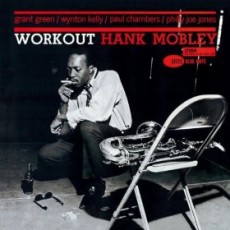
Henry (Hank) Mobley was born on July 7, 1930 in Eastman, Georgia but was raised in Elizabeth, New Jersey. Early in his career, he worked with Dizzy Gillespie and Max Roach, and then took part in one of the landmark hard bop sessions, alongside Art Blakey, Horace Silver, Doug Watkins and Kenny Dorham, resulting in the release of Horace Silver and the Jazz Messengers and the Jazz Messengers. When they split in ’56, Hank and Silver continued their collaboration in the 50s.
During the 1960s, he worked chiefly as a leader, recording over 20 albums for Blue Note Records between 1955 and 1970 and playing many of the most important hard bop players such as Grant Green, Freddie Hubbard, Sonny Clark, Wynton Kelly and Philly Joe Jones, along with a particularly productive partnership with Lee Morgan. He spent a brief time with Miles Davis in 1961 replacing John Coltrane.
Hank was a major voice on tenor saxophone, known for his melodic playing, is widely recognized as one of the great composers of originals in the hard-bop era, with interesting chord changes and room for soloists to stretch out.
He was forced to retire in the mid-1970s due to lung problems and although he worked two engagements at the Angry Squire in New York City in ‘85 and ‘86 in a quartet with Duke Jordan. He recorded as a leader for Blue Note, Prestige and Savoy record labels leaving history thirty-two albums and another fifty-six sitting in the sideman seat.
A few months later tenor saxophonist and composer Hank Mobley, who soared in the hard bop and soul jazz genres with his laid-back, subtle and melodic delivery, passed away from pneumonia on May 30, 1986.

Give The Gift Of Knowledge
More Posts: saxophone
Daily Dose Of Jazz…
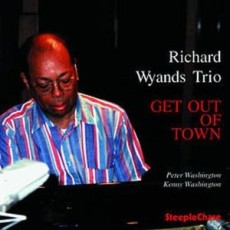
Richard Wyands was born July 2, 1928 in Oakland, California and started working in local clubs when he was 16, graduated from San Francisco State College, and gained experience playing in the San Francisco Bay area.
Although his chordal voicings are a little reminiscent of Red Garland, he spent most of his career as a sideman playing a few early dates for Fantasy and accompanying Ella Fitzgerald and Carmen McRae in 1956. A move to New York in 1958 afforded him the opportunity to gig with Roy Haynes, Charles Mingus, Gigi Gryce’s quintet, Oliver Nelson, Etta Jones, Eddie “Lockjaw” Davis, and Gene Ammons, among others.
Wyands’ association with Kenny Burrell had him playing and touring extensively from 1964-1977. He has played with many other top musicians, including Freddie Hubbard, Zoot Sims, Frank Foster, the Illinois Jacquet Big Band, Benny Carter, Ernie Andrews, and Milt Hinton, among others.
Pianist Richard Wyands has also headed his own trios, but has only had a handful of sessions as a leader including dates for Storyville, DIW and Criss Cross. The hard bop pianist is best known as a sideman, has led a few of his own trios and continues to perform and tour.
Jazz Is Global – Share
More Posts: piano
Daily Dose Of Jazz…
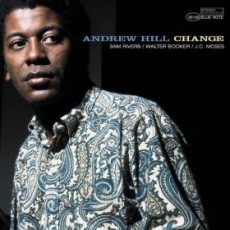
Andrew Hill was born June 30, 1931 in Chicago, Illinois and took up the piano at the age of thirteen, and was encouraged by Earl Hines. He studied informally until 1952. While a teenager he performed in rhythm and blues bands and toured with jazz musicians, including Charlie Parker and Miles Davis.
Hill first recorded as a sideman in 1954, but made his reputation recording as a leader for Blue Note from 1963 to 1970, featuring important post-bop musicians including Joe Chambers, Richard Davis, Eric Dolphy, Bobby Hutcherson, Joe Henderson, Freddie Hubbard, Elvin Jones, Woody Shaw and Tony Williams.
Hill is recognized as one of the most important innovators of jazz piano in the 1960s but rarely worked as a sideman after the 1960s, preferring to play his own compositions, which may have limited his public exposure.
As an educator he held positions at Portland State University, held residencies at Colgate University of Hamilton, Wesleyan University, University of Michigan, University of Toronto, Harvard University and Bennington College.
Returning to New York City in 1990, composer and pianist Andrew Hill, whose unique idiom of chromatic, modal and free improvisation, made his final public appearance on March 29, 2007 at Trinity Church. Suffering from lung cancer during his later years he died in his home on April 20, 2007. In May 2007, he became the first person to receive a posthumous honorary doctorate from Berklee College of Music.
Give The Gift Of Knowledge

Daily Dose Of Jazz…
Raymond Mantilla was born on June 22, 1934 in New York City and his early drumming inspiration came from Afro-Cuban jazz. He played with a number of Latin jazz ensembles from the 1950s including the La Playa Sextet, Xavier Cugat, Lou Perez, Rene Touzet, Miguelito Valdez and Monguito Conjunto.
He played behind Eartha Kitt in 1955 and by 1960 was touring with Herbie Mann and recording with Max Roach. He recorded with Al Cohn, Freddie Hubbard, Buddy Rich and Larry Coryell in the early Sixties and then led his own band in Puerto Rico from ’63 to ’69. This was followed with Ray becoming a founding member of Max Roach’s M’Boom percussion ensemble in 1970.
Mantilla was a member of Art Blakey’s Jazz Messengers in the 70s and toured the U.S., Europe, and Japan. He then recorded with Gato Barbieri, Joe Farrell, Richie Cole, Don Pullen, Charles Mingus, Walter Bishop, Jr., and Morgana King and toured Cuba with Dizzy Gillespie.
By the end of the decade he once again founded his own ensemble, the Ray Mantilla Space Station, and through the 1980s toured or recorded with Muhal Richard Abrams, Kenny Burrell, Shirley Scott and Warren Chiasson. In 1991 the noted session player and bandleader put together a new ensemble, the Jazz Tribe and has been recording, performing and touring ever since.
Take A Dose On The Road
More Posts: drums
Daily Dose Of Jazz…
Gordon “Specs” Powell was born June 5, 1922 in New York City. He started out musically on the piano but by the late 1930s he became exclusively a drummer. He began in the swing era working with Edgar Hayes in 1939, Benny Carter in 1941-42 and Ben Webster.
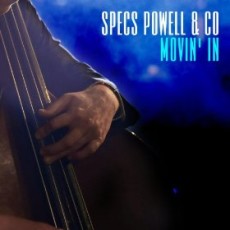
He started working as a staff musician for CBS in 1943 and by the early 60s he was lead drummer on The Ed Sullivan Show. He only led one recording session for Roulette Records in 1957 titled “Movin’ In”.
Remaining active until the 1970s, Specs Powell, jazz drummer and percussionist that worked in the bebop and hard bop idioms was honored by the Big Band and Jazz Hall of Fame in 2004.
Though he passed away three years later on September 15, 2007 at the age of 85, Specs Powell selected discography lists his orchestra and big band albums, “Movin’ In” and “Big Band Jazz” and left behind an impressive albeit a selected collection of recordings with Teddy Wilson, Jess Stacy, Red Norvo, Erroll Garner, Shirley Scott, Reuben Wilson, Bernard Purdie and Billy Butler among others.
Dose A Day-Blues Away
More Posts: drums