

Daily Dose Of Jazz…
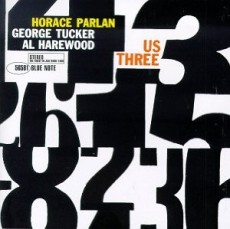
Al Harewood was born on June 3, 1923 and as a child Harewood was a gifted tap dancer that gave recitals and was affiliated with Bill “Bojangles” Robinson’s school of dance. With his older brother’s drum unoccupied when he was drafted into the Army during WWII, He began his apprenticeship. Having contracted pneumonia as a child and exempted from military service, Al began his illustrious career as a jazz drummer.
While working at a munitions armory during the war, Harewood taught himself the drums, finding uncommon aptitude for playing the traps with fire and swing. He began listening to the major percussion innovators of the time: Max Roach, Art Blakey, Philly Joe Jones, and the new bop styling’s of Kenny Clarke and began playing club dates around New York.
Harewood plays very melodically with rhythmic punches, a talent that made him an expert at feeding and supporting each soloist while never getting in the way of a horn player’s melodic development. He has worked with J. J. Johnson, Kai Winding, Art Farmer, Gigi Gryce, Benny Golson, Horace Parlan, Ike Quebec, Grant Green, Lou Donaldson, Curtis Fuller, Stan Getz, Carmen McRae, Mary Lou Williams, Stanley Turrentine, Shirley Scott and Dexter Gordon to name a few.
By age 88, Al Harewood maintained a wonderful sense of humor, dignity and courage as one of the original creators of modern jazz drumming. He played in New York’s clubs each and every night at the very least in spirit if not influence. He spent his time between New York and his family home in Barbados until his passing on March 13, 2014 at the age of 90.

Give A Gift Of Jazz – Share
More Posts: drums
Daily Dose Of Jazz…
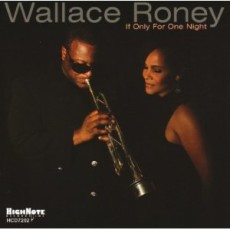
Wallace Roney was born May 25, 1960 in Philadelphia, Pennsylvania and at the age of 4 it was discovered he had perfect pitch. He began his musical and trumpet studies at the Settlement School of Music, then from the age of 7 studied with Sigmund Herring of the Philadelphia Orchestra and under the watchful eye of Eugene Ormandy was regularly presented at the Settlement recitals with the Philadelphia Brass Ensemble.
Having already made his recording debut at 14 by the time he entered the Duke Ellington School of the Arts in Washington, D.C., Wallace made his mark in D.C. as a gifted local performer by his graduation. He studied with Langston Fitzgerald of the Baltimore Symphony, attended Howard University and Berklee College of Music, took lessons from Clark Terry and Dizzy Gillespie.
Wallace studied with Miles Davis from 1985 until his death in ’91 and credits Miles as having helped to challenge and shape his creative approach to life as well as being his music instructor, mentor and friend and holds the distinction of being the only trumpet player Davis ever personally mentored.
With all of his skills and early accomplishments, Roney early career was bleak, bordering on homelessness, until he got a call to tour with drummers Tony Williams and Art Blakey. This shot in the arm culminated in him becoming one of the most in-demand trumpeters on record, movie and commercial recording sessions. In 1979 and again in 1980, Wallace Roney won the Down Beat Award for Best Young Jazz Musician of the Year. In 1989, and again in 1990, Wallace won Down Beat Magazine’s Critic’s Poll for Best Trumpeter to Watch.
He has played with Herbie Hancock, Ron Carter, Wayne Shorter, Elvin Jones, Jay McShann, Walter Davis Jr., Sonny Rollins and Curtis Fuller to name the short list and has recorded on over 250 sessions by the time he turned 40. The hard bop and post bop trumpeter Wallace Roney continued to perform, record and tour until he passed away at age 59 from complications arising from COVID~19 on March 31, 2020 in Paterson, New Jersey.
Give A Gift Of Jazz – Share
More Posts: trumpet

Daily Dose Of Jazz…
Ralph Peterson, Jr. was born on May 20, 1962 in Pleasantville, New Jersey into a family of drummers, having four uncles and a grandfather as drummers. He began on percussion at age three and was raised in Atlantic City where he played trumpet in high school and worked locally in funk groups. He applied to Livingston College Rutgers for drums but failed the percussion entrance exam and enrolled as a trumpeter instead.
In 1983 he joined Art Blakey’s Jazz messengers as the second drummer, playing with him for several years. He has worked with Terence Blanchard. Donald Harrison, Walter Davis, Tom Harrell, Out of the Blue, Branford Marsalis, David Murray, Craig Harris, James Spaulding, Roy Hargrove, Jon Faddis, Dewey Redman, George Colligan, Stanley Cowell, Mark Shim, Betty Carter, Charles Lloyd, Wynton Marsalis and many, many others.
After living in Canada for some time he returned to Philadelphia where he worked further with Fo’Tet and also recorded as Triangular Too with Uri Caine. He also led a group Hip Pocket with whom he played trumpet. He has recorded 15 albums as a leader and another six with Uri Caine and David Murray.
Drummer Ralph Peterson has taught at Philadelphia’s University of the Arts, currently teaches at Berklee College of Music in Boston, Massachusetts and continues to perform, record and tour.
Inspire A Young Mind
More Posts: drums
Daily Dose Of Jazz…
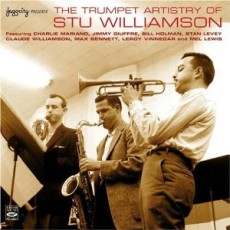
Stu Williamson was born on May 14, 1933 in Brattleboro, Vermont and is the younger brother of jazz pianist Claude Williamson. The trumpeter relocated to Los Angeles in 1949 and became a regular on the West Coast scene. He played with Woody Herman, Mel Lewis-Pepper Adams Quintet, Elmo Hope, Lennie Niehaus, Billy May and Charlie Barnet the first half of the Fifties.
Williamson played a significant role in Stan Kenton’s Orchestra, Howard Rumsey’s Lighthouse Café All-Stars and Terry Gibbs’s Dream Band. Between 1954 and 1958 Williamson played intermittently with Shelly Manne and was a ubiquitous session player up until 1968.
Although he had a beautiful, rich, round tone and his ability to create melodic solos full of invention, power and clarity gave him the opportunity to front small groups and big bands. Disappearing from the jazz scene after battling drug addiction for much of his life, including for years after he left the music. Trumpeter Stu Williamson passed away on October 1, 1991 in Studio City, California.
Dose A Day-Blues Away
More Posts: trumpet
Daily Dose Of Jazz…
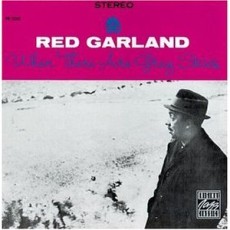
William “Red” Garland was born in Dallas, Texas on May 13, 1923. Showing an early interest in music, he began his musical studies on the clarinet and alto saxophone but switched to the piano. Garland spent copious amounts of time practicing and rapidly developed into a proficient player. A short early career as a welterweight boxer did not seem to hurt his playing hands and he fought a young Sugar Ray Robinson before making the switch to a full-time musician.
Garland’s trademark block chord technique, a style that would influence many forthcoming pianists in the jazz idiom and a commonly borrowed maneuver in jazz piano today, was unique and differed from the methods of earlier block chord pioneers such as George Shearing and Milt Buckner. His block chords were constructed of three notes in the right hand and four notes in the left hand, with the right hand one octave above the left. The right hand played the melody in octaves with a perfect 5th placed in the middle of the octave.
After WWII he performed with Roy Eldridge, Coleman Hawkins, Charlie Parker and Lester Young. He found steady work in Boston, New York and Philadelphia and by the late 40s he was touring with Eddie Vinson at the same time that John Coltrane was in Vinson’s band. His creativity and playing ability continued to improve, though he was still somewhat obscure. By the time he became a pianist for Miles Davis he was influenced by Ahmad Jamal and Charlie Parker’s pianist Walter Bishop.
Red Garland found fame in 1955 when he joined the Miles Davis Quintet along with John Coltrane, Philly Joe Jones and Paul Chambers and together they recorded several Prestige albums such as Workin’, Steamin’ Cookin’ and Relaxin’, that would later influence the free jazz movement. He would go on to play on ‘Round About Midnight and Milestones but would be eventually be fired by Miles.
In 1958 Garland formed his own trio. Among the musicians the trio recorded with Pepper Adams, Nat Adderley, Ray Barretto, Kenny Burrell, Eddie “Lockjaw” Davis, Jimmy Heath, Harold Land, Leroy Vinnegar and many others to numerous to list.
Red released some 46 albums as a leader, recording sessions for Prestige, Fantasy, Galaxy, Jazzland, Keystone, Xanadu, Alfa, Moodsville and New Jazz record labels. He sat in as a sideman for such greats as Arnett Cobb, Art Pepper, John Coltrane and Phil Woods.
Stopping his playing professionally for a number of years in the 1960s when jazz lost popularity to rock and roll, he returned to Dallas to care for his mother. Pianist Red Garland recorded sparsely through the 70s but continued recording and performing until his death of a heart attack on April 23, 1984 at the age of 61.
Inspire A Young Mind
More Posts: piano