

Daily Dose Of Jazz…
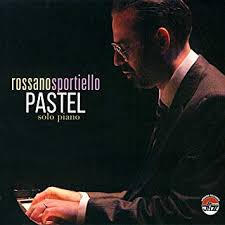
Rossano Sportiello was born in Vigevano, Italy on June 1, 1974 and began studying piano at the age of 9 under the tutelage of Italian classical pianist Carlo Villa and continued until his graduation in classical piano from the Conservatory in 1996. At 16, he was performing professionally at jazz venues in the Milan, Italy area, and in 1992, he joined one of Europe’s historic jazz bands, the Milano Jazz Gang. He toured with the group throughout Italy and West Europe until the end of 2000.
That same year, Sportiello met legendary jazz pianist and educator, Barry Harris, who became a mentor and good friend. Drawing international acclaim at the 2002 Ascona Jazz Festival in Switzerland while performing with the eight-piece, all-star American band led by Dan Barrett. In 2007, Rossano established himself in New York City and has performed with Slide Hampton, Clark Terry, Kenny Davern, Bucky Pizzarelli, Bob Wilber, Warren Vache, Bob Cranshaw, Mickey Roker, Harry Allen, Howard Alden, Joe Wilder, Eddie Locke, Joe La Barbera, Scott Hamilton, Jake Hanna, Houston Person, Bill Charlap, Dick Hyman, and the list goes on.
As an educator, Rossano has given lectures on jazz and masterclasses on piano at institutions such as the University of Toronto Jazz Studies, University of Central Florida and Claremont College in California and has lectured as a professor in residence at the Master’s Lodge of St. John’s College, Cambridge, UK.
Stride piano player Rossano Sportiello lists his influences have been Harris along with Ralph Sutton, Dave McKenna and Barry Harris, Fats Waller, Teddy Wilson, Art Tatum, Count Basie, Earl Hines, Ellis Larkins, and Bill Evans, to name a few. He continues to perform, record, and tour.
More Posts: bandleader,history,instrumental,jazz,music,piano
Daily Dose Of Jazz…
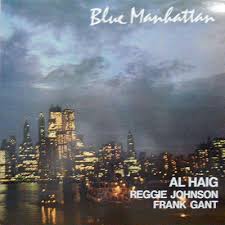
Frank Gant was born on May 26, 1931 in Detroit, Michigan. His first gigs were with Billy Mitchell and Pepper Adams, and after working with Little John Wilson and his Merry Men at the Madison Ballroom, including four days backing Billie Holiday, he went on to join Alvin Jackson’s house band at the Blue Bird..
Gant recorded with Donald Byrd, Sonny Stitt, and extensively with Yusef Lateef in the late 1950s and then Red Garland before becoming a member of Ahmad Jamal’s trio from 1966 to 1976. As the house drummer at Detroit’s Club 12, with Jackson’s band, he backed Thelonious Monk and Charlie Rouse in September 1959. In the 1970s, he accompanied Jamil Nasser and Harold Mabern as the rhythm section for workshops run by Cobi Narita.
From 1955 to 1986 he recorded as a sideman or group member on twenty albums with the above-mentioned musicians, as well as several with Al Haig. There is no more information following this recording period about the drummer as he has never been a leader, however, at eighty-nine he may still be occasionally performing.

More Posts: drums,history,instrumental,jazz,music
Daily Dose Of Jazz…
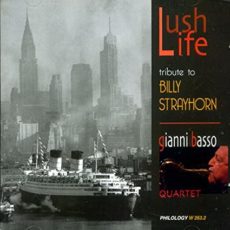
Gianni Basso, born in Asti, Italy on May 24, 1931 studied music in the busy northern city of Turin, where his childhood friend Oscar Valdambrini was a homeboy. A fascination for American jazz, their meeting was a case of a tenor saxophone and trumpet finding each other. This led to all manner of musical possibilities, most notably the easy-to-maneuver-and-feed small combo.
He started his career shortly after World War II, first as a clarinetist, then switched to the saxophone in the Forties performing in Germany and Belgium in Raoul Falsan’s Big Band. By the beginning of the next decade, he was established as a commercial “GB” or “general business” player in Milan, but one with a steady presence at jazz events, including some of the early Italian attempts at post-fascist festivals.
From about 1954, a collaboration with trumpeter and composer Oscar Valdambrini began that resembled the relationship between Duke Ellington and Billy Strayhorn. The partners’ group was without a doubt the most popular jazz band in Italy in the ’50s, accompanying many touring stars such as Billie Holiday, Lionel Hampton, Gerry Mulligan, Slide Hampton, and Chet Baker. His style became so developed that the Verve label signed him and Sarah Vaughan immediately recruited him for her 1984 album The Mystery of Man.
The late ’70s saw Basso founding the band Saxes Machine and fronting the Gianni Basso Big Band. In his senior years he settled into the comfort of the Rome studio scene, still playing in clubs and enjoying his growing historical stature on the European jazz scene that included free jazz fans.
Tenor saxophonist Gianni Basso, whose playing was influenced by Stan Getz and Sonny Rollins, passed away on August 17, 2009.
More Posts: bandleader,history,instrumental,jazz,music,saxophone
Daily Dose Of Jazz…
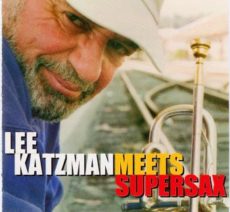
Lee Katzman was born on May 17, 1928 in Chicago, Illinois and was raised in Indianapolis, Indiana. His early career saw him playing primarily in big band settings. After arriving in New York in the late ‘40s, he played in the big bands of Gene Krupa, Claude Thornhill, Sam Donahue, Buddy Rich, Jimmy Dorsey, and Benny Goodman.
Relocating to California in 1956, he got an invitation from Stan Kenton to join the band as a jazz soloist, both on recordings and on worldwide tours. The late 1950s and 1960s saw him working with Pepper Adams, Les Brown, June Christy, Bob Dorough, Walter Norris, Med Flory, Bill Holman, Teddy Edwards, Mel Lewis, Shelly Manne, Les McCann, Anita O’Day, Jimmy Rowles, and Sonny Stitt.
Known for his clear tone and fearless, acrobatic solos, Lee was often a featured soloist in Bill Holman’s Great Big Band and Terry Gibbs Dream Band, as well as both the NBC and CBS orchestras. He later became a member of Herb Albert’s Baja Marimba Band.
He recorded two sessions as a leader, Beautiful with Teddy Edwards on tenor saxophone, Jack Wilson on piano, bassist Leroy Vinnegar, and Nick Martinis on drums. His second was Lee Katzman Meets Supersax with Med Flory~alto saxophone, Jay Migliore~tenor saxophone, Ray Reed~tenor saxophone, Jack Nimitz~baritone saxophone, Jimmy Rowles~piano, Bob Magnusson~bass, and Donald Bailey~drums.
When he relocated to New York in 1980, he played informal gigs around town with John Bunch and reconnected with Bob Dorough and Walter Norris. He retired with his wife, Judy, to Taos, New Mexico in 2011 and trumpeter Lee Katzman passed away in Taos on August 1, 2013 at age 85.
More Posts: bandleader,history,instrumental,jazz,music,trumpet
Daily Dose Of Jazz…
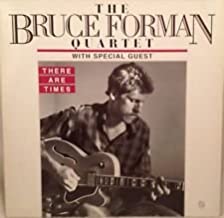
Bruce Forman was born in Springfield, Massachusetts on May 14, 1956 and first took piano lessons at an early age before picking up the guitar at age thirteen. In 1971, his family moved to San Francisco, California where he led his own groups in the area and performed with local jazz musicians, such as Eddie Duran, Vince Lateano, and Eddie Marshall.
He would go on to perform and record with nationally renowned musicians, such as Ray Brown, George Cables, Joe Henderson, Freddie Hubbard, Bobby Hutcherson, and Woody Shaw.
He performed regularly at the Monterey Jazz Festival and played with Richie Cole from 1978 to 1982. Bruce recorded his first of sixteen albums to date, Coast To Coast, in 1981. His most successful album as a leader was 1992’s Forman on the Job, which hit #14 on the U.S. Billboard Top Jazz Albums chart.
As a sideman he has recorded with Richie Cole, Clint Eastwood, Dan Hicks, Roger Kellaway, Mark Murphy, Charlie Shoemake, Lanny Morgan, Tom Harrell, Rare Silk, Dave Eshelman, Lorez Alexandria, Geoff Muldaur, Les DeMerle, Tony Monaco, Molly Ringwald, Chuck Deardorf. Guitarist Bruce Forman continues to perform, record and tour.
More Posts: bandleader,composer,guitar,history,instrumental,jazz,music