

Daily Dose Of Jazz…
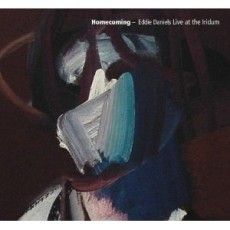
Eddie Daniels was born on October 19, 1941 in New York City and grew up in the Brighton Beach neighborhood of Brooklyn. He became interested in jazz as a teenager when impressed by listening to the recordings of the musicians accompanying singers, such as Frank Sinatra. Eddie’s first instrument was the alto saxophone, started on clarinet at 13 and later received his Masters in Clarinet from Julliard. By 15 he would add the Newport Jazz Festival Youth Competition to what would become a long list of credits. By the time he entered college, he was playing alto, clarinet and adding tenor saxophone to his arsenal.
Daniels has led a variety of bands from small combos to orchestras and has toured worldwide, recorded and appeared on television. Since the 1980s he has focused mainly on the clarinet and in 1989 he won one of many Grammy awards for playing on the Roger Kellaway arrangement of “Memos From Paradise”.
Over the course of his career he has captured Down Beat Magazine’s International Critics New Star on Clarinet Award, played and recorded with the Thad Jones/Mel Lewis Orchestra at the Village Vanguard, George Benson, Joe Farrell, Johnny Hammond, Richard Davis, Yusef Lateef, Airto Moreira and Don Patterson Gordon Goodwin’s Big Phat Band. Clarinetist Eddie Daniels, who also plays saxophone, flute and piccolo, performs commissioned classical compositions, has revolutionized the blend of classical and jazz and continues to tour and record.
Daily Dose Of Jazz…
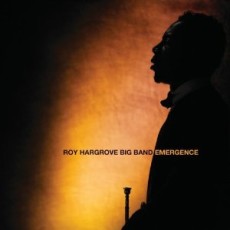
Roy Anthony Hargrove was born October 16, 1969 in Waco, Texas to parents who discovered his musical abilities as a young child. He received trumpet lessons and was greatly influenced by David “Fathead” Newman when Ray Charles’ band played at his junior high school. By high school his jazz potential was discovered by Wynton Marsalis during a visit to Dallas’s Booker T. Washington High School for the Performing and Visual Arts. He went on to spend a year at Berklee College of Music in Boston but was regularly found at jam sessions in New York and finally transferred to the New School there.
He first recorded with saxophonist Bobby Watson followed by the group “Superblue” with Watson, Mulgrew Miller and Kenny Washington. He released his first solo album “Diamond In The Rough” on Novus/RCA and followed with four more releases. In 1993 he was commissioned by the Lincoln Center Jazz Orchestra and composed “The Love Suite: In Mahogany”. Hargrove went on to record “Family” in 1995, and then, experimenting with other musicians, as part of a trio, the album Parker’s Mood, in 1995 with bassist Christian McBride and pianist Stephen Scott.
Roy has played with a host of stellar musicians including Shirley Horn, Joe Henderson, Stanley Turrentine, Johnny Griffin, Branford Marsalis, Joshua Redman, Herbie Hancock and Wynton Marsalis. He has stretched his limits performing and collaborating with D’Angelo, Common, Erykah Badu, Worldwide Underground and played on the film album Like Water For Chocolate.
Hargrove won two Grammy Awards, one being in 1998 for the album Habana with the Afro-Cuban band he founded, “Crisol”. He is also the leader of the progressive group “RH Factor” which combines elements of jazz, funk, hip-hop, soul and gospel and has also ventured into big band with his latest album “Emergence”. Trumpeter Roy Hargrove continues to compose, arrange, perform and tour until he passed away on November 2, 2018 in Mount Sinai Hospital, New York City.
More Posts: flugelhorn,trumpet
Daily Dose Of Jazz…
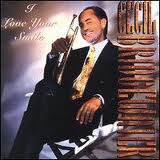
Cecil Bridgewater was born on Oct. 10, 1942 in Urbana, Illinois and studied music at the University of Illinois. Along with his brother Ron, they formed the Bridgewater Brothers Band in 1969. In 1970 he played with Horace Silver following this stint with a Thad Jones/Mel Lewis association from 1970 to 1976. During this period of the Seventies he married Dee Dee Bridgewater and played with Max Roach starting a decades-long association.
Cecil recorded his debut album “I Love Your Smile” in 1992, has enjoyed playing the sideman on some two dozen recordings with Dizzy Gillespie, Art Blakey, Randy Weston, Charles McPherson, Joe Henderson, Roy Brooks, Abdullah Ibrahim and Sam Rivers; and has composed works premiered by the Cleveland Chamber Orchestra and Meet the Composer.
Bridgewater has become a great supporter of The Jazz Foundation of America in their mission to save the homes and the lives of America’s elderly jazz and blues musicians including musicians that survived Hurricane Katrina. Cecil performed at the 2008 Benefit Concert, “A Great Night in Harlem” at the World Famous Apollo Theater. He continues to perform while currently teaching as adjunct faculty at Manhattan School of Music, New School, William Patterson and The Julliard School.
More Posts: trumpet
Daily Dose Of Jazz…
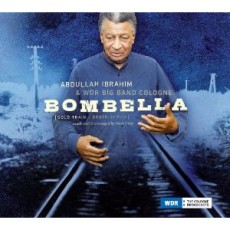
Abdullah Ibrahim was born October 9, 1934 in Cape Town, South Africa, formerly known as Adolph Johannes Brand, and as Dollar Brand. He first received piano lessons at age seven, was an avid consumer of jazz records brought by American sailors, and was playing jazz professionally by 1949. In 1959 and 1960, he played alongside Kippie Moeketsi and Hugh Masekela with The Jazz Epistles in Sophiatown, later recording the first jazz LP by Black South African musicians in 1960. Ibrahim then joined the European tour of the musical King Kong.
Moving to Europe in 1962, it was in the following year that Duke Ellington heard the Dollar Brand Trio at Zurich’s Africana Club at the request of Brand’s wife-to-be Sathima Bea Benjamin. As a result, Duke Ellington presents The Dollar Brand Trio was recorded at Reprise followed by a second session of the trio with Duke Ellington and Billy Strayhorn also on piano performing with Sathima as the vocalist. The recording, A Morning In Paris, remained unreleased until 1996 and then under Benjamin’s name. This led to wider appearances of the Dollar Brand Trio at many European festivals, as well as on radio and television.
Ibrahim has toured mainly in Europe, the United States, and South Africa, the band performing mainly in concert and club settings, and sometimes playing solo piano. Mainly playing the piano, he also plays the flute, saxophone, and cello, performing mostly his own compositions, although he sometimes performs pieces composed by others.
Abdullah Ibrahim to date has recorded more than forty albums as a leader, has written the soundtracks for a number of films, Chocolat and No Fear, No Die; and was a part of the 2002 documentary Amandla! – A Revolution in Four Part Harmony where he and others recalled the days of apartheid. He has ventured into orchestral performances with the inauguration of Nelson Mandela and the later initiation of the 18-piece Cape Town Jazz Orchestra in 2006.
A pianist and composer, Abdullah Ibrahim’s music reflects many of the musical influences of his childhood in the multicultural port areas of Cape Town, ranging from traditional African songs to the gospel of the AME church and ragas, to more modern jazz and other Western styles reflecting the influences of Thelonious Monk and Duke Ellington. He continues to perform, record and tour.
Daily Dose Of Jazz…
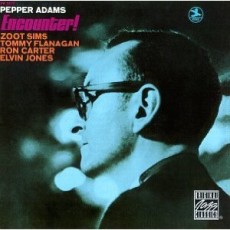
Park “Pepper” Adams III was born on October 8, 1930 in Highland Park, Michigan. His family moved to Rochester, New York when he was young and it was here that he began his musical endeavors. At 16 he moved back to Detroit and met several musicians who would later be important to his career, including trumpeter Donald Byrd. Adams became interested in Wardell Gray’s approach to the saxophone and later named Gray and Harry Carney as his influences.
After his Army band stint and a brief tour in Korea, Pepper moved to New York and recorded the “Dakar” album with Coltrane, with Lee Morgan on “The Cooker”, and briefly worked with Benny Goodman ‘s band in 1958. During this time, Adams also began working with Charles Mingus, performing on one of Mingus’s finest albums from this period, “Blues & Roots” and sporadically recording with Mingus until his death in 1979.
Adams would become a significant member of the Thad Jones/Mel Lewis Big Band from 1965 to 1978, and continued to record Jones’s compositions on many of his own albums. Adams also co-led a quintet with Donald Byrd that produced the live date, “10 to 4 at the 5 Spot” featuring Elvin Jones.
Pepper Adams, the baritone saxophonist nicknamed “The Knife” for his hearty tone, driving rhythmic sense, and big and intense sound that fit well in the up-tempo of hard bop, is considered, along with Gerry Mulligan, as setting the foundation for contemporary playing on the baritone. He died of lung cancer in Brooklyn, New York on September 10, 1986.
More Posts: saxophone