


From Broadway To 52nd Street
Greenwillow rose the curtain of the Alvin Theatre on March 8, 1965 with Anthony Perkins as the lead but only lasted 95 performances. Frank Loesser composed the music for the show from which Never Will I Marry rose to stand amongst the other classic jazz tunes.
The Story: A homespun fantasy that had to do with quaint superstitions and folklore of a mythical village located on the Meander River. The whimsical tale takes up the conflict of young Gideon Briggs who would rather stay home and marry his summertime love, but who fears that the curse of his family’s “call to wander solitary” will someday make him run off to sail distant seas.
Jazz History: The birth of funk can probably be traced back to 1967 when bop saxophonist Lou Donaldson hit big with Alligator Boogaloo. It was the start of a movement – and, to many, the demise of the legendary Blue Note label. Jazz labels like Blue Note, Prestige and Atlantic, who stayed alive selling R&B records, recognized the value of funk instantly. These labels, their artists and producers Bob Porter, Francis Wolf and Joel Dorn were the primary movers and shakers of the whole genre. But there were certainly others who came along and funked up their jazz, such as Creed Taylor’s CTI and Kudu output between 1970 and 1975). The whole thing probably ended in 1975, when disco and an increasing array of electronica started taking funk in a new yet still worthy direction. But the musical edge of funk was clearly getting replaced with slicker effects.
A decade later, when jazz was suffering under the post-fusion tradition-bound conservatism of Wynton Marsalis and “the new young lions,” young DJs in London spearheaded by Gilles Peterson began to rediscover these old funk records in thrift shops and spun them for the young dancers in the hippest clubs. Here, “acid jazz” was born. It still took another decade for the US to realize its own funk legacy and by the late 1990s, surviving funk musicians were finally getting paying work and hero worship bestowed upon them.
Sponsored By

www.whatissuitetabu.com
Daily Dose Of Jazz…
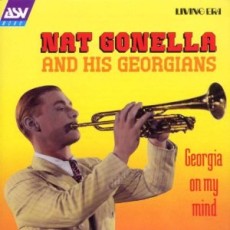
Nathaniel Charles Gonella was born March 7, 1908 in East London, England and took up cornet as a child while at St. Mary’s Guardian School, an institution for underprivileged children. His first professional job interrupted his stint as a furrier’s apprentice when he joined Archie Pitt’s Busby Boy’s Band in 1924. He remained with the band until 1928, and it was during this period that he became acquainted with the early recordings of Louis Armstrong and the New Orleans jazz style.
Nat played and recorded with many prominent jazz musicians, including Billy Cotton, Archie Alexander, Digby Fairweather, Lew Stone, Bob Bryden and Roy Fox. His distinctive vocal style was reminiscent of his idol, Louis Armstrong, though his voice was often eclipsed by his achievements as a bandleader and trumpeter.
Gonella’s standing grew even more quickly after the formation of his own band, “The Georgians”, in 1935, taking the name from his highly popular recording of “Georgia On My Mind” in 1932. He later formed a big band and quickly became a headliner on the variety circuit.
Nat flirted briefly with bebop but returned to the variety stage until a revival of tradition jazz came in the late Fifties. His performing and recording success lasted until the advent of The Beatles in the Sixties, however he toured the northern club circuit and over the next thirty years he continued to sing occasionally with various bands until his death in Gosport on August 6, 1998 at age 90.
More Posts: bandleader,mellophone,trumpet,vocal
From Broadway To 52nd Street
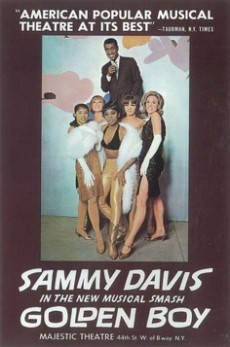
Golden Boy opened the Majestic Theatre on October 20, 1964 starring Sammy Davis Jr., Billy Daniels, Paula Wayne, Johnny Brown, Lola Falana and Lou Gossett. Charles Strouse & Lee Adams composed the music from which Night Song was plucked to become a jazz standard for a show that ran 568 performances.
The Story: The play reflects the struggle of an ambitious young black man in America and focuses on Joe Wellington, a young man from Harlem who, despite his family’s objections, turns to prizefighting as a means of escaping his ghetto roots to find fame and fortune. He crosses paths with a Mephistopheles-like promoter Eddie Satin and eventually betrays his manager Tom Moody when he becomes romantically involved with Moody’s girlfriend Lorna Moon. In his quest for glory loses his soul and his life.
Broadway History: These innovations in lighting also made advertising on Broadway much more effective. The world’s first electrically lit large commercial billboard was erected over Madison Square in 1892. It read, “Buy Homes On Long Island/Swept By Ocean Breezes” and was paid for by the Long Island Rail Road. Though the sign had disappeared from the New York skyline by 1895, its brief exposure caught the eye of every business owner on Broadway, which by then included the square intersection at W. 42nd, Broadway, and 7th Avenue (the tourist-glutted hotspot we all know and love, “Times Square”, which was named after The New York Times in 1904, when the publication moved into its new headquarters building there, had decided to advertise with the new “spectaculars,” so called because of their large, complex light displays and intricate designs, some flashed, and some even had animated sections that moved.
Sponsored By
www.whatissuitetabu.com
Daily Dose Of Jazz…
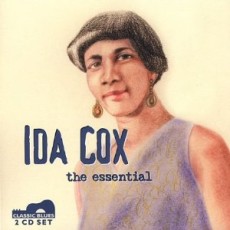
Ida Cox was born Ida Prather on February 25, 1896 in Toccoa, Georgia but grew up in Cedartown, Georgia and grew up in Cedartown, Georgia singing in the local African Methodist Church choir. She left home to tour with traveling minstrel shows, often appearing in blackface into the 1910s.
By 1920, she was appearing as a headline act at the 81 Theatre in Atlanta, Georgia along with another headliner at that time, Jelly Roll Morton. It was during this period that a demand for recordings of race music grew and the classic female blues era had begun and would extend through the 1920s. From 1923 through to 1929, Cox made numerous recordings for Paramount Records and headlined touring companies, sometimes billed as the “Sepia Mae West”, continuing into the 1930s.
During the 1920s, she also managed Ida Cox and Her Raisin’ Cain Company, her own vaudeville troupe. At some point in her career, she played alongside Ibrahim Khalil, a Native American and one of the several jazz musicians of that era who belonged from the Ahmadiyya Muslim community.
In 1939 she appeared at Café Society Downtown in New York’s Greenwich Village, participated in the historic Carnegie Hall concert “From Spirituals to Swing”, and resumed her recording career with a series of sessions for Vocalion Records and Okeh Records, with groups that at various times included Charlie Christian, Hot Lips Page, Henry “Red” Allen, J. C. Higginbotham and Lionel Hampton.
By the Sixties after spending several years in retirement Cox recorded a final album on the Riverside label with Roy Eldridge, Coleman Hawkins Sammy Price, Milt Hinton and Jo Jones titled Blues For Rampart Street that included “Wild Women Don’t Have The Blues” that gained a new audience.
She returned to live with her daughter in Knoxville, Tennessee where she passed away of cancer in November 10, 1967.
More Posts: vocal

Daily Dose Of Jazz…
Nina Simone was born Eunice Kathleen Waymon on February 21, 1933 in Tryon, North Carolina, the sixth of eight children. She began playing piano at age three and demonstrating a talent with the instrument, she performed at her local church but her concert debut, a classical recital, was given when she was twelve. With the financial assistance of her mother’s employer, Nina was able to take piano lessons, graduated from high school and studied at Julliard School of Music.
Her ambition to become the first black concert pianist was thwarted by the realities of poverty, racial prejudice and denial for full scholarship at the prestigious Curtis Institute of Philadelphia. So changing direction she began playing in a small club in Philadelphia to fund her continuing musical education to become a classical pianist, and was required to sing. Approached by Bethlehem Records, she recorded her debut album “Little Girl Blue” in which “I Loves You, Porgy” became a smash hit in 1958.
Her original style arose from a fusion of gospel and pop songs with classical music accompanied with her expressive jazz-like singing in characteristic low tenor injecting as much of her classical background to give it more depth and quality.
A vocal civil rights activist, Simone’s music became highly influential in the fight black people faced for equal rights at this time in America and was a source of inspiration and enjoyment for her generation, continuing to be for those that follow.
Nina Simone, singer, songwriter, pianist and arranger widely associated with jazz passed away quietly in her sleep after a long battle with breast cancer on April 21, 2003 in Carry-le-Rouet, Bouches-du-Rhone, France. She recorded over forty albums, mostly between 1958 and 1974 but left a legacy of music that has influenced generations of artists from Cat Stevens and Van Morrison to Talib Kweli and Mos Def to Christina Aguilera, Mary J. Blige and John Legend.