

Daily Dose Of Jazz…
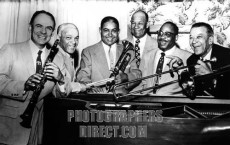
Wallace Bishop was born February 17, 1906 in Chicago, Illinois and started on drums as a teenager, studying under Jimmy Bertrand. His first professional gig was with Art Sims and his Creole Roof Orchestra in Milwaukee in 1926. Around this time he also played with Jelly Roll Morton, Bernie Young, Hughie Swift, Richard M. Jones and Tommy Dorsey.
Often addressed as “Bish”, from 1928 to 1930 he played with Erskine Tate followed with the Earl Hines Orchestra from 1931-1937. By the 1940s he was playing with Jimmie Noone, Coleman Hawkins, Don Redman, Phil Moore, Foots Thomas, John Kirby and Sy Oliver among others.
While touring Europe with Buck Clayton in 1949, Wallace elected to remain there, and found work both with noted European jazz musicians and with touring or expatriate Americans, including Bill Coleman, Don Byas, Ben Webster, Kid Ory, Milt Buckner, Buddy Tate and T-Bone Walker. Bishop recorded only two pieces as a bandleader in 1950, with a trio, but he continued to record regularly into the 1970s.
Wallace Bishop, a subtle and supportive jazz drummer who was one of the finest drummers of the swing era, passed away on May 2, 1986 in Hilversum, Holland.
From Broadway To 52nd Street
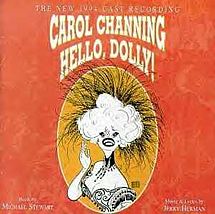
Hello Dolly opened at the St. James Theatre on January 16, 1964 with music composed by Jerry Herman. The show starred Carol Channing & David Burns, Eileen Brennan, Sondra Lee and Charles Nelson Reilly, running for a record 2,844 performances landing it amongst the grand collection of blockbuster hits. It was revived in 1967 with Pearl Bailey & Cab Calloway in the lead roles and in 1969, Barbra Streisand & Walter Matthau took the characters to the silver screen. The title song Hello Dolly and It Only Takes A Moment went on to become a part of the jazz catalogue.
The Story: At the turn of the 20th century in New York City, a brassy and intrepid matchmaker Dolly Galagher Levi is in town to find wealthy Horace Vandergelder a wife. However, unbeknownst to Horace, Ms. Levi has her sights set on him herself. While helping two rich pretenders to find love, Dolly finds romance and a husband for herself in this spoof on love and marriage.
Broadway History: Broadway, previously the home to jazz influenced choreographers like Cole, Fosse, and Robbins, saw a part of its nature change to reflect the mood of the country. While there were still blockbuster musicals of the old type – like My Fair Lady, Hello Dolly, Mame – a new generation of musicals reflected the changes in American society, and dance. Hair was a depiction of the rebellious nature of the hippie movement. And Fosse, that champion of syncopated, tap and minstrel based movement, absorbed the new 60s feel of dance with his hit musical Sweet Charity. In this show, Fosse based much of his movement on the social dances of the 1960s, while injecting his own unique brand of style and angular movement and jutting body parts. The movements of jazz dance had evolved to absorb the blossoming social scene. Broadway was no longer the spawning ground for theatrical jazz dance. It had become a pastiche of old standard styles and movements, and an incubator for a new form of jazz dance.
Sponsored By

www.whatissuitetabu.com
Daily Dose Of Jazz…
Herbert Lee “Peanuts” Holland was born on February 9, 1910 in Norfolk, Virginia. Holland learned to play trumpet at the Jenkins Orphanage. A veteran of the Alphonse Trent territory band with whom he recorded and played with from 1928 to 1933, he also played with Al Sears, the Jeters-Pillars Orchestra, Willie Bryant Jimmie Lunceford and Lil Armstrong’s band.
In 1938 Peanuts led his own very successful band prior to moving to New York City the following year. There he joined the big bands of Coleman Hawkins and Fletcher Henderson. Through the first half of the Forties he was part of Charlie Barnet’s band and in 1946 with Don Redman toured Europe.
Holland elected to stay in Europe living in Paris and Stockholm and performing with his own small combo. He amassed a catalog of 46 recordings for European labels between 1946 and 1960 regularly working with such jazz names as Mezz Mezzrow, Don Byas, Billy Taylor and Claude Bolling.
Jazz trumpeter Peanuts Holland best known for his contributions to swing jazz, passed away on February 7, 1979 in Stockholm, Sweden, just two days shy of his 69th birthday.
From Broadway To 52nd Street
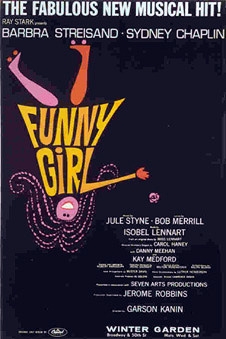
Funny Girl opened at the Winter Garden Theatre on March 26, 1964 and entered into the fraternity of blockbuster musicals with 1,348 performances. Jule Styne & Robert Merrill composed the music and from the score came the classic tune People, that became a hit long before it premiered on Broadway performed by Barbra Streisand. Joining her in the cast of players were Sydney Chaplin, Jean Stapleton and Lainie Kazan.
The Story: The early years of Ziegfield Follies star Fanny Brice in which Streisand recreates her Broadway triumph. She reminisces about her life as she wanders back to the days of Keeney’s Music hall, her eventual success and the two men in her life. There’s Flo Ziegfeld, who makes her a star and Nicky Arnstein, a gambler, who she marries. Her career flourishes as Nicky’s gambling and prison sentence destroy her marriage. She sings, roller-skates, cracks jokes, loves & marries a gambler, and tugs at your heart in a tour-de-force performance)
Jazz History: The Sixties was the most tumultuous decade in the history of America and the changes were reflected in jazz. Many musicians were falling under the modal-jazz spell of Miles Davis’ Kind of Blue, and the free-jazz influence of saxophonist Ornette Coleman; John Coltrane performs in concert as a member of Miles Davis’ group for the last time, riots break out at the Newport Jazz Festival and Max Roach begins to record his Freedom Now! Suite. The country saw John F. Kennedy elected as the youngest President in U.S. history, we lived the Cuban missile crisis, student sit-ins and segregation protests at restaurants, and the San Francisco Chronicle reports that Dave Brubeck lost $40,000 in bookings from a month-long tour of U.S. southern states because he refused to drop African-American bassist Eugene Wright from his group.
Sponsored By
www.whatissuitetabu.com
Daily Dose Of Jazz…
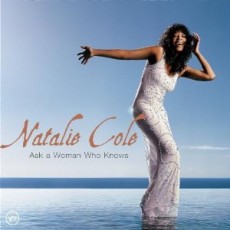
Natalie Maria Cole was born February 6, 1950 in Los Angeles, California the daughter of Nat King Cole and former Ellington Orchestra singer Maria Cole. Exposed to a host of great singers as a child, she first sang on her father’s Christmas album at six and began performing at 11. At 15 she attended Northfield Mount Hermon School followed by University of Massachusetts – Amherst, transferred to University of Southern California, returned to U Mass and graduated with a degree in Child Psychology and a minor in German.
While in college Natalie was singing on weekends and was welcomed on the club circuit in hope of singing her father’s music. However she stayed as far from his music as managers would allow and it was her own style of soul that attracted R&B producers Chuck Jackson and Marvin Yancy. The subsequent partnership produced 1975’s “Inseparable” that garnered her a Grammy for Best R&B Vocal Performance for “This Will Be” and Best New Artist for the album. She returned to pick up Grammy awards in 1976 and 1977 along with two platinum albums and gold singles.
By 1978, she would star in her first television special on CBS to rave reviews and garnered another gold album in the classic Natalie Live set. A string of hits followed with more gold albums but by the early 80s Cole’s career paused as she entered rehab multiple times for heroin and cocaine addiction.
1985 saw her back in good health and on the comeback trail hitting the charts with songs like “Dangerous” and “Pink Cadillac” through the decade culminating with a 1990 performance of “Wild Women Do” on the soundtrack of Pretty Woman. In 1991 she returned to her vocal jazz roots producing her best selling album “Unforgettable…with Love” covering 22 of her father’s greatest hits, again winning several Grammy awards. Her release of several more jazz CDs brought her more recognition with the album “Take A Look” winning a Grammy for Best Jazz Vocal Performance and “When I Fall In Love” from her Stardust album won a 1996 Grammy.
Natalie Cole has received numerous other awards and accolades, has carved out a secondary career in acting both on television and the silver screen, appeared live in concerts or other music-related programs and continued to record and perform until her passing away of congestive heart failure on December 31, 2015.
More Posts: vocal