

From Broadway To 52nd Street
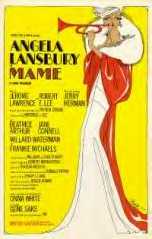
Mame raised the curtain to the stage lights of the Winter Garden Theatre on May 24, 1966 with Jerry Herman composing the music sung by the stars of the show Angela Lansbury, Frankie Michaels and Beatrice Arthur. The musical, also a blockbuster, had a total of 1,508 performances. From this play came the hit tune If He Walked Into My Life.
The Story: Set in New York and spanning the Great Depression and World War II, it focuses on an eccentric bohemian, Mame Dennis, whose famous motto is “Life is a banquet and most poor suckers are starving to death.” Her fabulous life with her wealthy friends is interrupted when the young son of her late brother arrives to live with her. They cope with the Depression in a series of adventures.
Jazz History: In 1966 Duke Ellington recorded Far East Suite for RCA; John Coltrane married Alice McCleod, who replaced McCoy Tyner as his pianist; alto saxophonist Cannonball Adderley records Joe Zawinul’s Mercy, Mercy, Mercy! live on Blue Note; pianist Keith Jarrett performs with the Charles Lloyd Quartet; the Roscoe Mitchell Sextet records Sound in August with members of Chicago’s AACM community; drummer Buddy Rich starts up a big band which would last about twenty years; bop piano immortal Earl “Bud” Powell dies on July 31st; on October 3, Dave Lambert of Lambert, Hendricks and Ross fame is struck by a car and killed instantly while trying to help a fellow motorist on the Connecticut Turnpike; and trumpeter Chet Baker is severely beaten on the streets of San Francisco, an event related to his drug addiction while his wife Carol Baker was in the hospital for the birth of their youngest child, Missy.
Sponsored By

www.whatissuitetabu.com
Daily Dose Of Jazz…
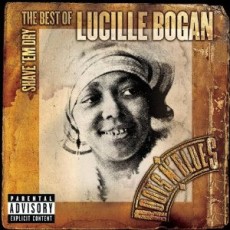
Lucille Bogan was born in Amory, Mississippi on April 1, 1897 but was raised in Birmingham, Alabama and at age five she was named Lucille Anderson. In 1916 she married railway man Nazareth Lee Bogan and she received her training singing in the rowdiest juke joints of the 1920s. She first recorded vaudeville songs in New York for Okeh Records in 1923. That same year she recorded “Pawn Shop Blues” in Atlanta, which was the first time a black blues singer had been recorded outside New York or Chicago.
Among the first blues singers to be recorded, in 1927 Lucille signed with Paramount Records in Chicago, recording her first big success, “Sweet Petunia”, later covered by Blind Blake. By 1930 her recordings had begun to concentrate on drinking and sex, with songs such as “Sloppy Drunk Blues”, “Tricks Ain’t Walkin’ No More” and “Black Angel Blues” later covered by B. B. King as “Sweet Little Angel”. She would later record for Brunswick Records.
Many of Bogan’s songs, most of which she wrote herself, have thinly-veiled humorous sexual references with the theme of prostitution featured prominently in several of her recordings. In the early Thirties Lucille returned to New York and recorded prolifically under the pseudonym Bessie Jackson until the middle of the decade. Lucille Bogan does not appear to have recorded after 1935, spending some time managing her son’s jazz group, Bogan’s Birmingham Busters, before moving to Los Angeles, where she died on August 10, 1948 from coronary sclerosis.
More Posts: vocal
Daily Dose Of Jazz…
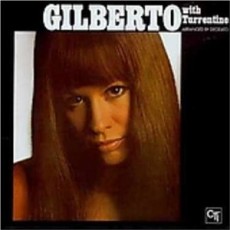
Astrud Gilberto was born Astrud Weinert on March 30, 1940 in the state of Bahia and raised in Rio de Janiero, the daughter of a Brazilian mother and a German father, She married Joao Gilberto in 1959, emigrating to the United States in 1963 and has continued to reside in the US ever since. They divorced in the mid-1960s and she began a relationship with her musical partner, Stan Getz.
Although now widely known for her samba and bossa nova music, she had never sung professionally and it was at the behest of her husband Joao that she sang on the recording of the Getz/Gilberto album featuring Stan Getz, Joao Gilberto and Antonio Carlos Jobim. Providing the English vocals to the 1965 Grammy Award-winning song “The Girl From Ipanema”, and her career was launched garnering her worldwide recognition and establishing her as a jazz and pop singer.
Her first solo album was The Astrud Gilberto Album in 1964, went on tour with Stan Getz singing bossa nova and American jazz standards, Gilberto didn’t start to record her own compositions until the 1970s. Her repertoire included such standards as “The Shadow Of Your Smile”, “It Might As Well Be Spring”, “Love Story”, “Fly Me To The Moon”, “Day By Day”, “Here’s That Rainy Day” and “Look to the Rainbow”.
Astrud has recorded songs in Portuguese, English, Spanish, Italian, French, German and Japanese, has received the “Latin Jazz USA Award for Lifetime Achievement”, inducted into the “International Latin Music Hall of Fame”, contributed to the Aids benefit album Red Hot + Rio, has had numerous versions of her songs sampled and used in movies, is a fine artist and ardent animal rights advocate.
More Posts: vocal

From Broadway To 52nd Street
The Roar Of The Greasepaint – The Smell Of The Crowd opened its season at the Shubert Theatre on May 16, 1965 and ran for 231 performances. Leslie Bricusse and Anthony Newley composed the music with the later starring alongside Cyril Ritchard. From these two talented lyricist and composer, Who Can I Turn To and Look At That Face entered the lexicon of jazz standards.
The Story: The allegorical plot examines the maintenance of the status quo between the upper and lower classes of British society in the 1960s. Since Sir forever is changing the rules of the game of life, downtrodden young Cocky always gets the short end of the stick. Assisting Sir is his eager disciple Kid, anxious to pick up bits of wisdom while helping keep Cocky in his place.
Broadway History: Musical theatre is a form of theatrical performance that combines songs, spoken dialogue, acting, and dance. The story and emotional content of a musical may have humor, pathos, love, anger and are communicated through the words, music, movement and technical aspects of the entertainment as an integrated whole. Although musical theatre overlaps with other theatrical forms like opera and dance, it may be distinguished by the equal importance given to the music as compared with the dialogue, movement and other elements. Since the early 20th century musical theatre stage works have generally been called, simply, musicals.
Sponsored By
www.whatissuitetabu.com
Daily Dose Of Jazz…
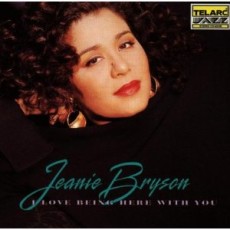
Jeanie Bryson was born March 10, 1958 in New York City, the daughter of songwriter Connie Bryson and Dizzy Gillespie. While matriculating through Rutgers University and studying with jazz pianist Kenny Barron, she began to be increasingly influenced by jazz.
Bryson has performed throughout North and South America, Europe, Israel and Japan and has received international critical acclaim. In addition to her own recordings on Telarc, Bryson has recorded with Etta Jones, Larry Coryell, Grover Washington Jr., Terence Blanchard and Kenny Burrell among others.
Her vocals are a combination of jazz, pop and Latin music and her repertoire is firmly rooted in The Great American Songbook and she has paid tribute to the legacies of Peggy Lee and Dinah Washington. Her “Déjà Blue” project showcased the velvet, sweet, laid-back and melodic voice.
While she continues to perform Jeanie is working on her newest project, “The Dizzy Gillespie Songbook”, a loving and fitting tribute that celebrates her father’s life, his music, and his legacy. She continues to perform and record.
More Posts: vocal