

Daily Dose Of Jazz…
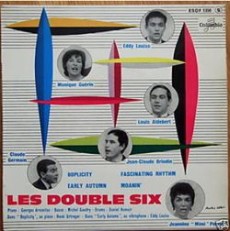
Jeannine “Mimi” Perrin was born February 2, 1926 in France and began private music instruction including piano as a child and pursued English studies at the Sorbonne. Recovering from tuberculosis, in 1949 she hit the French jazz scene in the cabarets of Saint-Germain-des-Pres and came to prominence with her trio. Towards the end of the 50s she worked as a studio background vocalist but was also a member of Blossom Dearie’s vocal group Blue Stars of France.
In 1959, she formed the vocal sextet Les Double Six, alluding to the fact that the group used overdubbing in the studio to sing twelve-part songs. The group became successful in the Sixties patterning itself to the vocalise of King Pleasure and Lambert, Hendricks & Ross. Mimi toured her group throughout Europe and North America recording with Quincy Jones, Dizzy Gillespie and Ray Charles.
Perrin was the leader and principal soloist in the group and established herself as a soloist and one of the great jazz singers with John Coltrane’s “Naima”. A later group, founded in 1966 by Perrin, did not achieve her previous success, and she abandoned music after another bout of tuberculosis.
From 1972 onwards, she worked as a translator of science fiction and fantasy and in the 1980s and 1990, she translated such novels Dean Koontz and John LeCarre as well as Alice Walker’s The Color Purple, along with the biographies of Nina Simone, Dizzy Gillespie, Quincy Jones and Steven Spielberg. Vocalist and pianist Mimi Perrin passed away on November 16, 2010 in Paris, France.
From Broadway To 52nd Street
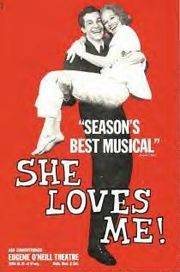
She Loves Me opened the Eugene O’Neill Theatre on April 23, 1963 and the show ran for 301 performances. Sheldon Harnick penned the lyrics and Jerry Bock composed the music to the tune She Loves Me which has entered into the pantheon of jazz standards. The musical starred Barbara Cook, Daniel Massey, Barbara Baxley and Jack Cassidy.
The Story: Set in Hungary in the late 1930s, the story follows two coworkers George and Amalia who unwittingly meet through a Lonely Hearts column. As the two anonymously write love letters to each other, things don’t go so well at work. Not knowing that they are each other’s pen pal, they constantly fight. Further Georg’s boss, Mr. Maraczek, who thinks George is having an affair with his wife, constantly criticizes George at work. Eventually, the boss realizes that another clerk is having the affair. In the end Georg and Amalia discover that they are each other’s pen pal and they fall in love.
Broadway History: The alternative theatre movement aimed to break these commercial and psychological restraints by bonding spectator and audience and by lessening the theatrical illusion of an imagined space and time. Conventional theatre taught the spectator to lose himself in the fictional onstage time, space, and characters; conversely, alternative theatre relied on the spectator’s complete consciousness of the present. This present is the real time and space shared by the audience and the performers; only when the audience consciously perceives the present can they perceive the theatrical experience as relevant to their lives, and not as escapist fiction. The primary importance of the spectator’s consciousness of the present is that he is an active force in creating the theatrical event rather than a passive observer of a ready-made production.
Sponsored By

www.whatissuitetabu.com
From Broadway To 52nd Street
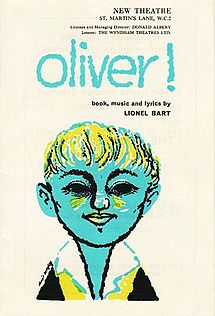
Oliver! opened at the Imperial Theatre on January 6, 1963 and ran 774 performances. Lionel Bart wrote the book and the lyrics and composed the music. One of his songs, Where Is Love became a jazz favorite.
The Story: Musical adaptation of Dickens story in which a young Oliver, an orphan in a workhouse, asks for more of the meager gruel from a surprised matron. Punished for beating up another boy who made fun of his dead mother and locked in a coffin but he escapes. Living on the streets of London he is befriended by the Artful Dodger who introduces him to Fagin, a criminal teaching young boys to become pickpockets. The thieving children are manipulated by their leader and mentor Fagin, and the young Oliver, who through circumstances is forced into a life of crime. Greed of the workhouse caretakers leads to Oliver’s ultimate rescue by a kindly old gentleman who realizes Oliver is his great nephew. The musical, as is the book, was a powerful statement on the 19th century poverty, crime and government neglect crying out for social reform.
Jazz History: By the 1960s, most of the legendary clubs were razed or fell into disrepair. The last club there closed its doors in 1968. Today, the street is full of banks, shops, and department stores and shows little trace of its jazz history. The block from 5th to 6th Avenues is formally co-named “Swing Street” and one block west is called “W. C. Handys Place”.
The 21 Club is the sole surviving club on 52nd Street that also existed during the 1940s. The venue for the original Birdland at 1674 Broadway (between 52nd & 53rd), which came into existence in 1949, is now a “gentlemen’s club”. The current Birdland is on 44th Street, between 8th and 9th Avenues.
Sponsored By
www.whatissuitetabu.com
From Broadway To 52nd Street
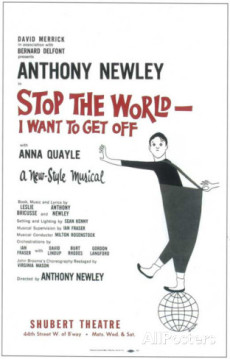
Stop The World I Want To Get Off opened at the Shubert Theatre on October 2, 1962. Running for 555 performances The music and lyrics were composed by Leslie Bricusse and Anthony Newley. The musical starred Anthony Newley as Littlechap and Anna Quayle portrays Evie. Fortunately for the jazz world one of their tunes would enter the pantheon of jazz classics – What Kind Of Fool Am I.
The Story: Set against the backdrop of a circus, it focuses on Littlechap, whose first major step towards improving his lot is to marry Evie, his boss’ daughter. Saddled with the responsibilities of a family, he allows his growing dissatisfaction with his existence to lead him into the arms of various women – Russian Anya, German Ilse, and American Ginnie – as he searches for something better than he has, only to realize in the twilight of his life what he always had – the love of his wife – was more than enough to sustain him.
Broadway History: In 1950, the tradition of the gypsy robe was born on Broadway, when a chorus member in Gentlemen Prefer Blondes sent the worn-out robe of a fellow chorus member to a friend in a different production. Since then, the robe has been passed to the chorus member with the most credits on the opening night of Broadway plays, with each former “gypsy” adding a prop from his or her performance.
Sponsored By
www.whatissuitetabu.com
Daily Dose Of Jazz…
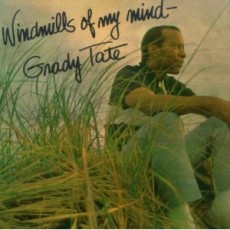
Grady Tate was born January 14, 1932 in Durham, North Carolina who began singing at age four, drums at five. However music was not in his immediate future as he earned a degree from North Carolina Central University with a degree in English literature/drama, a minor in psychology and taught English and speech in Washington, DC. Fortunately for the jazz world his desire to pursue an acting career lead him to New York City and the American Academy of Dramatic Arts and once in New York his reputation as an outstanding musician resulted in work with Quincy Jones.
Grady Tate’s drumming helped to define a particular hard bop, soul jazz and organ trio sound during the mid 1960’s and beyond. His slick, layered and intense sound is instantly recognizable for its understated style in which he integrates his trademark subtle nuances with sharp, crisp “on top of the beat” timing (in comparison to playing slightly before, or slightly after the beat). The Grady Tate sound can be heard prominently on the many classic Jimmy Smith and Wes Montgomery albums recorded on the Verve label in the 1960s.
He has been a member of the New York Jazz Quartet, the Tonight Show with Johnny Carson for six years, and his most widely heard vocal performances are the songs “I Got Six”, “Naughty Number Nine”, and “Fireworks” from Multiplication Rock and America Rock part of the Schoolhouse Rock series.
Grady Tate’s popularity as choice sideman of accomplished musicians is due to his remarkable intuitiveness and ability to make any style of music swing tastefully, and his interpretation of many different genres of music, in which he creates his own unique style of jazz led him to work with a host of talent, the short list including Lionel Hampton, Sarah Vaughan, Jimmy Smith, Grant Green, Stanley Turrentine, Lena Horne, Astrud Gilberto, Ella Fitzgerald, Cal Tjader, Bill Evans and Stan Getz.
Grady Tate, baritone vocalist and drummer has been on the faculty of Howard University since 1989.