

Daily Dose Of Jazz…
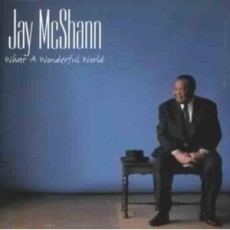
Jay McShann, born James Columbus McShann on January 12, 1916 in Muskogee, Oklahoma began played the piano from the age of 12. His primary education came from Earl “Fatha” Hines late-night radio broadcasts from the Grand Terrace Café. Leaving home he spent time at college and working with bands throughout Oklahoma, Arkansas, Arizona and New Mexico.
In the 1930 Jay moved to Kansas City working with both local groups and his own band with his 1938 band comprised of Charlie Parker, Bernard Anderson, Al Hibbler, Paul Quinichette, Earl Coleman, Ben Webster and Walker Brown, creating a music that would become known as the Kansas City sound.
Nicknamed Hootie, it was during the 1940s that he stood at the forefront of the blues and hard bop jazz musicians mainly from Kansas City. His first recordings were all with Charlie Parker, the first as “The Jay McShann Orchestra” on August 9, 1940. After World War II he began to lead small groups featuring blues shouter Jimmy Witherspoon. Witherspoon started recording with McShann in 1945, and fronting McShann’s band, and had a hit in 1949 with “Ain’t Nobody’s Business”.
Jay McShann was inducted into the Blues Hall of Fame, was nominated twice for a Grammy Award, performed regularly with violinist Claude Williams and continued to recording and touring into the nineties around Kansas City and Toronto, Ontario. The blues and jazz pianist Jay McShann, whose career spanned more than sixty years, passed on December 7, 2006, at St. Luke’s Hospital in Kansas City.

From Broadway To 52nd Street
No Strings opened the curtain at the 54th Street Theatre on March 15, 1962 and ran for 580 performances. The musical starred Richard Kiley and Diahann Carroll performing music composed by Richard Rodgers, and The Sweetest Sounds and Loads of Love went on to become part of the classic jazz lexicon.
The Story: In Paris, David Jordan, a prize-winning writer suffering from a long dry spell meets a black model, Barbara Woodruff. Their budding romance wilts when David learns that a wealthy admirer has kept Barbara. Later they resume their affair but after recognizing that an interracial marriage would be doomed, they go their separate ways.
Jazz History: When trumpeter Miles Davis, under the influence of James Brown, Sly Stone, and Jimi Hendrix, crossed over to a new rock-inflected form with his influential Bitches Brew album in 1970, the new sub-genre of jazz-rock fusion gained jazz legitimacy for about a decade. Numerous graduates of Davis’ experiment—including pianists Herbie Hancock, Keith Jarrett, Joe Zawinul, and Chick Corea, drummers Tony Williams and Jack DeJohnette, percussionist Airto Moreira, saxophonist Wayne Shorter, guitarist John McLaughlin, and bassist Dave Holland—went on to success as leaders or members of 70s fusion super groups like Weather Report, Return to Forever, Lifetime, and the Mahavishnu Orchestra. Fusion was followed by a lighter, radio-friendly style called smooth jazz, which ultimately diminished the legitimacy of fusion in the minds of jazz purists. Fusion was innovative in its time, however, for it brought electronics and a strong backbeat into jazz, while influencing an entire new generation to begin exploring the style.
Sponsored By

www.whatissuitetabu.com
Daily Dose Of Jazz…
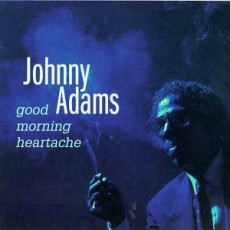
Laten John Adams was born in New Orleans, Louisiana on January 5, 1932 the oldest of ten children and became a professional musician after leaving school. He began his career-singing gospel with the Soul Revivers and Bessie Griffin’s Consolators, but crossed over to secular music in 1959. He recorded Dorothy LaBostrie’s “I Won’t Cry” on the RIC label and produced by teenager Mac Rebennack a.k.a. Dr. John who would later give him a #27 hit in 1962 with “A Losing Battle”.
In 1963, Adams went on to record for Modern Records and Watch Records with limited success until he signed with SSS International. Having three hits on the billboard charts and an album “Heart and Soul” he moved unsuccessfully to other labels like Atlantic and Ariola. During this period he held down a regular gig at Dorothy’s Medallion Lounge in New Orleans and toured the southern nightclub circuit.
In 1983 signing with Rounder Records, Johnny recorded a series of nine critically acclaimed albums beginning with “From the Heart” in 1984, encompassing a wide range of jazz, blues and R&B styles while highlighting Adams’ voice. By 1991 “The Real Me” album brought him a number of accolades, including a W.C. Handy Award. He began touring internationally, working and recording with such musicians as Aaron Neville, Harry Connick Jr. Lonnie Smith and Dr. John.
Johnny Adams, jazz, blues and gospel singer, passed away on September 14, 1998 in Baton Rouge, Louisiana after a long battle with prostate cancer.
More Posts: vocal

From Broadway To 52nd Street
How To Succeed In Business Without Really Trying opened the 46th Street Theatre on October 14, 1961 and ran for one thousand four hundred and seventeen performances landing it in the blockbuster musical hall of fame. Bob Fosse choreographed the musical to the Frank Loesser compositions performed by the stars of the show Robert Morse, Rudy Vallee, Bonnie Scott and Charles Nelson Reilly. From the show rose the song I Believe In You to become a jazz standard.
The Story: Based on the Pulitzer prize winning play, chronicles the rise of a window washer as he schemes, connives and plots his way to the top of the Worldwide Wicket Company. Foundation for the Michael J. Fox version of Secret of My Success)
Broadway History: In 1811, the city planners of New York City began a massive building execution of the grid, which is now a major characteristic of Manhattan. Broadway, as we know it, was born. All existing roads were redesigned according to this concept; only Broadway was spared. The theater district sits between the 41st and 53rd Street and between the Sixth and Ninth Avenues.
Some 40 theaters are immersed in a sea of light from the theaters’ neon signs, each advertising the latest performances; keeping the Broadway mythos alive. In the early years, Broadway began as a leader in the retail sector. The commercial draw is what really sparked growth in the area. The retail venues that lined the street attracted affluent patrons and created a centralized cultural environment over time. It is because of the retail area that Broadway really took off in the early 1900’s.
Sponsored By
www.whatissuitetabu.com
Daily Dose Of Jazz…
Arthur Prysock was born on January 2, 1929 on Spartanburg, South Carolina but was raised on a farm in North Carolina. He left home at 16, moved to Hartford, Connecticut and found work with an aircraft company during World War II until they discovered he was underage. He then found a day job as a cook, singing around town at night with a band.
In 1944 bandleader Buddy Johnson signed the baritone as a vocalist, singing on several Johnson hits on Decca Records and became a mainstay of the live performance circuits. By 1952 Prysock went solo, signed with Decca, recorded “I Didn’t Sleep a Wink Last Night” and in 1960s covered Ray Noble’s ballad “The Very Thought Of You” and “It’s Too Late Baby, It’s Too Late”. Signing with Verve Records he recorded “Arthur Prysock & Count Basie” and “A Working Man’s Prayer”.
In the seventies, he had a surprise disco hit with “When Love Is New” and in 1985, recorded his first new album in almost a decade, “Arthur Prysock” He gained further attention for his tender, soulful singing on a beer commercial, “Tonight, Tonight, Let It Be Lowenbrau”.
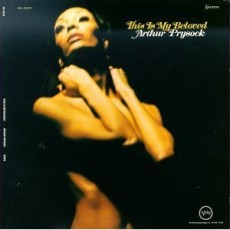
Over the course of a prolific 43-year career, Arthur, who had been influenced by Billy Eckstine, was seen primarily in front of big bands. He recorded nearly 60 albums for Mercury, Old Town, Milestone and Decca record labels, including the orated “This Is My Beloved”. In 1995 he received the Pioneer Award from the Rhythm and Blues Foundation.
His tender music has been a staple of jazz radio in the wee hours of the morning, and of cheek-to-cheek dancing in smoke-filled cocktail lounges. Arthur Prysock, the baritone romantic crooner that never lost his vocal strength, rich resonance or his deep, velvety tones, passed away on June 21, 1997.
More Posts: vocal