


Daily Dose Of Jazz…
Kurt Elling was born November 2, 1967 in Chicago, Illinois who first became interested in music through his father and growing up sang in choirs and played various musical instruments. As a child he listened to Tony Bennett, learned counterpoint from the motets of Bach and sang in his high school choir. He played violin, French horn, piano and drums but wasn’t exposed to jazz until he attended college listening to Dave Brubeck, Dexter Gordon, Herbie Hancock and Ella Fitzgerald among others. He went on to pursue a master’s in philosophy of religion but left one credit short to pursue a career as a jazz vocalist.
Kurt began to perform around Chicago in basement clubs and jam sessions, scat singing and improvising his own lyrics while working day jobs to survive. He started listening to the minimalism and emotion of Chet Baker and to Mark Murphy exposing him to the poetry of Jack Kerouac. He recorded a demo in the early 90s that resulted in signing with Blue Note and the subsequent releasing of seven albums with the label.
He has been nominated for nine Grammy Awards, winning Best Vocal Jazz Album for 2009’s Dedicated To You. He often leads the Down Beat critics poll and has been awarded the Prix Billie Holiday from the Académie du Jazz. Elling is a baritone with a four-octave range, a writer, and composer who performs vocalese. Kurt Elling has sung and recorded with Bob Belden, Joanne Brackeen, Oscar Brown, Jr., Orbert Davis, Jon Hendricks and Bob Mintzer to name a few. Since 1995, he has collaborated with pianist, composer, and arranger and musical director Laurence Hobgood, regularly leading a quartet.
More Posts: vocal
Daily Dose Of Jazz…
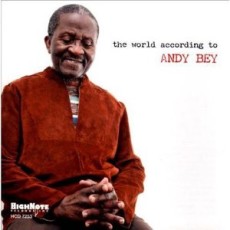
Andrew W. Bey was born October 28, 1939 in Newark, New Jersey. Although he received piano and singing lessons later on, he began playing by ear at the age of three. In the early 50s Andy got his initial professional exposure working on a television show “Startime” with Connie Francis and sang for Louis Jordan. He went on to form a trio with sisters Salome and Geraldine called “Andy and The Bey Sisters”. They recorded various sides and released two albums on the Prestige label and one on RCA. The group parted in 1965.
In the Seventies he worked with the Thad Jones/Mel Lewis Orchestra, collaborated with musicians like Stanley Clarke and also did notable work with Horace Silver and Gary Bartz. Later he recorded an album titled “Experience And Judgment” which had Indian influences. After that period he returned to hard bop and also recorded covers of music by non-jazz musicians.
In 1994, openly gay, Andy was diagnosed HIV-positive, but as of yet it has not interrupted his career. Colleague Herb Jordan assisted him with a resurgence of his recording career with “Ballads, Blues, & Bey” in 1996, returning him to prominence. Since then he has released five additional albums with his latest 2013 offerings titled “Chillin’ With Andy Bey” and “World According To Andy Bey”. Vocalist and pianist Andy Bey continues to perform, record and tour.
Daily Dose Of Jazz…
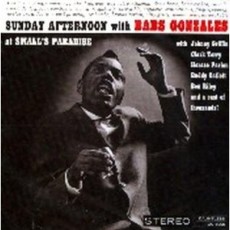
Babs Gonzales was born Lee Brown on October 27, 1919 in Newark, New Jersey and he and his brothers were all called Babs. He studied piano at a young age and learned to play drums. He sang in clubs; wore a turban in Hollywood in the late 1940s, calling himself Ram Singh; worked as a chauffeur for Errol Flynn; called himself Ricardo Gonzales (Mexican rather than ‘Negro) so as to get a room in a good hotel.
Gonzales was a pioneer in the scat vocalese style who did what he could to popularize bop. He had stints with Charlie Barnet and Lionel Hampton’s big bands, and then led his own group Three Bips & a Bop from 1946 to1949, recording for Blue Note during 1947- 1949, including the earliest version of “Oop-Pop-A-Da”, later covered by Dizzy Gillespie. Among his sidemen on these dates were Tadd Dameron, Tony Scott, Roy Haynes, James Moody, J.J. Johnson, Julius Watkins, Art Pepper, Wynton Kelly, Don Redman and Sonny Rollins making his recording debut.
When Capitol Records decided to flirt with bop around 1950, Babs was voicing the sessions. He worked with James Moody; recorded with Jimmy Smith, Johnny Griffin, and Bennie Green, who was one of the first Americans to perform at Ronnie Scott’s club in London as early as 1962. Spending a lot of time in Europe Babs was considered quite a colorful jazz personality there. A hard-working promoter of jazz, he also published three autobiographies; “I Paid My Dues — Good Times”, “No Bread” and “Movin’ On Down De Line”.
Babs Gonzales, who used his voice as a musical instrument incorporating slang, strange and funny new words in rhythmically complex phrases died on January 23, 1980. He would later become more of a cult figure, leaving a recorded legacy that is considered collector’s items for the die-hard bop aficionados. Though his place in jazz history is often blurred, he was present during the bop revolution and was ever the consummate hipster.
More Posts: vocal
From Broadway To 52nd Street
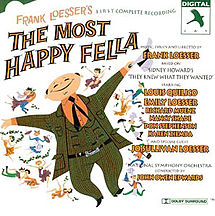
The Most Happy Fella opened at the Imperial Theatre on May 3, 1956 with Jo Sullivan, Robert Wede and Art Lund in the starring roles performing music composed by Frank Loesser. The musical ran for 676 performances and rendered unto jazz the classic tune Joey, Joey, Joey.
The Story: Rosabella comes to Napa Valley to marry the handsome young man who sent her his picture and proposed by mail. Certain that she has found someone to really love her, she soon discovers that Joe is just a hired hand and the man who proposed is Tony, an aging Italian vintner. He sent Joe’s picture fearing that one of himself would have disheartened her. The shock sends Rosabella into Joe’s arms. Eventually she realizes that Tony is an honorable, loving man. When he offers to accept not only her but the baby she is now pregnant with, she comes to love him.
Broadway History: Off-Broadway shows, performers, and creative staff are eligible for awards from the New York Drama Critics’ Circle Award, the Outer Circle Critics Award, the Drama Desk Award, the Obie Award (presented since 1956 by The Village Voice), the Lucille Lortel Award (created in 1985 by the League of Off-Broadway Theatres & Producers), and the Drama League Award. Although Off-Broadway shows are not eligible for TonyAwards, an exception was made in 1956 (before the rules were changed), when Lotte Lenya won for “Best Performance by a Featured Actress in a Musical”, for the Off-Broadway production of The Threepenny Opera.
Sponsored By

www.whatissuitetabu.com

Daily Dose Of Jazz…
Dianne Reeves was born on October 23, 1956 in Detroit, Michigan to a very musical family. Her father was a singer, mother Vada Swanson played trumpet, her cousin George Duke. Raised in Denver by her mother after her father died, she took piano lessons and sang at every opportunity. Inspired at age 11 to sing, she discovered she wanted to be a singer when a teacher brought students together. Subsequently her uncle, Charles Burrell, a bass player with the Denver Symphony Orchestra, introduced her to the music of jazz singers, from Ella Fitzgerald to Billie Holiday and was especially impressed by Sarah Vaughan.
By 16, Reeves was singing in the high school big band at Denver’s George Washington High School and that same year the band played at the National Association of Jazz Educators, taking first place. It was there she met trumpeter Clark Terry, who became her mentor. A year later she began the study of music at the University of Colorado prior to moving to Los Angeles in 1976. There her interest in Latin-American music grew and she began experimenting with different kinds of vocal music and finally decided to fully pursue a career as a singer. She met Eduardo del Barrio, toured with his group “Caldera”, sang in Billy Childs’ jazz band “Night Flight” and later she toured with Sergio Mendes.
From 1983 until 1986 Reeves toured with Harry Belafonte as a lead singer and immersing herself in world music for the first time. The following year she became the first vocalist signed to the reactivated Blue Note/EMI label. Dianne is well known for her fluent improvisational style that mixes elements of jazz with R&B, for which she has won four Grammy awards since her first release in 1977, “Welcome To My Love”. She has 18 albums to her credit as a leader and more than two dozen collaborations with Nicholas Payton, Christian McBride, Eddie Henderson, Solomon Burke, Tom Browne, Gordon Goodwin, Joe Sample, George Duke, both Chico and Von Freeman, Ronnie Laws, McCoy Tyner, Wayne Shorter and the list goes on. She was featured prominently as the vocalist performing in the studio adjacent to that of Edward R. Murrow in the 2005 film Good Night, and Good Luck.
Considered one of the most important contemporary jazz singers, Dianne Reeves continues to perform, tour and record, her latest import album being “Beautiful Life”.
More Posts: vocal