

From Broadway To 52nd Street
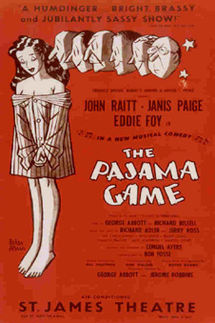
The Pajama Game drew back the first curtain at the St. James Theatre on May 13, 1954 and ran a record 1063 performances catapulting the show into the register of blockbuster musicals. Eddie Foy Jr., John Raitt, Janis Paige and Shirley MacLaine starred in the musical with music written and composed by Richard Adler & Jerry Ross. Jazz has had the privilege to give the song Hey There perpetual encores.
The Story: Adapted from the Broadway play, it’s a story of Sid, a workshop superintendent who must deal with a union demand for a 7.5-cent raise at the Sleep-Tite Pajama Factory. A strike is imminent and Babe the leader of the grievance committee leads the fight. However Sid is attracted to Babe and ensues a course of romance but is deflected. With slowdowns and machinery breakdowns promoting her cause, Sid reluctantly fires her. However he is convinced there is merit to Babe’s championship of the union and plots to get a peek at the books kept by Gladys.
Taking Gladys out to a nightclub Sid wheedles the keys from her but before he can leave the two are discovered by Babe. Sid gets a look at the books, sees that the boss has already tack on the 71/2 cents to production but has keeping the profits for himself. Sid confronts the boss, gets him to agree to the raise, goes to the union rally to bring the news and peace to his love life. Finally accepting her feelings for Sid, she falls for him. Everyone goes out to celebrate at Hernando’s Hideaway.
Jazz History: The free jazz movement, coming to prominence in the late ’50s, spawned very few standards. Free jazz’s unorthodox structures and performance techniques are not as amenable to transcription as other jazz styles. However, “Lonely Woman”, a blues by saxophonist Ornette Coleman, is perhaps the closest thing to a standard in free jazz, having been recorded by dozens of notable performers.
Free jazz is an approach to the music that was first developed in the 1950s and 1960s. Though the music produced by free jazz composers varied widely, the common feature was a dis-satisfaction with the limitations of bebop, hard bop and modal jazz, which had developed in the 1940s and 1950s. Each in their own way, free jazz musicians attempted to alter, extend, or break down the conventions of jazz, often by discarding hitherto invariable features chord changes or tempos. While usually considered experimental and avant-garde, free jazz has also oppositely been conceived as an attempt to return jazz to its “primitive”, often religious roots, and emphasis on collective improvisation.
Sponsored By

www.whatissuitetabu.com
From Broadway To 52nd Street
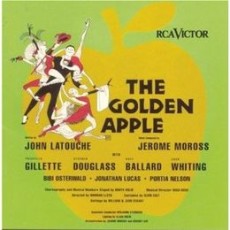
The Golden Apple was staged for it’s initial performance at the Phoenix Theatre on March 11, 1954 and ran for one hundred and seventy-three performances. The stars of the musical were Kay Ballard, Dean Michener, Jonathan Lucas, Jack Whiting, Stephen Douglass, Bibi Osterwald and Priscilla Gillette. Jerome Morross composed the music with libretto written by John Latouche and their composition Lazy Afternoon emerged from the musical to make the pantheon of jazz standards.
The Story: In a small turn-of-the-century American village called Angel’s Roost, nothing of importance seems to happen until a traveling salesman arrives at the annual fair in a balloon. He so beguiles the wife of the sheriff that she elopes with him to the neighboring town. The mayor throws roadblocks in the pursuer’s path. After the sheriff outclasses the salesman in a boxing match, he returns home to find love from another woman waiting for him. Recreation of Homer’s The Iliad & The Odyssey.
Broadway History: The Off-Broadway theatre is a professional New York City venue with a seating capacity between 100 and 499, much smaller than those on Broadway. An Off-Broadway production is a production of a play, musical or revue that appears in such a venue, and which adheres to related trade union and other contracts.
The Off-Broadway movement started in the 1950s, as a reaction to the “perceived commercialism of Broadway” and provided an “outlet for a new generation” of creative artists. This fertile breeding ground, away from the pressures of commercial production and critical brickbats, helped give a leg up to hundreds of future Broadway greats. The first great Off-Broadway musical was the 1954 revival of the Brecht/Weil Three Penny Opera.
Sponsored By
www.whatissuitetabu.com
Daily Dose Of Jazz…
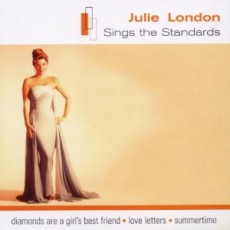
Julie London was born Gayle Peck in Santa Rosa, California on September 26, 1926 to a vaudeville song-and-dance team. At 14, her family moved to Los Angeles and shortly after she bean appearing in movies she graduated from the Hollywood Professional School in 1945.
The pin-up girl of WWII met and married the streetwise technique of actor Jack Webb in 1947, an unlikely union arising out of their love for jazz but only lasted until 1954. Becoming somewhat reclusive following the divorce she met jazz composer and musician Bobby Troup and although her career really took off in 1955, Julie had been singing in her teens long before she began acting.
London’s career began in 1955 with a live performance at the 881 Club in Los Angeles. Billboard named her the “Most Popular Female Vocalist” for 1955, 1956, and 1957 and she was the subject of a 1957 Life cover article in which she was quoted as saying, “It’s only a thimbleful of a voice, and I have to use it close to the microphone. But it is a kind of over-smoked voice, and it automatically sounds intimate.”
Julie London’s debut recordings were for the Bethlehem Record label but while shopping for the record deal, she recorded 4 tracks backed by Troup, “Don’t Worry About Me”, “Motherless Child”, “A Foggy Day” and “You’re Blasé”, that would later be included on the compilation albums “Bethlehem’s Girlfriends” in 1955. London’s most famous single, “Cry Me A River”, written by her high-school classmate Arthur Hamilton would become a million-seller after its release in December 1955. Throughout her singing career she recorded thirty-two albums with her last recording of “MY Funny Valentine” was produced for the soundtrack of the 1981 Burt Reynolds film Sharkey’s Machine.
She went on to have a prolific acting career on the stage, television and film that lasted 35 years concluding with the role of Dixie McCall on the tv series Emergency, executive produced by Jack Webb, and costarred her then husband Bobby Troup, a marriage that lasted until her death from poor health due to her long-term cigarette habit on October 18, 2000 in Encino, California at the age of 74.
More Posts: vocal

Daily Dose Of Jazz…
Marlena Shaw was born Marlina Burgess on September 22, 1942 in New Rochelle, New York and was first introduced to music by her jazz trumpet player uncle Jimmy Burgess. She cites Dizzy Gillespie, Miles Davis, Al Hibbler and lots of gospel as her teaching tools.
In 1952, Burgess brought her on stage at Harlem’s Apollo Theatre to sing with him and his band. Shaw’s mother did not want her daughter to go on tour with her uncle at such a young age. Instead, she enrolled Shaw into the New York State Teachers College in Potsdam to study music. She later dropped out, got married, had five children but never gave up on her singing career.
Shaw began making appearances in jazz clubs whenever she could spare the time. This most notable of these appearances was in 1963 when she worked with jazz trumpeter Howard McGhee. That same year, she had an unsuccessful audition due to nervousness with Columbia Records but continued to play at small clubs in 1964 until 1966 when her career took off after landing a gig with the Playboy Club chain in Chicago. It was through this gig that she met with Chess Records, inked a deal, released her first two albums on their subsidiary Cadet and moved to Blue Note by 1972.
With the onset of disco in the 70s, she reinvented herself and recorded “Go Away Little Boy” and one of the era’s biggest hits remaking “Touch Me In The Morning” for Columbia. Her career has touched all forms of music even being sampled by hip-hop artists and commercials. Vocalist Marlena Shaw has continued to record, toured and consistently performing at club dates and festivals like the North Sea Jazz Festival in the Netherlands.
From Broadway To 52nd Street
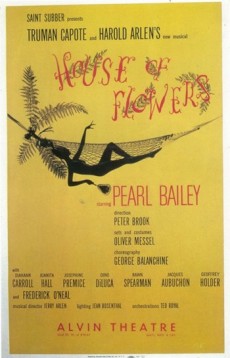
House Of Flowers opened at the Alvin Theatre on December 12, 1954 with music by Harold Arlen and lyrics and book by Truman Capote. This was his only Broadway musical based on his own short story, which was first published as one of three extra pieces in the Breakfast At Tiffany’s novella. Pearl Bailey, Diahann Carroll, Juanita Hall, Alvin Ailey, Geoffrey Holder, Ray Walston and Carmen de Lavallade starred for 165 performances. The composition that emerged from this musical to become a jazz standard was “A Sleepin’ Bee”.
The Story: During a trade war between two Haitian brothel keepers, Madame Tango and Madame Fleur, the latter sells one of her girls, Ottilia, to a rich lord. Ottilia turns him down preferring young, handsome but poor mountain boy Royal. and despite Fleur’s machinations to seal Royal in a barrel and toss him into the ocean, he escapes his watery grave on the back of a turtle. The lovers eventually marry and live happily ever after.
Jazz History: Hard bop, an extension of bebop (or “bop”) music that incorporates influences from rhythm and blues, gospel, and blues especially in the saxophone and piano playing, developed in the mid-1950s, partly in response to the vogue for cool jazz in the early 1950s. The hard bop style coalesced in 1953 and 1954, paralleling the rise of rhythm and blues. Miles Davis’ performance of “Walkin'”, the title track of his album of the same year, at the very first Newport Jazz Festival in 1954, announced the style to the jazz world. The quintet, Art Blakey and the Jazz Messengers featuring pianist Horace Silver and trumpeter Clifford Brown were leaders in the hard bop movement along with Davis.
Modal jazz recordings, such as Davis’ Kind of Blue became popular in the late 1950s. Popular modal standards include Davis’s “All Blues All” and “So What”, John Coltrane’s “Impressions” and Herbie Hancock’s “Maiden Voyage”. These recordings would eventually lead to the formation of Davis’ second great quintet, which included saxophonist Wayne Shorter and pianist Herbie Hancock, recorded a series of highly acclaimed albums in the mid-to-late 1960s.
Sponsored By
www.whatissuitetabu.com