

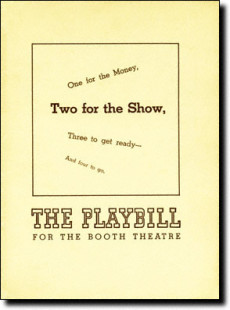
From Broadway To 52nd Street
Two For The Show opened on Broadway at the Booth Theatre on February 8, 1940 and after 124 performances the curtain came down for its final descent on May 25, 1940. Directed by John Murray Anderson with the sketches directed by Joshua Logan and musical staging by Robert Alton, the original cast included later Hollywood notables as Eve Arden, Alfred Drake, Betty Hutton and Keenan Wynn.
The Story: This was a revue with several sketches being performed such as “The Age Of Innocence” and “Cookery” written by Richard Hadyn. There were two other revues in this series, all conceived and directed by John Murray Anderson: One for the Money (February 4, 1939-May 27, 1939), and Three to Make Ready (March 7, 1946-December 14, 1946). The most notable song introduced in the show was “How High The Moon” which subsequently has been recorded by many jazz artists, becoming a well-known standard
Jazz History: Bebop or bop is a style of jazz characterized by fast tempo, instrumental virtuosity and improvisation based on the combination of harmonious structure and melody. It was developed in the early to mid-1940s and first surfaced in musicians’ argot sometime in the first two years of American involvement in WWII.
The origins of the term “bebop” has been debated by numerous authorities and researchers usually stated to derive from nonsense syllables or vocables used in scat singing, and is supposed to have been first attested in 1928. However, some researchers speculate that it was a term used by Charlie Christian because it sounded like something he hummed along with his playing.Yet, Dizzy Gillespie’s version of the story relates that the audiences coined the name after hearing him scat the then-nameless tunes to his players and the press ultimately picked it up, using it as an official term: “People, when they’d wanna ask for those numbers and didn’t know the name, would ask for bebop.”
Sponsored By

www.whatissuitetabu.com
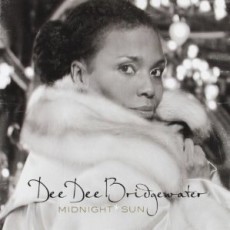
Daily Dose Of Jazz…
Dee Dee Bridgewater was born Denise Eileen Garrett on May 27, 1950 in Memphis, Tennessee but grew up in Flint, Michigan. Exposed to jazz as a young girl by her father who was a jazz trumpeter and music teacher, she was singing in rock and R&B bands by age sixteen. Two years later she enrolled at Michigan State University, then transferred to the University of Illinois and toured the Soviet Union with their jazz band in 1969. Then in 1970 she met trumpeter Cecil Bridgewater, married and moved to New York City where he got a gig playing with Horace Silver.
In the early seventies Bridgewater joined the Thad Jones-Mel Lewis Jazz Orchestra as lead vocalist, marking her commencement of her jazz career. She subsequently performed with such greats as Sonny Rollins, Dizzy Gillespie, Dexter Gordon, Max Roach, Rahsaan Roland Kirk and others over the course of a career spanning four plus decades.
Dee Dee Bridgewater is a two-time Grammy Award winning singer-songwriter, a Tony Award winning actress, host of NPR’s Jazzset, and a United Nations Ambassador for the Food and Agriculture Organization. She has paid musical tribute to Ella Fitzgerald with her 1997 Grammy winning Dear Ella recording, to Horace Silver with her Love and Peace, and Billie Holiday with her 2010 Eleanora Fagan (1915-1959) To Billie With Love from Dee Dee.
Her album This Is New investigated the music of Kurt Weill, sang French classics on J’ai Deux Amours and brought the contributions of African musicians of Mali alive with Red Earth. She has performed on nearly every major stage around the world and continues to record, perform and tour.
More Posts: vocal
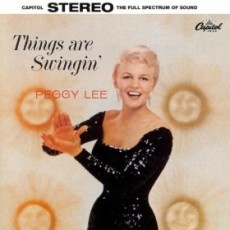
Daily Dose Of Jazz…
Peggy Lee was born Norma Deloris Egstrom on May 26, 1920 in Jamestown, North Dakota. The seventh of eight children of Norwegian and Swedish ancestry, her mother died when she was four. She began singing on a local radio station during her high school years, and then ventured to Fargo where Ken Kennedy of WDAY changed her name to Peggy Lee. At 17 she left home for Los Angeles.
Making her way to Chicago’s Buttery Room, Lee caught the attention of Lady Alice Duckworth who was so impressed brought her fiancé Benny Goodman the next night. That chance encounter landed her a gig with Goodman for two years, replacing Helen Forrest in 1941.
Peggy had her first #1 hit with “Somebody Else Is Taking My Place” in1942 followed by the million record seller “Why Don’t You Do Right” that made her famous by 1943. Her signature song became “Fever” to which she added some lyrics. In 1948 she joined Perry Como and Jo Stafford as one of the rotating host of NBC’s Chesterfield Supper Club. As a composer she collaborated with Laurindo Almeida, Duke Ellington, Quincy Jones, Johnny Mandel, Marian McPartland, Dave Grusin and Lalo Schifrin among others.
Lee played opposite Danny Thomas in the 1952 remake of the Jazz Singer, in 1955 played a despondent, alcoholic blues singer in Pete Kelly’s Blues that garnered her an Oscar nomination for Best Supporting Actress, and voiced several characters in Disney’s Lady and the Tramp for which she later had to sue Disney for video royalties.
From her humble beginnings as a vocalist on local radio she forged her own sophisticated persona, evolving into a multi-faceted artist and performer, receiving 12 Grammy nominations, three wins including a Lifetime Achievement Award and induction into the Songwriters Hall of Fame among other awards and accolades. Peggy Lee, whose career as a jazz and pop singer, songwriter, composer and actress spanned nearly seven decades passed away due to complications from diabetes and a heart attack on January 21, 2002.

More Posts: vocal
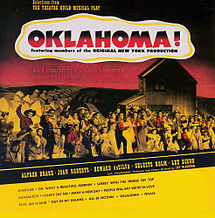
From Broadway To 52nd Street
The curtain rose on Oklahoma on the stage at the St. James Theatre on March 3, 1943. The cast consisted of Alfred Drake, Joan Roberts, Celeste Holm and Lee Dixon performing music and lyrics by Richard Rodgers and Oscar Hammerstein. Running 2,212 performances, the musical would go on to receive rave reviews as a film thirteen years later and str such greats as Shirley Jones, Gordon McRae, Rod Steiger and Eddie Albert. From the play came two songs that became jazz standards – People Will Say We’re In Love and The Surrey With The Fringe On Top.
The Story: The musical is about Laurie, a country girl, who is courted by a cowboy, Curly, and is pursued by the villain Jud, who also sees her as a love interest.
Broadway History: As change came to the Broadway play in the early 1940s, jazz musicians also sought change by looking for new directions to explore. A new style of jazz was born, called bebop. It had fast tempos, intricate melodies and complex harmonies. Bebop was considered jazz for intellectuals. The demise of the huge big bands was imminent to be replaced by smaller groups that did not play for dancing audiences but for listening audiences.
Sponsored By
www.whatissuitetabu.com
More Posts: broadway

From Broadway To 52nd Street
Lady In The Dark took the stage at the Alvin Theatre on January 23, 1941. The musical starred Gertrude Lawrence, McDonald Carey, Dianne Kaye and Victor Mature with the music composed by Kurt Weill and lyrics by Ira Gershwin. It ran for four hundred and sixty-seven performances. Beyond its Broadway run, Lady In The Dark would b staged in the United Kingdom in 1981, was also made into a 1944 film and a live 1954 television special. Except for the final song, all the music in the play is heard in three extended dream sequences: the Glamour Dream, the Wedding Dream, and the Circus Dream which, to some extent, become three small operettas integrated into a straight play. The final song, “My Ship”, which went on to become a jazz standard, functioned as a leitmotif for Liza’s insecurity: as each dream commences, a snippet of the tune is heard, as it is a haunting melody which Liza recognizes but cannot name, or sing with words, until her anxiety is resolved.
The Story: The protagonist, Liza Elliott, is the unhappy albeit successful editor of a fashion magazine, Allure, who is undergoing psychoanalysis. Relating a dream to her analyst, all the familiar male figures in her life appear in her dream but they act in unfamiliar ways. By recounting her dream, Liza realizes that her father’s disdain for her as a child has warped her relations with men.
Broadway History: Innovations to Broadway would come in 1943 with Rodgers & Hammerstein’s Oklahoma, which integrated music, song, and dance with a detailed plot. West Side Story followed in these footsteps in 1957 by introducing serious themes, causing the genre to be called simply “musicals”. In 1967 Hair would herald the rock musical to prominence.
Sponsored By
www.whatissuitetabu.com