

Daily Dose Of Jazz…
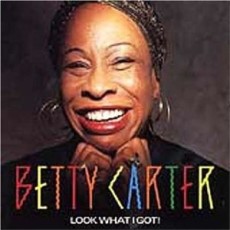
Betty Carter was born Lillie Mae Jones on May 16, 1929 in Flint, Michigan but grew up in Detroit. The first music she heard was church music as her father led a choir. She studied piano at the Detroit Conservatory and winning a talent contest became a regular on the local club circuit. By 16 she was singing with Charlie Parker and would later perform with Dizzy Gillespie and Miles Davis.
Honing her scatting while touring with Lionel Hampton in the late 40s, it was Hampton’s wife Gladys who nicknamed her “Betty Bebop”, a name she reportedly detested. In the fifties she recorded with King Pleasure and Ray Bryant, and released her first solo LP, Out There With Betty Carter in 1958.
Although her career was eclipsed somewhat through the 60s and 70s, she made a series of duets with Ray Charles that rendered “Baby, It’s Cold Outside” which brought her a modicum of new recognition. She established Bet-Car in 1970, her own record label, after an A&R man attempted to run off with her master recordings. Her private label produced some of her most famous recordings including the double album “The Audience With Betty Carter”.
In the last decade of her life she won a Grammy for “Look What I Got”, appeared on the Cosby show, performed at the White House, was awarded the National Medal of Arts by President Clinton and headlined Verve’s 50th Anniversary at Carnegie Hall.
Betty Carter remained active in jazz until her death from pancreatic cancer on September 26, 1998 at the age of 69. The singer renowned for her improvisational technique and idiosyncratic vocal style was devoted to the jazz idiom. Her fellow vocalist Carmen McRae once claimed: “There’s really only one jazz singer – only one Betty Carter”.
More Posts: vocal
Daily Dose Of Jazz…
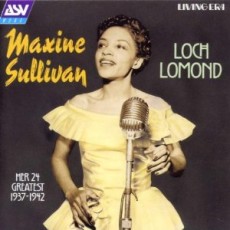
Maxine Sullivan was born Marietta Williams on May 13, 1911 in Homestead, Pennsylvania who developed a subtle and lightly swinging jazz style. Maxine possessed an affable delivery that slighted no lyric.
Over the course of her long career Sullivan first moved to New York and sang during intermissions at the Onyx Club. It was here she was discovered by Claude Thornhill who recorded her in front of a septet singing standards and a couple of Scottish tunes in swinging fashion. One of those tunes “Loch Lomond” would become her big hit and her career signature song.
During the forties Maxine appeared in movies opposite Louis Armstrong, on Broadway in Swingin’ The Dream, with then husband John Kirby and his sextet, and starred a radio show “Flow Gently Sweet Rhythm” for two years receiving reasonable success with a solo career.
By the 50s she became trained as a nurse and over the next several years was absent from music. However, 1968 saw Sullivan’s comeback performing at festivals and even playing a little valve trombone and flugelhorn.
During the later years of her career she intermittently appeared with the World’s Greatest Jazz Band, sang with mainstream jazz groups and recorded in concert her first hit Loch Lomond. Passing away on April 7, 1987 in New York City, vocalist Maxine Sullivan was inducted into the Big Band Hall of Fame in 1998.
More Posts: vocal
Daily Dose Of Jazz…
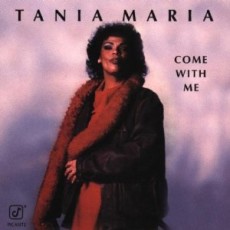
Tania Maria was born on May 9, 1948 in Sao Luis, Maranhao in northern Brazil. She began playing piano at 7, became a leader at 13 of a band organized by her father, won first place in a local music contest and began playing dances, in clubs and on the radio. It was her father who encouraged her to study piano so that she could play in his weekend jam sessions. By doing so she absorbed the rhythms and melodies of samba, jazz, pop and Brazilian chorinho. Since then she has never worked in anyone else’s group.
Tania released her first album ”Apresentamos” in 1969 with a second in 1971 but it was her move to France that exploded her on the international scene. She began touring and while performing in Australia she caught the ear of guitarist Charlie Byrd who recommended her to Concord Records.
Tania’s formidable musical precision and freewheeling spirit has been heard at virtually every important jazz festival in the world and has appeared on countless television and radio shows. She has recorded numerous albums, has been nominated for a Grammy in the category of “Best Jazz Vocal Performance, Female, and has played with such greats as Steve Gadd, Anthony Jackson, Sammy Figueroa and Eddie Gomez to name a few.
The Brazilian artist, singer, composer, bandleader and pianist also has a law degree She sings mostly in Portuguese but also English. Her music is sometimes pop, jazz, and unmistakably Brazilian. Whether playing fiery samba, tranquil bossa or any other style, Tania Maria maintains a style that is uniquely her own. Her vibrant voice, brilliant piano work and outstanding performances have made an artist of increasing international popularity.
From Broadway To 52nd Street
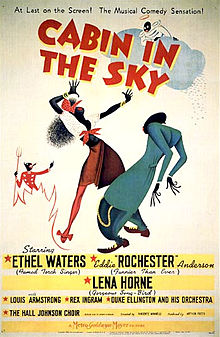
Cabin In The Sky debuted on the Martin Beck Theatre stage on October 25, 1940. Running 156 performances, the show, directed by Albert Lewis and staged by George Balanchine, starred Ethel Waters, Dooley Wilson, Todd Duncan, Rex Ingram and Katherine Dunham. In 1943 it was turned into a silver screen classic with Vincente Minnelli directing Broadway stars Ethel Waters and Rex Ingram, along with Eddie “Rochester Anderson, Lena Horne and Louis Armstrong. The musical spawned such jazz classics as Taking A Chance On Love and Cabin In The Sky.
The Story: When a pious Petunia Jackson prays to the Good Lord to spare the life of her troublesome husband, Little Joe, the Good Lord allows Joe six months in which to redeem himself. He even sends the Lord’s General to help but has turned over a new leaf, he has an argument with Petunia and shoots her. They arrive at the Pearly Gates where Petunia’s loving pleas melt the Good Lord’s heart. So Joe is permitted to enter along with her.
Jazz History: Noted jazz disc jockey Symphony Sid frequently did live broadcasts from 52nd Street, making it famous across the country. By the late 1940s the jazz scene began moving elsewhere around the city and urban renewal took hold of the street. By the 1960s, most of the legendary clubs were razed or fell into disrepair. The last club there closed its doors in 1968.
Today, the street is full of banks, shops, and department stores and shows little trace of its jazz history. The block from 5th to 6th Avenues is formally co-named “Swing Street” and one block west is called “W. C. Handy’s Place”.
The 21 Club is the sole surviving club on 52nd Street that also existed during the 1940s. The venue for the original Birdland at 1674 Broadway located between 52nd & 53rd, which came into existence in 1949, is now a “Gentlemen’s Club”. The current Birdland is on 44th Street, between 8th and 9th Avenues.
Sponsored By

www.whatissuitetabu.com
More Posts: broadway
Daily Dose Of Jazz…
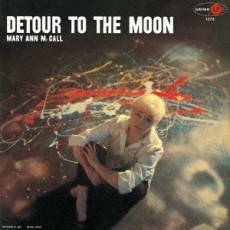
Mary Ann McCall was born on May 4, 1919 in Philadelphia, Pennsylvania and started her music career singing middle-of-the-road pop but quickly grew into a respected jazz singer. She started out singing and dancing in Philly with Buddy Morrow’s Orchestra followed by brief stints with Tommy Dorsey and Woody Herman in 1938 and ’39 respectively, and then Charlie Barnett until 1940.
During the forties Mary Ann reconnected with Woody Herman and recorded notable tunes “Wrap Your Troubles In Dreams” and “Detour Ahead”. She went on to work with the Ralph Burns Orchestra, Tommy Reynolds and Teddy Powell and in 1949 she won the Down Beat Readers Poll for Girl Singer (with Band).
In the 50’s McCall she recorded several albums as a leader working with Charlie Ventura, Teddy Charles, Phil Moore and Ernie Wilkins. By the end of the decade her flame had started to fade singing in Detroit and then relocating to Los Angeles where she performed intermittently. In the seventies she re-emerged to record with Jake Hanna and Nat Pierce and in 1987 she came out of retirement to perform at a Woody Herman tribute concert a few days before his death.
Vocalist Mary Ann McCall passed away on December 14, 1994 in Los Angeles, California.

More Posts: vocal