

Daily Dose Of Jazz…
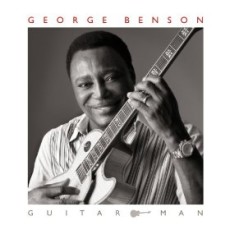
George Benson was born in Philadelphia, Pennsylvania on March 22, 1943 and raised in the Hill District. A child prodigy at the age of 7, he first played the ukulele in a corner drug store and received a few dollars for his efforts. At age 8, he was playing guitar in an unlicensed nightclub on Friday and Saturday nights that was soon closed down by the police. By the time he was 10, George was in New York recording his first single record with RCA-Victor in New York, called “She Makes Me Mad”.
He attended Connelly High School and although he left before graduation, he learned how to play straight-ahead instrumental jazz during a relationship performing for several years with organist Jack McDuff. At the age of 21, he recorded his first album as leader, “The New Boss Guitar” featuring McDuff, followed by “It’s Uptown with the George Benson Quartet” and “The George Benson Cookbook”.
During the ‘60s he was recording with Miles Davis for Columbia’s “Miles In The Sky”, moved on to Verve for a period and then signed with Creed Taylor producing such albums as “White Rabbit” and “The Other Side of Abbey Road” among others.
Benson released “Breezin” in 1976 and it went triple platinum topping Billboard’s 200. Tuning to vocal chops, the guitarist added a crossover audience adding smooth jazz to his repertoire of genres that include R&B, pop and jazz. The multi-Grammy award winner, he has recorded over two hundred albums and singles as a leader, sideman and collaborator; and has performed with the likes of Jaki Byard, Hank Mobley, Jimmy Smith, Lou Donaldson, Hank Crawford, Don Sebesky, Stanley Turrentine, Hubert Laws, Lee Morgan, Red Holloway, J. J. Johnson and Kai Winding, Freddie Hubbard, Deodato, Aretha Franklin, Freddy Cole, and Sadao Watanabe among numerous others.
In 2009 the National Endowment of the Arts honored George Benson with the distinction of being a Jazz Master and he continues to record, perform and tour worldwide.

Daily Dose Of Jazz…
Bill Henderson was born William Randall Henderson on March 19, 1926 in Chicago, Illinois. He didn’t begin his musical career until 26 years later performing around his home city with Ramsey Lewis before moving to New
York in 1958. A singer of blues, ballads and swing, he follows in the tradition of Joe Williams and Ernie Andrews but clearly brings his own personality to each performance.
His early big hit was Senor Blues, recorded with Horace Silver and worked with the Jimmy Smith trio. During his tenure at Vee-Jay in which he recorded several fine albums he worked with Ramsey Lewis, Yusef Lateef, Booker Little and Eddie Harris. A move to MGM had him working with Oscar Peterson in 1963 and touring with Count Basie from 1965-66.
Settling in Los Angeles, Bill began working as an actor in film and television in the seventies, taking minor or supporting roles and one-time appearances in such movies as Trouble Man, Silver Streak, City Slickers, Hoodlum, and television with Happy Days, Hill Street Blues, The Jeffersons, MacGyver, Cold Case and My Name Is Earl.
The late nineties saw his participation on Charlie Haden’s album “The Art Of The Song” alongside Shirley Horn, followed by a Live at the Kennedy Center and Beautiful Memory: Live at The Vic releases. Still in great form at the age of 86, vocalist and actor Bill Henderson, who amassed some four-dozen albums and 45s over his career, continued to perform around Los Angeles until his death at age 90 on April 3, 2016 from Alzheimer’s Disease.

More Posts: vocal
From Broadway To 52nd Street
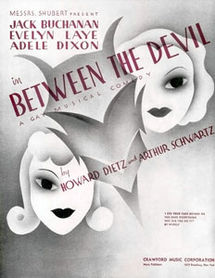
The musical opened in pre-Broadway tryouts in New Haven and Philadelphia in October 1937. Two months later and three days before Christmas on December 22, 1937 Between The Devil opened at the Imperial Theatre. Though it only ran for 93 performances, the play produced by the Shuberts rendered two songs composed by Arthur Schwartz and Howard Dietz that were destined to become jazz standards, By Myself and I See You Face Before Me. The play starred Jack Buchanan, Pierre Antoine, Evelyn Laye, Adele Dixon and Charles Walters.
The Story: The original plot had an English leading man, Peter Anthony, marrying two women at the same time. However, the plot was changed to have Peter Anthony marry the second wife only because he thought his first wife had died.
Broadway History: The Theater Works Project was placed in the hands of Hallie Flanagan, an instructor and creator of an experimental theater at Vassar. She had studied theater in Europe and Russia in the 20s on the first Guggenheim scholarship awarded to a woman, and was fully aware of what Le Gallienne had proposed. Flanagan differed, however, in that she was willing to oversee the development of a national program with chapters throughout the country. New York, with the greatest number of unemployed theater people, would develop six chapters, with other cities developing chapters relative to the number of displaced workers. In an unexpected moment of charity and good will, both George Bernard Shaw and Eugene O’Neill offered rights to their respective works to the Project for the nominal sum of $50.00 per week while they were in production.
More Posts: broadway
Daily Dose Of Jazz…
Robert “Bobby” McFerrin, Jr. was born March 11, 1950 in Manhattan, New York to the late Metropolitan Opera baritone Robert McFerrin and Broadway singer Sara Cooper. He spent his childhood surrounded by jazz, blues, R&B, classical, pop and world music, playing in jazz and cabaret bands until the age of twenty-seven.
Developing a vocal technique that switches rapidly and fluidly between normal and falsetto registers to create polyphonic effects, McFerrin performs both the main melody and the accompanying parts of songs. His use of percussive effects with his voice and tapping on his chest compliments his ability to overtone singing.
In 1984 McFerrin released his first solo album The Voice without accompaniment or overdubbing but he came to worldwide prominence with his 1988 hit “Don’t Worry, Be Happy” that garnered him two Grammys for Song and Record of the Year.
The ten-time Grammy winning vocalist and conductor has collaborated with Chick Corea, Herbie Hancock, Joe Zawinul, Tony Williams and Yo-Yo Ma. In addition he has lent his voice to the Cosby Show, to film and the 1989 Oscar winning documentary Common Threads: Stories from the Quilt in which his ten-person Voicestra was featured.
He is the creative chair of the Saint Paul Chamber Orchestra and has been a guest conductor for symphonies and philharmonics in San Francisco, New York, Chicago, Cleveland, Philadelphia, Los Angeles, Vienna and London. He has performed with comedian Robin Williams, consorted with the Muppets, interpreted Beatles songs and demonstrated with audience participation the power of pentatonic scale that became a viral Internet phenomenon.
Bobby McFerrin defies convention and categorization as he draws from all genres to showcase his matchless improvisational skill with an ability to create new vocabularies on the fly as he continues to explore and discover new territory in music.
More Posts: vocal
From Broadway To 52nd Street
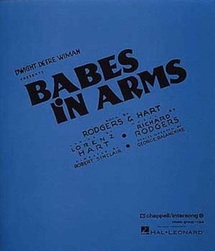
Babes In Arms opened at the Shubert Theatre on April 14, 1937 and ran for two hundred and eighty-nine performances. The musical starred Mitzi Green (Billie Smith), Ray Heatherton (Valentine “Val” LaMar), Alfred Drake and the Nicholas Brothers.
The music composed by Richard Rodgers and the lyrics were provided by Lorenz Hart and from their score arose five songs that are jazz standards – I Wish I Were In Love Again, Johnny One Note, The Lady Is A Tramp, and Where Or When.
The musicals most famous and recorded composition, My Funny Valentine, in which Billie sings to Val first poking fun at some of Valentine’s characteristics but ultimately affirming that he makes her smile and that she doesn’t want him to change.
The Story: With a threat of being assigned to a work farm, the children of traveling vaudevillians band together to mount a musical revue. The show wins critical acclaim but loses money. So the children are sent to the farm. They are rescued when a French aviator on a transatlantic flight, makes an emergency landing on the farm, coming to their aid.
Jazz History: In the 1930s swing jazz emerged as a dominant form in American music, in which some virtuoso soloists became as famous as the bandleaders. Key figures in developing the “big” jazz band included bandleaders and arrangers Count Basie, Cab Calloway, Jimmy and Tommy Dorsey, Duke Ellington, Benny Goodman, Fletcher Henderson, Earl Hines, Glenn Miller and Artie Shaw.
Ellington and his band members composed numerous swing era hits that have become standards: “It Don’t Mean A Thing (If It Ain’t Got That Swing), Sophisticated Lady, Caravan were among them. Also during this period trumpeter, bandleader and singer Louis Armstrong was a much-imitated innovator of early jazz.
More Posts: broadway