


Daily Dose Of Jazz…
Rita Reys was born into an artistic family as Maria Everdina Reijs on December 21, 1924 in Rotterdam, The Netherlands. She grew up listening to classical music and as a teenager entered and won many local talent competitions.
In 1943, Rita met her first husband, jazz drummer Wessel Iicken, who introduced her to the jazz scene. Forming Rita Reys & The Wessel Ilcken Sextet, she regularly performed at the Sheherezade jazz club in Amsterdam and as her reputation grew began to tour and perform around Europe and Africa between 1945 and 1950.
In 1950, the then Rita Reys Sextet celebrated continued success in The Netherlands, played American army bases and dance clubs in England, and settled in Stockholm, the city known as the jazz center of Europe in the early Fifties. She made her first recordings there for the Artist record label, would follow up with a session with Ove Lind, and others such as Quincy Jones, Clifford Brown, Art Farmer. She would go on to meet Ella Fitzgerald, Dizzy Gillespie, Oscar Peterson and Lester Young.
Reys accepted an invitation by Columbia record producer George Avakian to visit the United States and after arrival recorded The Cool Voice of Rita Reys with Art Blakey and the Jazz Messengers featuring Horace Silver, Hank Mobley and Donald Byrd. She had a swinging quality of her phrasing that opened the doors of the Village Vanguard for several performances. She has performed with Oscar Pettiford, Zoot Sims, Clark Terry, Herbie Mann, Milt Hinton, Osie Johnson, Jimmy Smith and Lester Young to name a few luminaries.
Vocalist Rita Reys has won France’s Juan Les Pins Jazz Festival; in 1969 she was the first Dutch jazz singer to perform at the New Orleans Jazz Festival, became a Citizen of Honor of New Orleans in 1980, won the Edison Award, the Bird award and has eight gold records.
Throughout the next three decades she would continue to perform, record and tour, returning to the Great American Songbook, paid tribute to George Gershwin and Antonio Carlos Jobim, has published her life story Rita Reys, Lady Jazz, has recorded nearly four-dozen albums since 1957, perform at festivals around the world and was named Europe’s First Lady of Jazz, a title she carries to this day. Vocalist Rita Reys passed away on July 28, 2013 in Breukelen, Netherlands.

More Posts: vocal
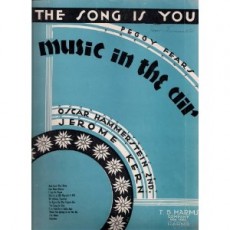
From Broadway To 52nd Street
On November 8, 1930 at the Alvin Theatre, the curtain rose for Music In The Air starring Walter Slezak, Natalie Hall, Tullio Carminetti and Katherine Carrington. Running for 342 performances and the tune, The Song Is You was written and composed by Jerome Kern and Oscar Hammerstein becomes a jazz classic standard.
The Story: We follow Karl who writes a song and along with his Bavarian villages trek to Munich to have it published. In Munich, Karl is pursued by a flirtatious prima donna, while composer Bruno falls in love with Karl’s sweetheart. Her indifference to Bruno only lends to fuel Bruno’s ardor and he confesses to her that no matter what melody he creates, it’s always her. The romance and high hopes prove fruitless, so all return home together.
Jazz History: Art Tatum was to become one of The Street’s brightest stars and legendary giants with a following that brought him the highest paid salary to any performer. He moved between The Onyx, The Three Deuces and The Downbeat and was always in great demand for private parties and was once paid a hundred dollars at a George Gershwin shindig to perform during his sixty-minute intermission at the club. With his vision limited to 25% in one eye, he would often ask a friend to walk him down to Hanson’s Drugstore at 51st and 7th, New York’s equivalent to Schwab’s in Hollywood, where it became a gathering place of theatre-goers, celebrities and hopefuls and where Walter Winchell regularly stopped by. Tatum always took a seat at the L-shaped counter and when it was full he would ask someone to drop a handful of coins on the counter and impress the onlookers with his acuteness of hearing by identifying each coin. Art Tatum lived, drank and died with the prodigality that characterized his keyboard pyrotechnics. Frequently he stayed up for days at a time with only catnaps to sustain him or slept long stretches only to awake instantly the moment his hand was touched. Of the 46 pianists queried after his death, 30 named him as their favorite pianist.
Sponsored By

www.whatissuitetabu.com
More Posts: broadway
Daily Dose Of Jazz…
Bob Dorough, born December 12, 1923 in Cherry Hill, Arkansas, he grew up in Texas. He learned to play piano and would play in an Army band during World War II. After discharge he attended North Texas State University, majoring in composition and minored in piano.
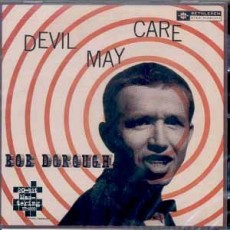
Around 1950 Bob moved to New York City and was playing piano in a Times square tap studio where he was introduced to the boxer sugar Ray Robinson, who was putting together a song and dance revue. He was hired, became the show’s music director and toured the U.S. and Europe. Leaving the revue in Paris in 1954, he recorded with singer Blossom Dearie during that time. Returning to the U.S. and moving to Los Angeles, he played various gigs, including a job between sets by comedian Lenny Bruce. Dorough released his first album, Devil May Care, in 1956 that contained a version of Charlie Parker’s “Yardbird Suite”.
Dorough penned the lyrics for Miles Davis on the Christmas song “Blue Xmas” and a few years later recorded “Nothing Like You” that is on the Sorcerer album. He worked with Allen Ginsberg, and his adventurous style influenced Mose Allison among other singers. He is perhaps best known as a voice and primary composer of many of the songs used in “Schoolhouse Rock!” during the Seventies and Eighties.
The cool jazz pianist and composer he has penned with bassist Ben Tucker the tune “Comin’ Home Baby” that earned Mel Torme two Grammy nominations and a Top 40 hit. A vocalese singer, he has released 28 vocal jazz albums as a leader, four singles and 17 as a sideman and/or guest over the last 50 years. Bob Dorough received an honorary degree from East Stroudsburg University of Pennsylvania with a Doctor of Fine Arts, was named Artist of the Year in 2002 by the Pennsylvania Governor’s Awards for the Arts. He garnered a Grammy nomination for Best Recording for Children and was inducted into the Arkansas Jazz Hall of Fame prior to passing away on April 23, 2018 in Mount Bethel, Pennsylvania at age 94.

Daily Dose Of Jazz…
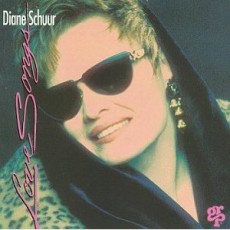
Diane Schuur was born December 10, 1953 in Tacoma, Washington and was blinded at birth due to retinopathy of prematurity. Encouraged by both her parents to sing, she started when she was a two-and-a-half and by age nine was getting professional gigs. Early heroines were Sarah Vaughan and Dinah Washington but while attending Washington State School for the Blind she began performing original material and by sixteen had revealed a distinctive voice and began performing.
Diane’s big break came when Stan Getz heard her at the 1979 Monterey Jazz Festival and became a positive influence. In 1982 he invited her to join him at a White House performance and Nancy Reagan invited her back to perform with Count Basie. She began recording in 1984 on her nickname titled album “Deedles” with Getz performing and on her next two albums.
Pianist and vocalist Diane Schuur has performed with Quincy Jones, Stan Getz, B.B. King, Dizzy Gillespie, Maynard Ferguson, Ray Charles, Joe Williams, Barry Manilow, Alan Broadbent, Harvey mason, Peter Erskine and Stevie Wonder among others. She has been nominated five times and won two Grammy Awards, and her catalogue of recordings is too extensive to enumerate. Her staying power is evident in her continual performance, touring and recording of both studio and live performances.

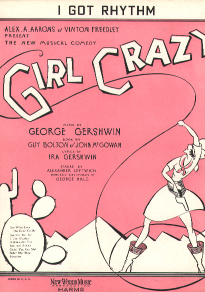
From Broadway To 52nd Street
Girl Crazy opened on October 14, 1930 at the Alvin Theatre with a run of 272 performances starring Ethel Merman and Ginger Rogers singing music composed by the Gershwin Brothers. Two songs emerged from this musical to become jazz classics – Embraceable You and I Got Rhythm.
The Story: A tale where Danny Churchill, in an attempt to flee nightclubs, gambling casinos and women, hires a NY taxi driver to take him to Custerville, Arizona. There he hopes to rest on a dude ranch. Before long he has transformed the ranch into a club with gambling rooms and bevies of girls. He woos and wins the heart of one of the girls, Ginger, who is the daughter of the local saloonkeeper.
Broadway History:Though the Depression was in full swing, stars were still being made as musicals and revues continued to emerge on Broadway. From 1931 – 42 this decade made stars of Ray Bolger and Bert Lahr, who went on to fame as the Scarecrow and Cowardly Lion in The Wizard Of Oz; the double act of Gaxton & Moore, who were part of the comic backbone of vaudeville, got their individual starts on Broadway when Gaxton, having mastered the character of a loveable, oblivious bumbler resembling Elmer Fudd with a Porky Pig personality, performed in George M. Cohan’s Forty-Five Minutes From Broadway in 1906, and the much younger Moore was the romantic lead in Rodgers and Hart’s A Connecticut Yankee in 1927. They were paired in Gershwin’s “Of Thee I Sing” and continued their successful partnership well into the ‘40s. The tradition of the double act was later upheld by the likes of Abbott & Costello, Lewis & Martin and Burns & Allen.
Sponsored By
www.whatissuitetabu.com
More Posts: broadway