

Daily Dose Of Jazz…
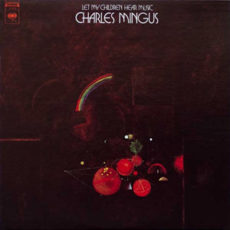
Sy Johnson was born on April 15, 1930 in New Haven, Connecticut and learned to play the piano in his youth. He first performed in New York City with Charles Mingus at the jazz club Showplace, with Booker Ervin on tenor, Ted Curson on trumpet, Dannie Richmond on drums, and Mingus on bass. and on his first night with Mingus, Eric Dolphy performed on alto, bass clarinet, and flute.
In 1971, eleven years later, Mingus gave Johnson Let My Children Hear Music to arrange, which featured two Mingus pieces, Shoes of the Fisherman’s Wife (Are Some Jiveass Slippers) and Don’t Be Afraid, the Clowns Afraid Too. The album’s emergence was heralded with a live concert, Mingus And Friends At Philharmonic Hall, also arranged by Johnson and released as an album.
Performing We Did It on Soul Train in 1973 and continued to work with Mingus until his death from Lou Gehrig’s disease in 1979. Mingus recorded two of Johnson’s compositions, Wee and For Harry Carney, and nominated Johnson for a Guggenheim award following his own in Jazz Composition.
Johnson continues to work with Sue Mingus arranging charts for all the Mingus repertory ensembles—the Mingus Big Band, the Mingus Orchestra and the Mingus Dynasty. He would go on to collaborate with arrangements for Joe Williams, Frank Sinatra, Wes Montgomery, Roy Eldridge, Ben Webster, Quincy Jones, Benny Goodman, Count Basie, Mel Torme, Terry Gibbs, Lee Konitz and Sarah Vaughan, among others.
He has also worked on Broadway and in films such as the1984 movie The Cotton Club. Arranger Sy Johnson is also a jazz photographer, writer, pianist, singer, and teacher.

More Posts: arranger,history,instrumental,jazz,music,photographer,pianist,singer,teacher,writer
Daily Dose Of Jazz…
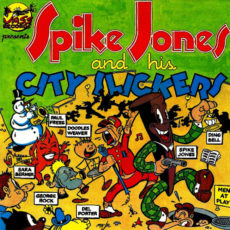
Del Porter was born Delmar Smith Porter on April 13, 1902 in Newberg, Oregon. He first began singing in 1928 as a member of the Foursome, which came to prominence in the Ethel Merman Broadway hit shows, Girl Crazy in 1930 and 1934’s Anything Goes. With the Foursome’s arranger and Porter’s lifelong friend, Raymond M. Johnson, he reorganized the quartet around 1946 as the Sweet Potato Tooters, one of the hottest bands in the country at the time. He would go on to record as a leader, toured with Glenn Miller, and recorded with Bing Crosby, Dick Powell, and Red Nichols.
They recorded extensively for Decca, but a long dry spell followed the quartet’s appearance in the Eleanor Powell movie Born to Dance which resulted in the creation of a six-piece group the Feather Merchants, patterned after the cockeyed musical humor of Frank & Milt Britton and Freddie Fisher’s Schnickelfritz Band. This band evolved into City Slickers, a band he co-founded with Spike Jones about the time the group split up.
The zany band that revolutionized the field of comedy music during World War II, from their earliest days, as lead vocalist, clarinetist, composer, and arranger. He wrote two songs Siam and Pass the Biscuits, Mirandy which became staples of the band’s repertoire. But he was all talent and no ambition, and soon took a back seat to Jones.
After leaving the Slickers in 1945, he returned to lend his melodious voice on Spike Jones Plays the Charleston and their Bottoms Up album. In addition to his music publishing business, Tune Town Tunes, with fellow City Slicker and songwriting partner Carl Hoefle. Porter later wrote jingles for Paper Mate pens, recorded with his Sweet Potato Tooters for Capitol transcriptions, as well as Mickey Katz and Spade Cooley. He continued to dabble in songwriting in his later years.
Vocalist, saxophonist, and clarinetist Del Porter, who in the 1940s, led his own big band, passed away on October 4, 1977 in Los Angeles, California.
More Posts: bandleader,clarinet,history,instrumental,jazz,music,saxophone,vocal
Hollywood On 52nd Street
Senza Fine which translates in English to Endless was written by Italian singer-songwriter Gino Paoli, inspired by collaboration partner Ornella Vanoni, who was signed to Memory Records. The label wanted to rebrand the singer with a new sexy image, detaching her from her previous one. The song was composed in 1961, and not specifically for the movie Avanti! but was chosen to be the soundtrack.
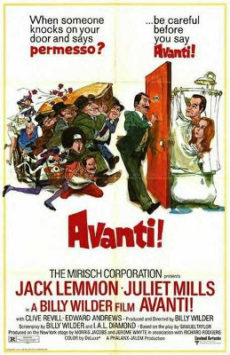
Senza Fine is performed in the 1972 film Avanti!, an American/Italian comedy film produced and directed by Billy Wilder. The film stars Jack Lemmon and Juliet Mills. The screenplay by Wilder and I. A. L. Diamond is based on the play of the same name by Samuel Taylor, which had a short run on Broadway in 1968. It was produced at a time when the censors were more lenient, allowing her naked breasts and his and her naked backside to appear in the film.
The Story Ten years have elapsed since Baltimore industrialist Wendell Armbruster, Sr. first began spending a month at the Grand Hotel Excelsior in the Island of Ischia on the Bay of Naples, in Italy allegedly to soak in the therapeutic mud baths for which the resort island is known. When he is killed in an automobile accident, his straitlaced son Wendell Armbruster, Jr. flies to Italy to claim his father’s body. Upon arrival, he discovers his father had a British mistress, whose free-spirited London shop girl daughter, Pamela Piggott, was fully aware of their parents’ clandestine romance. Wendell’s plan was to return his father’s body back to Baltimore in time for burial in just three days’ time for a huge funeral service. Complications arise including kidnapping, blackmail, murder, a host of government forms and an affair, but with the assistance of hotel manager Carlo Carlucci, they attempt to smooth things over, as he takes on all the arrangements for the body to be taken. J.J. Blodgett of the State Department gets a call from Jr.’s wife and flies in from Rome to come to the rescue. He moves to get the body back to the States for the funeral under the guise of Sr. being a diplomat. In the end, all works out and a new rendezvous is created.
The Cast starred Jack Lemmon as Wendell Armbruster, Jr., Juliet Mills as Pamela Piggott, Clive Revill as Carlo Carlucci, Edward Andrews as J.J. Blodgett, and Gianfranco Barra as Bruno. The supporting cast was Franco Angrisano as Arnoldo Trotta, Franco Acampora as Armando Trotta, Giselda Castrini as Anna, the waitress, Pippo Franco as Matarazzo, Janet Agren as Nurse, Giacomo Rizzo as Barman, Antonino Faà di Bruno as Concierge, Raffaele Mottola as Passport Officer, Harry Ray as Dr. Fleischmann, Ty Hardin as U.S.Navy first helicopter pilot.

More Posts: history,hollywood,instrumental,jazz,music,Street,vocal
Daily Dose Of Jazz…
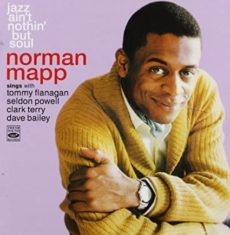
Born John Norman Mapp on March 31, 1928 and raised in Queens, New York. He started his music career as a singer with the U.S. Army band during World War II while stationed in Europe. Receiving his honorable discharge, he returned home to continue singing in New York City.
After an evening of performing, Dinah Washington went uptown to a Harlem night club to hear Norman sing at his debut. Impressed by his performance she adopted him as her protégé, encouraged him to continue singing and writing songs, and helped him start his career as a soloist and big-band musician.
As a composer, Mapp’s songs include Jazz Ain’t Nothin’ but Soul, I Worry ‘Bout You, Mr. Ugly, In the Night, Free Spirits, and Foul Play. His songs have been performed by Count Basie, Betty Carter, Marvin Gaye, Gigi Gryce, Peggy Lee, and Arthur Prysock.
Vocalist and composer Norman Mapp, who never regretted making music his career…because it brought him a wealth of experience, passed away in 1988.

More Posts: bandleader,history,instrumental,jazz,music,vocal
Daily Dose Of Jazz…
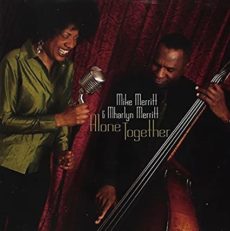
Mharlyn Merritt was born on March 30, 1950 in Philadelphia, Pennsylvania, the daughter of bassist Jymie Merritt. A vocalist rooted in jazz, R&B and classic soul, she has collaborated with her brother Michael on a recording titled Alone Together. She has paid tribute to cabaret with her Jukebox Reveries: Love Songs from the American Songbook as well as experimenting with other genres of music.
A novelist and poet with a Masters of Fine Arts in Creative Writing, Mharlyn is a recipient of a National Endowment for the Arts Fellowship in Jazz Performance and an Interdisciplinary Arts Fellowship from the Pennsylvania Council on the Arts.
Her band Messenger, she has opened fr Hugh Masekela, Eddie Palmieri, and Richard Beltzer among others. She has graced numerous sessions as a background vocalist at Sigma Sound Studios in Philadelphia. Having lived in New York and London vocalist Mharlyn Merritt currently resides in Philadelphia and continues to write, perform and record.
More Posts: bandleader,history,instrumental,jazz,music,vocal