

Daily Dose Of Jazz…
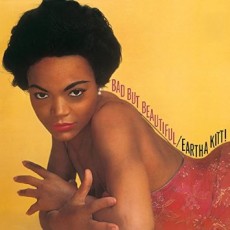
Eartha Mae Kitt was born Eartha Mae Keith on January 17, 1927 to a Cherokee/Black mother and German father on a cotton plantation in North, a small town in Orangeburg County near Columbia, South Carolina.
Raised by Anna Mae Riley, a Black woman whom she believed to be her mother, at age 8 she was sent to live with another family until Anna Mae death due to her man’s refusal to accept the child’s light complexion. She was ultimately sent to live with her biological mother Mamie Kitt in New York City.
Eartha began her career in 1943 with the Katherine Dunham Company, a relationship that lasted until 1948. As a member she appeared in the 1945 original Broadway production of the musical Carib Song. Orson Welles signed her 1950 to her first starring Broadway role as Helen of Troy in his staging of Dr. Faustus, followed by Shinbone Alley. During this decade she starred in films such as Mark of the Hawk, St. Louis Blues and Anna Lucasta.
A talented singer with a distinctive voice and unique style that became enhanced as she became fluent in French, by the early 1950s, she had six US Top 30 hits and a UK Top 10 hit “under The Bridges of Paris” with two more in 1963 and 1983. Kitt recorded such hits as Let’s Do It”, “Champagne Taste”, C’est Si Bon”, “Just An Old Fashioned Girl”, “Monotonous”, “Je Cherche Un Homme”, “Love For Sale” and “Santa Baby” among others.
Success found her way into television taking over the role of Catwoman in 1967 for the 3rd and final season of Batman. But in 1968, her career in America suffered due to President Lyndon B. Johnson after she made anti-war statements at a White House luncheon. It wasn’t until ten years later that she made a successful return to Broadway in the 1978 original production of the musical Timbuktu, receiving the first of her two Tony Award nominations; the second was for the 2000 original production of the musical The Wild Party.
Eartha toured and performed in Europe for many years and her English-speaking performances always seemed to be enriched by a soft French feel. She spoke four languages and sang in seven, which she effortlessly demonstrated in many of the live recordings of her cabaret performances. Over the course of her career from the Seventies until her death, Kitt voiced television commercials, wrote three autobiographies, had disco hits, was embraced by the gay community, continued making movies, making appearances on popular television shows, returned to Broadway and touring companies, and became a darling of the cabaret scene.
Eartha Kitt, actress, jazz singer, cabaret star, dancer, stand-up comedienne, activist and voice artist, winner of three Emmy Awards, and recipient of a Hollywood Walk of Fame Star was a true renaissance woman who screamed her way out of this world, passed away in her home on Christmas Day, December 25, 2008.

Put A Dose In Your Pocket
More Posts: vocal
Daily Dose Of Jazz…
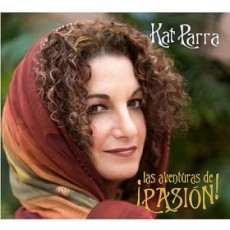
Kat Parra was born on January 13, 1962 in San Francisco, California and spent part of her teenage years in Chile. Upon her return, she move to southern California to attend University of California at Los Angeles where she studied classical flute and voice for a year. Moving to the Silicon Valley area she shifted her educational focus to jazz, studying voice at San Jose State University alongside singer Patti Cathcart of Tuck & Patti, who was a major influence.
Kat spent five years as a lead vocalist for the Bay area salsa band Charanga Nueve, and they opened for the likes of Celia Cruz and Los Van Van of Cuba. But despite all that musical activity, she still had a “day gig” working for the tech giant Cisco Systems. In 2006 she left Cisco to be a full-time singer and concentrate on music exclusively.
That very same year Parra recorded her first solo album, Birds In Flight produced by Bay Area-based trombonist Wayne Wallace on JazzMa Records. After that, she signed with Wallace’s indie label, Patois Records, releasing her second solo album, Azucar de Amor (Sugar of Love) in 2008.
Kat is a flexible and broad-minded jazz vocalist who has very strong Latin leanings but has also been affected by Middle Eastern, Arabic, and North African music as well as greatly influenced by Afro-Cuban jazz. She has also combined jazz with everything from Brazilian samba to Afro-Peruvian music. She plays flute, guitar, and piano, and continues to perform in several different languages, including English, Spanish (which she speaks fluently), Portuguese, French, and Ladino, which is the language of Sephardic Jews and is considered one of the romance languages.
Dose A Day – Blues Away
Daily Dose Of Jazz…
Juul Johansson, better known as Mads Mathias, was born on January 9, 1981 in Silkeborg, Denmark and grew up partly in Tanzania. Growing up in a musical home, his exposure to music began at infancy, picking up the saxophone as his main instrument by age 11. A car accident at seventeen left his right hand injured, losing his index finger and half of two other fingers. Afraid that his days of playing the saxophone were over, he started singing and writing songs instead.
Inspired and influenced by the great jazz vocalists of the past and present from Nat King Cole and Frank Sinatra to Harry Connick Jr, and with a deep respect for the crooner tradition, Mathias is nevertheless an original talent with a unique and effortlessly charming vocal delivery and a skill for writing catchy and memorable, stylishly crafted tunes.
Fortunately the rehabilitation of his hand made him able to play the saxophone again and at age 20 he was entered the Rhythmic Music Conservatory, graduating in 2007.From an early age, Mads Mathias was a part of Jutland jazz scene and today is part of the Danish music scene: As a studio musician, he has contributed to several record releases and frequently used live dates.
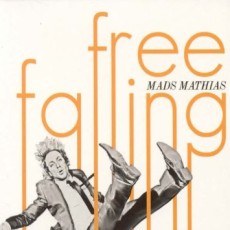
In 2012 released debut solo album Free Falling which won him a Danish Music Award for “Best New Danish Jazz Artist of the Year”, He also won an Honorable Mention Award at one of the world’s largest songwriting competitions for his song “Fool for Love” and Kvintet with the addition of Espen Laub in addition to critical reviews and airplay on Danish radio.
Besides his own Mads Mathias Orchestra, Mads formed Mads Mathias Kvartet with Peter Rosendal, Regin Fuhlendorf and Morten Ankarfeldt and appears with The Danish Radio Big Band, Tivoli Big Band and Six City Stompers. The vocalist, songwriter and saxophonist continues to perform and record.
Put A Dose In Your Pocket
Daily Dose Of Jazz…
Maya Nova was born on January 8, 1974 in Bulgaria. The soulful jazz vocalist earned her BA Degree from the Popular Music Department of National Music Academy in Bulgaria and pursued the live music stage with several leading jazz and funk groups.
Maya was a finalist at two Voice Competitions for young talents: “Golden Orpheus” and “Star Moments”, where she performed with the Bulgarian National Radio Big Band. After making several appearances at Sofia Jazz Fall Festival with her Jazz Quartet that led her to appear on the popular TV program “Todor Kolev’s Night Show” with the National Music Academy Big Band.
In 1998, Nova toured Europe: Denmark, Norway, England and Cypress and in 2002 she moved to Singapore. For the next 10 years she became one of the sought after jazz vocalists at concerts, festivals and clubs not only in Singapore but also in Malaysia, India, China and South Korea.
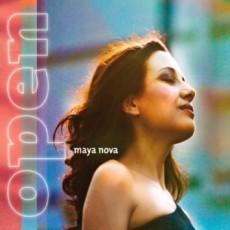
In 2009, Nova was a semi-finalist in the Shure Montreux Jazz Voice Competition at the 43rd Montreux Jazz Festival in Switzerland. She released her debut album “Open” in 2010 with a concert at the Late Nite Show series at Esplanade Recital Hall, Singapore. The following year she performed with her jazz quartet at Bansko International Jazz Festival and Nisville Jazz Festival in collaboration with saxophonist Rick Margitza.
Vocalist Maya Nova moved to New York in 2012 and currently shares her artist schedule between performing and teaching.
Give The Gift Of Knowledge
More Posts: vocal

Daily Dose Of Jazz…
George Kahn was born on January 7, 1952 and grew up in New Rochelle, New York, studying classical music from the age of nine. He began composing while in high school and was always interested in improvisational music. As a Composition Major at Brandeis University, he studied the music of Charles Ives, John Cage and Karlheinz Stockhausen.
In his last years at Brandeis, being particularly affected by John Coltrane’s Kulu Se Mama, which opened his mind towards what was possible in music. After graduating, he lived on Cape Cod for a couple of years, did some gigs in Boston, toured the East Coast with a disco band and eventually moved to California in 1976.
Kahn worked in an improvising New Age group for a few years, studied arranging with Spud Murphy, and performed in a variety of settings. In the latter half of the 1990s he made his move, forming the Playing Music label and Sudhana Music Publishing. Since then he has released six CDs.
George performs frequently in the Los Angeles area, including an annual Jazz For The Homeless fundraiser for the charity PATH (People Assisting The Homeless) and benefits for public school music programs and looks forward to touring again in the near future.
Consistently creative, pianist George Kahn has received critical acclaim for his 2008 “Cover Up!” and continues to perform, subsequently releasing “Jazz & Blues Revue”, an 8–piece band with three vocalists in 2014.
Take A Dose On The Road
More Posts: piano