

Daily Dose Of Jazz…
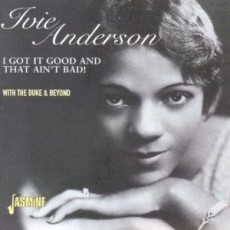
Ivie Anderson was born on July 10, 1905 in Gilroy, California. From age nine to thirteen, she attended St. Mary’s Convent and studied voice. At Gilroy grammar and high school, she joined glee club and choral society. She also studied voice under Sara Ritt while in Nunnie H. Burroughs Institution in Washington, DC.
Ivie’s career officially started around 1921 when she first performed in Los Angeles, California. From 1922 to 1923, she was brought to New York City by joining a pioneering African-American musical revue Shuffle Along. By 1924 and 1925, she had already performed in various locations such as Cuba, the Cotton Club in New York City and in Los Angeles with the bands of Paul Howard, Curtis Mosby and Sonny Clay.
1928 saw Anderson singing in Australia with Clay’s band, starred in Frank Sebastian’s Cotton Club in Los Angeles and soon after, she finally began touring in the States as a solo singer.
With a sweet, clear singing voice, she was a popular attraction with Ellington’s band. Over Ellington’s long career as bandleader, his indifference toward vocalists changed with the hiring of Anderson, who was generally considered the best vocalist he ever employed.
Her outstanding performance of “Stormy Weather” in the movie short Bundle of Blues in 1933 was only eclipsed by the later and far better known version sung by Lena Horne. She also appeared as a singer in the Marx Brothers movie “A Day At The Races” in 1937 and the same year in Hit Parade of 1937 as Ivy Anderson.
Suffering from asthma for years, jazz vocalist Ivie Anderson passed away on December 28, 1949.

Give A Gift Of Jazz – Share
More Posts: vocal
Daily Dose Of Jazz…
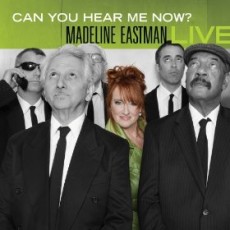
Madeline Eastman was born June 27, 1954 in San Francisco, California. It wasn’t until she turned 18 while watching Lady Sings The Blues that she became enchanted with jazz singing. Listening to Miles Davis’ mid-‘60s quintet and the vocals of Ella Fitzgerald and Sarah Vaughan but gleaned her greatest inspiration from Carmen McRae.
In 2004, Ms. Eastman won 3rd place in the Down Beat Reader’s Poll “Best Female Jazz Vocalist” and was recognized in Down Beat Magazine’s International Critics Poll as “Talent Deserving Wider Recognition.” Eastman has long been heralded for her vocal gifts, interpretive savvy, and irrepressible sense of adventure.
Splitting her time between touring and teaching at Stanford Jazz Workshop and being named Department Chair of Jazz Vocal Studies at the Jazzschool in Berkeley, California, Madeline has performed in Asia and Europe and major clubs in the U.S. such as Yoshi’s, Jack London Square, New York nightclubs and festivals like the Cotati, Monterey and Glasgow.
She has released five CD’s on her own Mad Kat label that she co-founded with vocalist Kitty Margolis and has recorded with such luminaries as Cedar Walton, Kenny Barron, Phil Woods, Rufus Reid and Tony Williams. Vocalist Madeline Eastman continues to record and perform in her bold and original interpretations of the jazz canon and lively onstage persona.
Inspire A Young Mind
More Posts: vocal
Daily Dose Of Jazz…
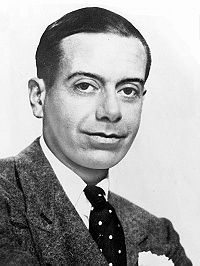
Cole Albert Porter was born into wealth on June 9, 1891 in Peru, Indiana. His musical training began at an early age, learning the violin at age six, the piano at eight and wrote his first operetta, with help from his mother at 10. His father, an amateur poet, may have influenced his son’s gifts for rhyme and meter. He matriculated through Yale writing student songs went on to Harvard law, switched to the music faculty, where he studied harmony and counterpoint.
Classically trained, he was drawn towards musical theatre. After a slow start, he began to achieve success in the 1920s, and by the 1930s he was one of the major songwriters for the Broadway musical stage. Unlike most successful Broadway composers, Porter wrote both the lyrics and the music for his songs.
After a serious horseback riding accident in 1937, Cole was left disabled and in constant pain, but he continued to work. His shows of the early 1940s did not contain the lasting hits of his best work of the 1920s and 30s, but in 1947 he made a triumphant comeback with his most successful musical, Kiss Me Kate.
Porter wrote numerous songs that have come to be jazz standards such as Night and Day, Anything Goes, I Get A Kick Out Of You and I’ve Got You Under My Skin, It’s De-Lovely, Begin the Beguine, Just One of Those Things and In The Still of the Night. He also composed scores for films from the 1930s to the 1950s.
Cole Porter, composer and lyricist, noted for his sophisticated, suggestive lyrics, clever rhymes and complex forms, contributed to the great American songbook, passed away of kidney failure on October 15, 1964.
Put A Dose In Your Pocket
More Posts: composer,songwriter
Daily Dose Of Jazz…
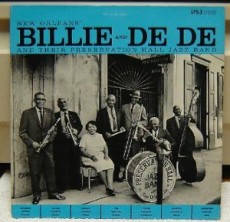
Billie Pierce was born Wilhelmina Goodson on June 8, 1907 in Marianna, Florida. She was born into a family of pianists with both parents and seven-sisters playing, notably her sister Ida Goodson.
Early in the 1920s, Billie played with Bessie Smith and later in the decade played in the bands of Alphonse Picou, Emile Barnes and George Lewis. By the 1930s she was playing the Blue Jay Club, where she met trumpeter De De Pierce; the two fell in love, married, and co-led their own ensemble, which served as the house band at Luthjen’s Dance Hall in the 1950s.
She played in the Preservation Hall Jazz Band and was a regular on the New Orleans jazz scene in the 1950s through the early Seventies. Pianist and singer Billie Goodson died on September 29, 1974 in New Orleans, Louisiana at the age of 67.
Give The Gift Of Knowledge
More Posts: vocal
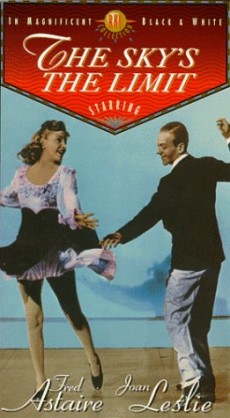
Hollywood On 52nd Street
My Shining Hour and One For My Baby (And One More For The Road) are from a 1943 musical comedy movie titled “The Sky’s The Limit”. Harold Arlen composed the music and Johnny Mercer wrote the lyrics. It starred Fred Astaire and Joan Leslie.
My Shining Hour was introduce by Sally Sweetland and was nominated for an Academy Award for Best Song. It is believed that the opening line “this will be my shining hour” to have been a reference to Winston Churchill’s famous rallying call to British citizens during the war: “This will be our finest hour”.
One For My Baby (And One For More The Road) took two and a half days to shoot, after seven days of full set rehearsal. After a drunken rendition of the song, he furiously tap dances up and down the bar, pausing only to smash stacked racks of glasses and a mirror. The number was first performed in the film by Fred Astaire but popularized by Frank Sinatra.
Sponsored By

www.whatissuitetabu.com