

Daily Dose Of Jazz…
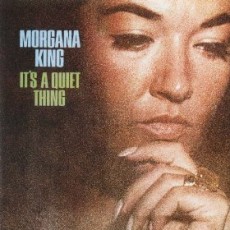
Morgana King was born Maria Grazia Morgana Messina on June 4, 1930 in Pleasantville, New York but grew up in New York City at 145th & Amsterdam. Around 13, she began studying acting with the Shubert Theatre family, discovered her vocal talents and received a scholarship to the Metropolitan School of Music.
By sixteen she heard jazz and fell in love with the big bands of Benny Goodman, Harry James but they became overshadowed by Duke Ellington, Erskine Hawkins and Benny Carter. It was during this period she changed her name to Morgana King and her professional career began on a stage in Greenwich Village.
Morgana’s unique phrasing and multi-octave range has made her a formidable interpreter that was expressively evident on her 1956 debut release “For You, For Me, For Evermore”. Her singing career would go on to span four decades with such albums as “It’s A Quiet Thing”, “Wild Is Love” and “Gemini Changes” and headlining clubs, concert halls and hotels throughout the U.S., Europe, Australia and South America with a limited list of musicians she has performed and recorded with.
She is also known for her acting debut playing Carmela Corleone in The Godfather, singing “Eh, Cumpari” and reprising the role in the Godfather Part II. Retiring from show business in 1993, her body of work that includes over thirty albums exhibits her four-octave range, her lyrical signature and her refined ease of evoking a sentiment not just in jazz but also throughout her expanded genres. Morgana King passed away on March 22, 2018 in Palm Springs, California leaving us with her catalogue of music that includes her 1964 signature song “A Taste of Honey”.

Inspire A Young Mind
More Posts: vocal
Hollywood On 52nd Street
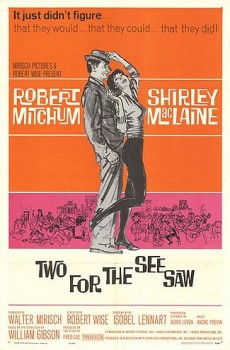
A Second Chance comes from a 1962 film Two For The Seesaw adapted from the Broadway play written by William Gibson. Robert Wise directed and Robert Mitchum and Shirley MacLaine played the lead roles. Andre Previn composed the music with lyrics by Dory Langdon.
The Story: Nebraska attorney Jerry Ryan (Mitchum) recently separated from his wife gets away from it all by moving into a shabby New York apartment. While struggling with the divorce, he meets struggling dancer Gittel Mosca (MacLaine) at a party. They instantly get along, begin to fall in love but the relationship is rocky and hampered by their differences in background and temperament. Gittel has a fling and Jerry can’t separate himself from his ex though the divorce is final. He decides to move back to Nebraska.
Sponsored By

www.whatissuitetabu.com

From Broadway To 52nd Street
As our final installment on the musicals and the songs that have gone on to become classics in the jazz catalogue, Broadway has entertained millions of audiences from around the world and has touched every human emotion and story one can imagine. It has captured our hearts and taken us on journeys to unexpected destinations both visceral and intuitive.
The Broadway musical played an integral role in the creation of the Great American Songbook as songs from the legendary composers and lyricists like Gershwin, Porter, KernRodgers, Hammerstein, Van Heusen, Hart, Webber, Rice, Loesser, Bricusse, Newley, Styne, Comden etc. have filled the pages of our imaginations
The “blockbuster” musicals were so successful that they ran over a thousand performances. A small aggregation of only 17 comprised of Oklahoma (2,212), Annie Get Your Gun (1,147), Kiss Me Kate (1,077), South Pacific (1,925), Guys & Dolls (1,200), The King And I (1,246), The Pajama Game (1,063), My Fair Lady (2,717), How To Succeed In Business (1,417), Funny Girl (1,348), Hello Dolly (2,844), Fiddler On The Roof (3,242), The Sound Of Music (1,443), Mame (1,508), Promises, Promises (1,281), Ain’t Misbehavin’ (1,604) and Evita (1,567).
To describe Broadway one would beg permission to borrow from Tevya in Fiddler On The Roof – “without tradition our lives would be as shaky as a fiddler on the roof!”
The lyrics and composition that were relegated to the amphitheaters of “The Great White Way” have received perpetual encores over the past century under the auspices of “The Street” and the songs continue to be honored by living legends, contemporaries and the “new breed” of jazz musicians and vocalists.
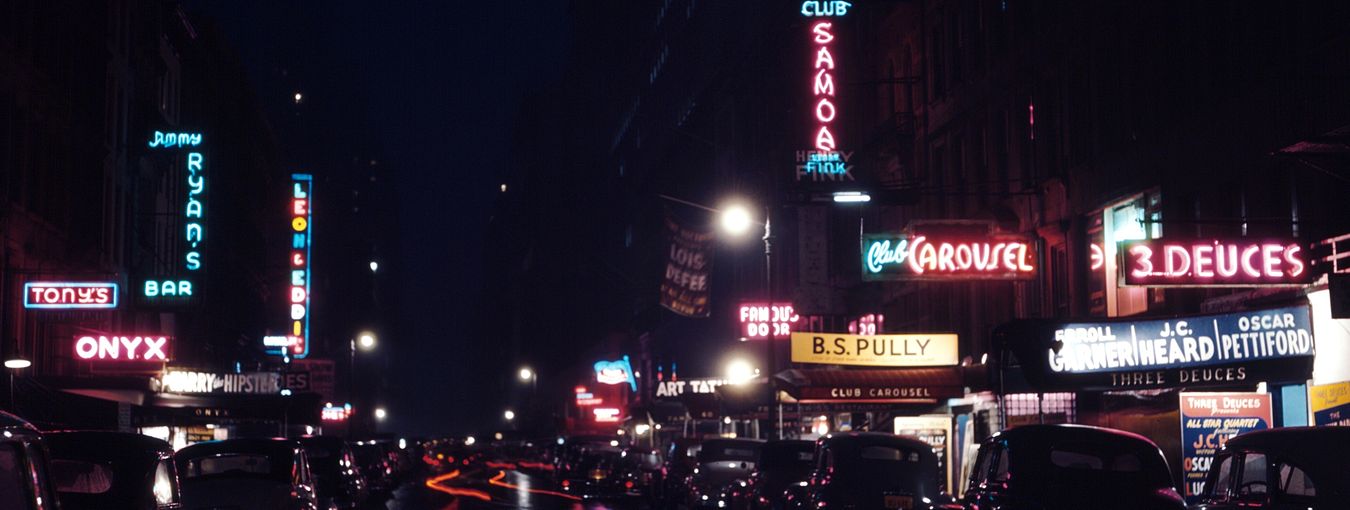
52nd Street, between Fifth and Seventh Avenues was known as “Swing Street” was equally attended by hundreds of thousands during its heyday between the 1930s and 1950s in just thirteen clubs. Equally blockbuster are the million selling albums of Miles Davis (Kind of Blue), Dave Brubeck (Time Out), John Coltrane (A Love Supreme, Blue Train), Herbie Hancock (Headhunters), Louis Armstrong (What A Wonderful World), Ella Fitzgerald (Best of the Songbooks).
To describe 52nd Street one would merely state that it was the epicenter of jazz in New York City and the connection between the musicians who played on Broadway and the legitimate clubs. It was the place where musicians who played for others earlier in the night, played for themselves on 52nd Street.

Daily Dose Of Jazz…
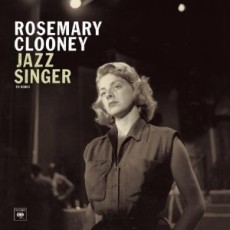
Rosemary Clooney was born on May 23, 1928 in Maysville, Kentucky. When she was fifteen, her parents split up and along with her sister, Betty remained with their father. In 1945, the Clooney sisters won a spot on Cincinnati, Ohio’s radio station WLW as singers. They sang in a duo for much of her early career. Clooney’s first recordings in 1946 were for Columbia Records. She sang with Tony Pastor’s big band. Clooney continued working with the Pastor band until 1949 when making her first as a solo artist a month later still for Columbia.
In 1951, her record of “Come On-a My House”, produced by Mitch Miller, became a hit. It was her first of many singles to hit the charts, despite the fact that Clooney hated the song passionately. She had been told by Columbia Records to record the song, and that she would be in violation of her contract if she did not do so.
Around 1952, Rosemary recorded several duets with Marlene Dietrich and by ’54 she was starring in the movie White Christmas with Bing Crosby, Danny Kaye and Vera-Ellen. She went on to appear on radio and television, including her own half-hour show featuring the Nelson Riddle Orchestra.
Leaving Columbia Records in 1958 for MGM Records doing a number of recordings, then some for Coral Records. Her career languished in part due to depression and drug addiction in the early Sixties but she signed with RCA Victor until 1963, on to Reprise in ‘64, Dot Records in 1965 and moved to United Artist Records in ’66.
Clooney’s career revived in 1974, when she appeared with Bing Crosby on his 50th anniversary in show business. By 1977, she recorded an album a year for the Concord Jazz record label.
Throughout her career Rosemary Clooney continued to perform on radio, sing jingles for television commercials, guest starred on nighttime dramas, parodied on Saturday Night Live, received a Primetime Emmy nomination, collaborated with Barry Manilow, founded the Rosemary Clooney Music Festival, received a Grammy Lifetime Achievement Award and recorded until her death on June 29, 2002.
Give The Gift Of Knowledge
More Posts: vocal
Daily Dose Of Jazz…
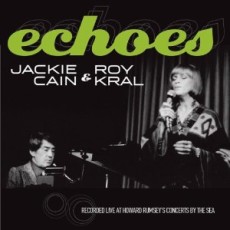
Jackie Cain was born May 22, 1928 in Milwaukee, Wisconsin. By the time she was 18, the blonde and extremely attractive high school graduate decided she wanted to be a jazz singer. The year was 1946 when a friend took her to Chicago and introduced her to Roy Kral, a pianist and arranger who was going places. He took a good look at her, but according to legend wasn’t the least bit interested until he heard her sing.
Liking something about each other, they became a duo using their first names Jackie & Roy and became one of the most enduring combinations in jazz, beginning in the late ’40s when the team began interacting as fellow members of intriguing saxophonist Charlie Ventura’s band. The two continued working together, off and on, until Kral’s death from congestive heart failure at the age of 80 in 2002. The following year Jackie was still going strong, performing at an 85th birthday event for jazz pianist Marian McPartland.
The appeal of Jackie & Roy was about voices, but more accurately about voicings. The two vocalists, who became husband and wife in 1949, sang like twin songbirds but with ranges an octave apart. This blend would be effective in any singing style, but was uniquely suited to the style of jazz vocalese. Along with goofy singer Eddie Jefferson, Jackie & Roy were innovators in a type of jazz singing that is distinct from scat singing.
Her syllables or sheer vocal sounds along with a great sense of humor created enjoyable performances and funniest material. She recorded commercials for Plymouth, recorded Paul Simon and Donovan material, and by 1990 had appeared on over 50 recordings. She has also studied both flute and cello.
Take A Dose On The Road
More Posts: vocal