


Hollywood On 52nd Street
When Did You Leave Heaven was nominated for an Academy Award for Best Original Song in 1936 from the movie Sing Baby Sing. Richard A. Whiting and Walter Bullock composed the music and lyrics. Alice Faye, Adolphe Menjou, Gregory Ratoff, Ted Healy, Patsy Kelly and Paul Stanton.
The Story: Singer Joan Warren is fired from her job at the Ritz Club and seeks help from theatrical agent, Nicky Alexander. Taking her to Mr. Brewster, president of the Federal Broadcasting Company, she auditions but does not get the job due to upper class snobbery. Back at the club packing her bags she is convinced to audition for drunken actor Bruce Farraday. Pictures taken, scandal ensues and a radio contract is offered to Warren if Farraday will perform with her. Tricking Brewster into believing it to be true they plan to broadcast from Kansas City but Farraday exonerates Warren and honestly secures the radio contract for her.
Sponsored By

www.whatissuitetabu.com
Daily Dose Of Jazz…
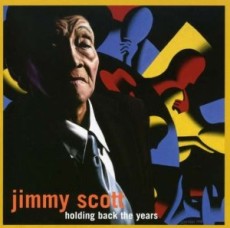
Jimmy Scott was born JamesVictor Scott on July 17, 1925 in Cleveland, Ohio into a family of ten. As a child Jimmy got his first singing experience by his mother’s side at the family piano, and later, in church choir. At thirteen, he was orphaned after a drunk driver killed his mother.
He first rose to prominence as “Little Jimmy Scott”, a moniker given by Hampton when he was in the Lionel Hampton Band when he sang lead on the late 1940s hit “Everybody’s Somebody’s Fool”, recorded in December 1949, and which became a top ten R&B hit in 1950, though label credit went to “Lionel Hampton. This omission of credit was not only a slight to Scott’s talent but a huge blow to his career. A similar professional insult occurred several years later when his vocal on “Embraceable You” with Charlie Parker, on the album One Night in Birdland, was credited to female vocalist Chubby Newsome.
By 1963 it looked as though Scott’s luck had changed: he signed to Ray Charles’ Tangerine Records label, under the supervision of Charles himself, creating what is considered by many to be one of the great jazz vocal albums of all time, Falling in Love is Wonderful. However, owing to obligations on an earlier contract that Scott had signed with Herman Lubinsky, the record was withdrawn in a matter of days, while Scott was on honeymoon. The album was not re-released for forty years. His career subsequently faded by the late 1960s and he returned to his native Cleveland to work as a hospital orderly, shipping clerk and as an elevator operator in a hotel.
In 1991 Scott eventually resurfaced when he sang at the funeral of his long-time friend Doc Pomus, an event that single-handedly sparked his career renaissance. Afterwards Lou Reed recruited him to sing backup on the track “Power and Glory” from his 1992 album Magic and Loss, which was inspired, to an extent, by Pomus’s death. That same year Sire Records released the album All The Way with Kenny Barron, Ron Carter and David “Fathead” Newman for which he was nominated for a Grammy. He followed this up with Dream, Heaven, Holding Back The Years, and in 1999, his early Decca and Savoy recordings were re-released on CD.
Scott’s career spanned sixty-five years and during that time he performed at the inaugurations of President Dwight D. Eisenhower (1953) and President Bill Clinton (1993) performing the same song, “Why Was I Born?”. He has received an NEA Jazz Master Award, the Kennedy Center’s Jazz In Our Time Living Legend Award, Lifetime Achievement Award from the Jazz Foundation of America, Inducted into the R&B Hall of Fame and conducted a “two-day video interview with the Smithsonian Institute for the National Archives.
Though he looked so young, and was short and of slight build, it was his extraordinary phrasing and romantic feeling that made him a favorite singer of fellow artists such as Billie Holiday, Ray Charles, Frankie Valli, Dinah Washington, and Nancy Wilson. The list of luminaries he performed with is extensive but includes Quincy Jones, Sarah Vaughan, Fats Navarro, Bud Powell and numerous others. Vocalist Jimmy Scott passed away of cardiac arrest on June 12, 2014 at the age of 88. He was sleep at his home in Las Vegas.

Jazz Is Global – Share
More Posts: vocal
Daily Dose Of Jazz…
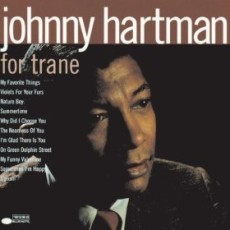
Johnny Hartman was born John Maurice Hartman on July 13, 1923 in Chicago, Illinois. Possessing a beautiful voice, good looks and an engaging stage presence, his lush bass, similar to Billy Eckstine’s, was less mannered. He always cited Frank Sinatra and Nat “King” Cole as his primary influences, audible in his naturalistic phrasing and attention to the narrative detail of a lyric.
Briefly a member of Dizzy Gillespie’s group, over the next four decades Hartman recorded infrequently over a four-decade career but left as his legacy exquisite albums such as Songs From the Heart and I Just Dropped By to Say Hello. Johnny’s well-known collaboration with the saxophonist John Coltrane in 1963 called “John Coltrane and Johnny Hartman” was chosen by Esquire Magazine as the greatest album ever made.
While the crossover fame he richly deserved eluded him during his lifetime, he recorded through much of his career as a solo artist. By the late-1960s Hartman was working primarily in Japan and Australia, performing starring in his own TV specials. By the late-’70s Hartman was working back in the States, where he earned a Grammy nomination in 1980. Then, just as his career was taking off again, he developed cancer, passing away on September 15, 1983.
Johnny Hartman’s resurgence in popularity In the mid-’90s came when Clint Eastwood included a handful of his songs in his adaptation of The Bridges of Madison County, introducing him to a whole new generation of listeners. The resulting soundtrack CD, as well as two re-issued Hartman albums, quickly sold more than any of his work had during his lifetime.
Dose A Day – Blues Away
More Posts: vocal
Hollywood On 52nd Street
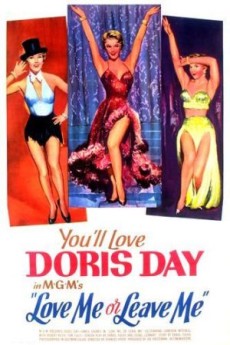
I’ll Never Stop Loving You, composed by Nicholas Brodzsky and Sammy Cahn wrote the lyrics for the 1955 film Love Me or Leave Me. The film is a biographical romantic musical drama that retells the life story of Ruth Etting, a singer who rose from dancer to movie star.
Doris Day stars as Etting, James Cagney as gangster Martin “Moe the Gimp” Snyder, her first husband and manager, and Cameron Mitchell as pianist/ arranger Myrl Alderman, her second husband.
Sponsored By
www.whatissuitetabu.com
Daily Dose Of Jazz…
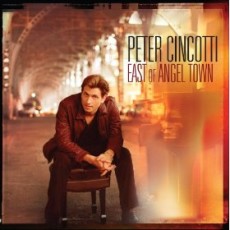
Peter Cincotti was born July 11, 1983 in New York City. The singer, songwriter and pianist started playing a toy piano at the age of three and attended the Horace Mann School. While in high school, he regularly performed at clubs throughout Manhattan and performed at the White House.
At the 2000 Montreux Jazz Festival he won an award for a rendition of Dizzy Gillespie’s “A Night In Tunisia” and in 2002 Peter reached No. 1 on the Billboard Traditional jazz Charts, the youngest solo artist to do so to date.
Cincotti appeared in a small role and contributed to the soundtrack of the 2004 Bobby Darin biopic Beyond The Sea, had a small role as the Piano Player in Spider-Man 2, and his song “December Boys” is featured in the 2007 film of the same name.
His self-titled debut album is a compilation of traditional jazz songs, while his second album, “On The Moon” featured some of the artist’s own songs, that was followed by his third “East of Angel Town”. Combining pop, jazz, rock and dance, Peter created his fourth studio album, “Metropolis” and released worldwide in the spring of 2012.
That same year, Peter and his sister Pia Cincotti wrote and produced an original full-length musical titled “How Deep Is The Ocean?” that debuted at The New York Musical Theater Festival to sold out audiences in New York. He continues to perform, compose, record and tour.
Inspire A Young Mind