

Daily Dose Of Jazz…
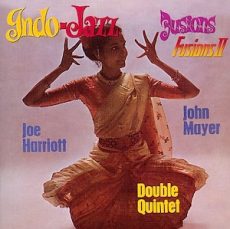
John Henry Basil Mayer was born on October 28, 1930 in Calcutta, Bengal, British India, to an Anglo-Indian father and Tamil mother. After studying with Phillipe Sandre in Calcutta and Melhi Mehta in Bombay, he won a scholarship to London’s Royal Academy of Music in 1952, where he studied composition with Matyas Seiber, as well as comparative music and religion in eastern and western cultures.
He worked for five years as a violinist with the London Philharmonic Orchestra beginning in 1953 and then with the Royal Philharmonic Orchestra from 1958 to 1965. During that period John was also composing fusions of Hindustani classical and Western classical forms fused with jazz undertones. His Violin Sonata was performed by Yehudi Menuhin and his Shanta Quintet was recorded by jazz sitarist Diwan Motihar and Denis Preston’s Lansdowne String Quartet in 1967.
In the 1960s he worked extensively with the Jamaican-born jazz musician Joe Harriott, with whom he formed the group Indo-Jazz Fusions. John also composed for film, and the BBC quiz show Ask the Family. From 1989 onwards he taught composition at Birmingham Conservatoire where he introduced the BMus Indian music course in 1997. He continued to compose concert works for chamber, solo and orchestral projects and record jazz-fusion albums.
Composer and sitarist John Mayer, known primarily for his fusions of jazz with Indian music, was fatally injured when hit by a motorist in North London and died on March 9, 2004.

More Posts: bandleader,composer,history,instrumental,jazz,music,sitar
Daily Dose Of Jazz…
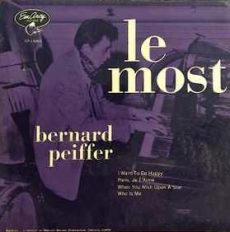
Bernard Peiffer was born on October 23, 1922 in Épinal, France and was raised in a musical family, with his father and uncle playing the violin and the organ, respectively. Learning piano at age nine, he studied under Pierre Maire and quickly demonstrated his abilities by repeating long sections of classical works by ear. He won the 1st Prize in Piano at the Paris Conservatory and began his professional career at the age of twenty. playing with André Ekyan and Django Reinhardt.
During World War II, he joined the French resistance after witnessing the execution of a friend by the Gestapo in the streets of Paris. Soon afterwards he was captured, and was incarcerated for over a year. By the early 1950s, he began a successful career, playing with Django Reinhardt, leading his own quintet, composing film soundtracks, and achieving notice in the clubs of Paris, Monte Carlo and Nice, and eventually became nationally known.
He moved to Philadelphia, Pennsylvania in 1954 with his wife Corine and daughter Rebecca. The subsequent loss of his third daughter profoundly affected him, resulting in Poem for a Lonely Child. During his first years in America, Bernard achieved considerable success, performing at Carnegie Hall, Birdland, and the Newport Jazz Festival. He recorded for the EmArcy, Decca and Laurie labels.
Peiffer released his last commercial album in 1965 and, after having kidney surgery a few years later, restricted himself to performing and teaching, mainly in Philadelphia. His students included Uri Caine, Sumi Tonooka, Tom Lawton, and Don Glanden. His last major appearance was at the 1974 New York/Newport Festival at Carnegie Hall. Pianist, composer and teacher Bernard Peiffer, whose nickname was Le Most for his piano skills, died on September 7, 1976. He was 53.
More Posts: bandleader,composer,educator,history,instrumental,jazz,music,piano
Daily Dose Of Jazz…
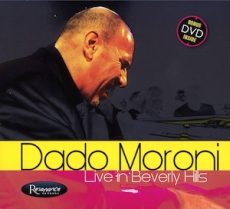
Edgardo “Dado” Moroni was born October 20, 1962 in Genoa, Italy and started playing piano at age four. A self-taught musician, by his mid-teens he was playing professionally around Italy and by age 17 had recorded his first album.
Throughout the 1980s Dado worked mostly in Europe and played a long stint as part of former Duke Ellington bassist Jimmy Woode’s trio at Widder Bar in Zurich, Switzerland. At 25, in 1987 he served as a juror at the prestigious Thelonious Monk International Piano Competition.
He moved to the U.S. in 1991 and became part of the New York jazz scene. He appeared regularly as a leader and sideman at Blue Note, Birdland, and the Village Vanguard. During this period he recorded several CDs.
Moroni has played with Freddie Hubbard, Clark Terry, Zoot Sims, Harry “Sweets” Edison, Ray Brown, Ron Carter, Oscar Peterson, Ahmad Jamal, Hank Jones, Niels-Henning Ørsted Pedersen and Alvin Queen.
Based in Italy, Dado continues to perform worldwide. In 2007 he won the Italian Jazz Awards as Best Jazz Act. 2009 had him named Best Italian Jazz Pianist in the Top Jazz referendum sponsored by Musica Jazz magazine. The following year he was appointed Professor of Jazz Piano at Giuseppe Verdi Conservatory of Music in Turin, Italy.
Pianist, composer and educator Dado Moroni continues to perform, record and teach.
More Posts: composer,educator,history,instrumental,jazz,music,piano
Daily Dose Of Jazz…
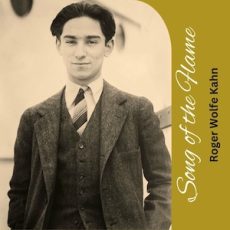
Roger Wolfe Kahn was born on October 19, 1907 in Morristown, New Jersey, into a wealthy German Jewish banking family. He began studying the violin aged six and is said to have learned to play eighteen musical instruments before starting to lead his own orchestra in 1923, at the age of only 16. His interest in music led the ten year old to buy a ukulele with instructions on how to play. The ukulele turned his mind toward violins, pianos, banjos and jazz orchestras.
By sixteen he rejected college, formed his own booking agency and organized a paying band. He installed it at the Knickerbocker Grill in New York. Self-taught, he could play every instrument in the outfit, and his favorite instruments were the piano and saxophone. By the time he reached nineteen, he had eleven orchestras on his books that played in resorts and hotels from Newport, Rhode Island to Florida. His success enabled him to pursue his passion for composing music and aviation.
Kahn appeared in a short film, hired many famous jazz musicians and singers of the day to play and sing in his band, especially during recording sessions. They were Tommy Dorsey, Morton Downey, Joe Venuti, Eddie Lang, Artie Shaw, Jack Teagarden, Red Nichols, Libby Holman, Gertrude Niesen, Franklyn Baur, Dick Robertson, Elmer Feldkamp and Gene Krupa.
Early on in his career he made several recordings under the name Roger Wolfe Kahn and His Hotel Biltmore Orchestra. He and his Orchestra recorded four takes of the song Rhythm Of The Day for Victor Records and for some reason Victor chose not to release any of them. Undeterred, he wrote the song Following You Around, and arranged the score of his stage musical Rhapsurdity and Hearts and Flowers.
During his career Roger made recordings for Victor, Brunswick and Colubia records, fronted several fashionable New York night clubs and owned several clubs, one beingLe Perroquet de Paris, opened in New York in November 1926 with a five-dollar cover charge. In 1938, the Kahn Orchestra reformed to perform a special one-off concert, in what could have been the Kahn Orchestra’s last concert.
Roger Wolfe Kahn, who was a composer, bandleader and an aviator, died of a heart attack in New York City on July 12, 1962.
More Posts: arranger,bandleader,composer,history,instrumental,jazz,music

Daily Dose Of Jazz…
George Letellier was born October 11, 1957 in the United States. After attending Berklee College of Music in Boston, Massachusetts in 1975, the following year he wrote his first compositions and arrangements. He began as a pianist playing in warm-up bands for artists such as Phil Woods, Gary Burton, and Steve Swallow. Returning to Berklee in 1983, he graduated two years later with a Superior Prix in Film Music Composition.
Moving to San Francisco, California he worked as a freelance pianist in the jazz and salsa genre from 1986 until 1990. His successful session work attracted film executives and he was hired to compose music for films and corporate videos. In 1987 George served as a music editor on the Academy Award-nominated short film Liru, and in 1988 in Oakland, California, established a film production company where he worked not only as a composer but a producer.
In 1991, Letellier moved to Portugal, accepting a job offer as a professor of composition in Porto, Portugal. There he composed two ballets and was a session musician. He collaborated with saxophonist Mario Santos and formed the George Letellier Quartet which toured all across Portugal.
By 1995 he relocated to Luxembourg and began working as a music composer, session musician and taught private lessons. With the Opus 78 Big Band, he collaborated in arranging the tunes of Frank Sinatra and turning them into large philharmonic ensembles for performing.
From 1997 until 2003, he went into education serving as Director of Jazz Studies at the Esch Conservatoire, wrote three publications on jazz theory and formed the original Consabora Salsa Orchestra with Harri Jokiharra. Since 2001, Letellier has taught jazz at L’Ecole de Musique in Echternach, Luxembourg.
Pianist, composer, and educator George Letellier continues to function as a session pianist, and has performed in hundreds of jazz concerts and theatrical productions in Luxembourg, the United States, Europe, and India.
More Posts: bandleader,composer,educator,history,instrumental,jazz,music,piano