

Daily Dose Of Jazz…
John Robichaux: The Forgotten King of New Orleans Dance Bands
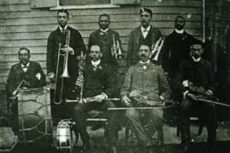
Before there was Louis Armstrong, before jazz became the word on everyone’s lips, there was John Robichaux—a Creole musician born January 16, 1866, in Thibodaux, Louisiana, who quietly ruled New Orleans’ dance scene for nearly half a century.
A Multi-Instrumentalist’s Rise
Picture a young man learning brass bass, alto saxophone, and drums, then maturing into a 25-year-old bass drummer with the prestigious Excelsior Brass Band—one of New Orleans’ most respected musical institutions. But Robichaux wasn’t content to simply keep the beat. From 1892 to 1903, while still performing with the Excelsior, he was simultaneously leading his own ensembles and adding violin to his growing arsenal of instruments. The man believed in keeping busy.
The Bandleader New Orleans Trusted
Here’s what makes his story remarkable: Robichaux’s bands weren’t just popular—they were the bands to hire if you wanted class, precision, and professionalism. At one point in 1913, he was conducting a staggering 36-piece orchestra. Imagine coordinating that many musicians in the early 20th century, long before modern amplification or recording technology!
His reputation attracted New Orleans’ finest musicians—legends like guitarist Bud Scott, clarinetist Lorenzo Tio Jr., and cornetist Manuel Perez all played under his baton. When you could attract that caliber of talent, you weren’t just running a band—you were running an institution.
Forty-Six Years at the Top
For an astonishing 46 years, Robichaux was the most continuously active dance bandleader in New Orleans. Forty-six years! That’s longer than most entire careers, a testament to both his musical excellence and his business acumen in an incredibly competitive city.
When History Changed the Game
But history has a way of complicating even the greatest success stories. When Louisiana’s Black Code amendment passed in 1894, it reclassified Creoles of color, throwing Robichaux’s refined Creole orchestras into direct competition with the grittier Uptown Negro bands that played a rawer, more improvisational style. The musical landscape was shifting beneath his feet, gradually eroding the dominance he’d worked decades to build.
A Prolific Legacy
Still, Robichaux persisted with remarkable productivity. Over his career, he composed more than 350 songs and orchestral arrangements—a staggering output that speaks to both his creativity and work ethic. He remained primarily in New Orleans, occasionally touring with the traveling musical revue One Mo’ Time, but always returning to the city that made him.
The Bridge Between Eras
When John Robichaux died of natural causes in 1939, an entire era of New Orleans music died with him. He represents a crucial bridge between the city’s formal, European-influenced dance orchestras and the raw, revolutionary jazz that would soon conquer the world. His bands were where young musicians learned discipline, arrangement, and professionalism before they went off to create something entirely new.
History remembers the revolutionaries, but it often forgets the masters who created the foundation upon which revolutions are built. John Robichaux deserves better than footnote status—he deserves recognition as one of the architects of New Orleans’ musical golden age.
More Posts: bandleader,drums,violin