


Daily Dose Of Jazz…
David Friesen was born on May 6, 1942 in Tacoma, Washington, the younger brother to actress Dyan Cannon. An autodidact on bass, he picked it up while serving in the U.S. Army in Germany.
He played with John Handy and Marian McPartland and following this, with Joe Henderson and in 1975 he toured through Europe with Billy Harper. His first album as a session leader, Cool Pool on the Muse label was recorded in ‘75. The following year Friesen began collaborating with guitarist John Stowell that produced many dates where they would work together.
He performed with Ted Curson at the Monterey Jazz Festival in 1977 and then worked with Ricky Ford, Duke Jordan, Mal Waldron, and Paul Horn. David’s 1989 album Other Times, Other Places reached No. 11 on the U.S. Billboard Top Jazz Albums chart. He would go on to perform or record with has Chick Corea, Michael Brecker, Stan Getz, Dexter Gordon, Kenny Garrett, and Dizzy Gillespie.
Double bass and electric upright bassist David Friesen has recorded forty-three albums as a leader and continues to perform and record.
Sponsored By


#preserving genius
More Posts: bass
Daily Dose Of Jazz…
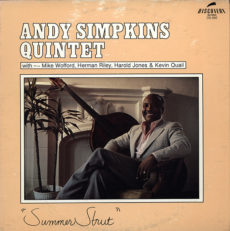
Andrew Simpkins was born on April 29, 1932 in Richmond, Indiana and first became known as a member of the group The Three Sounds, with which he performed from 1956 to 1968. After departing he joined George Shearing until 1974, and from 1979 to 1989 toured with Sarah Vaughan.
In the Seventies he settled in Los Angeles, California and became respected as a top-quality bassist and widely known as a solid and reliable studio musician.He performed with singers Carmen McRae and Anita O’Day, instrumentalists Gerald Wiggins, Monty Alexander, Buddy DeFranco, Don Menza, and Stéphane Grappelli, and many others.
He recorded three albums as a leader and also played acoustic bass on the 1997 Cover Album recording with Pat Boone titled In a Metal Mood: No More Mr. Nice Guy. Throughout his career not only did he record prolifically with The Three Sounds, he recorded with Kenny Burrell, Victor Feldman, Lalo Schifrin and Joe Williams.
Bassist Andy Simpkins passed away of stomach cancer on June 2, 1999 in Los Angeles.
Sponsored By
#preserving genius
More Posts: bass
Daily Dose Of Jazz…
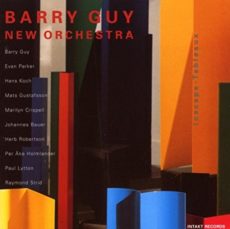
Barry John Guy was born April 22, 1947 in London, England and came to the fore as an improvising bassist as a member of a trio with pianist Howard Riley and drummer Tony Oxley in 1969. He also became an occasional member of John Stevens’ ensembles in the 1960s and 1970s, including the Spontaneous Music Ensemble.
By the early 1970s, he was a member of the influential free improvisation group Iskra 1903 with Derek Bailey and trombonist Paul Rutherford and in the late Seventies was revived with violinist Philipp Wachsmann, replacing Bailey. Guy, saxophonist Evan Parker, and drummer Paul Lytton became one of the best-known and most widely travelled free-improvising trios of the 1980s and 1990s.For a brief time he was a member of the Michael Nyman Band in the 1980s, performing on the soundtrack of The Draughtsman’s Contract.
Guy’s improvisation and formal composition interests led him to the London Jazz Composers Orchestra, originally formed to perform his composition Ode in 1972. The orchestra became one of the great large-scale European improvising ensembles. Though documentation is sketchy early on, in the late 1980s the Swiss label Intakt set out to document the band more thoroughly, resulting in several recordings.
He has also written for other large improvising ensembles, such as the NOW Orchestra and ROVA. Having taught at Guildhall School of Music, double bassist Barry Guy is currently improvising in piano trios with Marilyn Crispell and Agusti Fernandez, recorded several albums for ECM, continues to venture into the pop field with his session work, and along with his wife, run the small label Maya, which releases a variety of records in the genres of free improvisation, baroque music and contemporary composition.
Sponsored By
#preserving genius
More Posts: bass
Daily Dose Of Jazz…
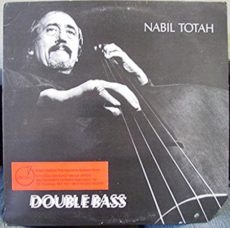
Knobby Totah was born Nabil Marshall Totah on April 5, 1930 in Ramallah, Palestine. He emigrated to the United States in 1944 and began playing the bass in 1953. He first worked in Japan with Toshiko Akiyoshi and Hampton Hawes in 1953 and ‘54, then with Bobby Scott , Johnny Smith and with Charlie Parker, Gene Krupa, Woody Herman and Eddie Costa.
From 1956 he played with Zoot Sims and Al Cohn, with whom he played with until 1959. Around 1957 Knobby performed with Tal Farlow, Bobby Jaspar and George Wallington. From 1958-1961 he worked with Herbie Mann and with Slide Hampton, then with Bobby Hackett, Teddy Wilson, Stephanie Nakasian, Johnnie Ray and with Gene Krupa through the Sixties and in 1973, played on his last album.
Totah recorded two trio albums as a leader in the mid-Eighties and late Nineties, working with Mike Longo and Ray Mosca, in addition to his recording and performing as a sideman.
Double bassist Knobby Totah passed away on June 7, 2012 in York, Pennsylvania.
Sponsored By

#preserving genius
More Posts: bass
Daily Dose Of Jazz…
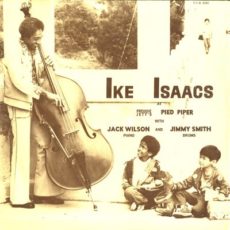
Ike Isaacs was born Charles Isaacs on March 28, 1923 in Akron, Ohio and played trumpet and tuba as a child before settling on bass. Serving in the Army during World War II, he took lessons from Wendell Marshall.
After being discharged Ike played with Tiny Grimes from 1948 to 1950, then with Earl Bostic until 1953, followed by Paul Quinichette in ‘53 and Bennie Green in 1956. He led a band locally in Ohio in 1956, then played for two years in the trio of Carmen McRae, whom he married late in the decade.
Throughout the Sixties Isaacs went on to work and recorded with Lambert, Hendricks and Ross, then with Count Basie, Gloria Lynne, Ray Bryant, Maxine Sullivan, Eddie “Lockjaw” Davis, Harry “Sweets” Edison and Erroll Garner, as well as with his own small groups.
Bassist Ike Isaacs only recorded once as a leader in 1967 for RGB Records. With him on the date were Jack Wilson on piano and Jimmy Smith on drums. He passed away on February 27, 1981.

#preserving genius
More Posts: bass