

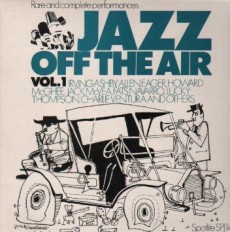
Daily Dose Of Jazz…
Irving C. Ashby was born December 29, 1920 in Somerville, Massachusetts. After playing rhythm guitar in Lionel Hampton’s orchestra, he played in the Nat King Cole Trio from 1947 to 1951. He then briefly replaced drummer Charlie Smith in the Oscar Trio, producing a lineup of piano, guitar and bass similar to the Cole Trio’s, a substitution that continued until 1958.
After leaving the Peterson Trio, Ashby concentrated on session work for the labels. His subsequent recordings included sessions with Norman Granz, Sheb Wooley, LaVern Baker, Howard Roberts, B.B. King, Louis Jordan, Pat Boone and Illinois Jacquet.
In addition to performing on guitar, Irving Ashby also played the upright bass until his passing on April 22, 1987 in Perris, California at the age of 66.

Dose A Day – Blues Away
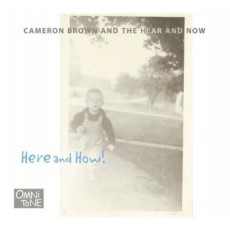
Daily Dose Of Jazz…
Cameron Brown was born December 21, 1945 in Detroit, Michigan. He started studying music at age 10, first on piano, later on clarinet. But, drawn to the bass, he found himself playing a tin bass in a student dance band. As an exchange student in Europe, he worked with George Russell’s sextet and big band for one year.
Brown went on to play with Don Cherry, Aldo Romano, Booker Ervin and Donald Byrd. In 1966 he returned to the States to matriculate and graduate in 1969 from Columbia College, Columbia University with a degree in sociology.
In 1974, Cameron met Sheila Jordan, gigged with free jazz pioneers Roswell Rudd and Beaver Harris, joined Archie Shepp’s quintet in 1975 and recorded with Harris and The 360 Degree Music Experience around that time.
The Don Pullen/George Adams Quartet had Brown and drummer Dannie Richmond helping to develop into an intense and rewarding partnership that lasted during the 1980s. In addition to this quartet, he played with Art Blakey’s Jazz Messengers, and various groups led by Rudd, and Richmond. He has performed and recorded with Ted Curson, Lee Konitz, Chet Baker, Joe Lovano, Mal Waldron, Ricky Ford, Steve Grossman, Betty Carter, John Hicks, Etta Jones and Jane Ira Bloom, to name a few.
Cameron has appeared on more than 80 recordings as a sideman and his first recording as a leader after nearly 40 years of performing, was published in 2003 with his group The Hear and Now featuring Dewey Redman.
In addition to playing gigs and touring nationally and internationally, he is an educator currently teaching jazz double bass at Green Meadow Waldorf School in Chestnut Ridge, New York, offers private lessons and substitute teaches music theory classes at The New School for Jazz and Contemporary Music in New York City.
v
Dose A Day – Blues Away
More Posts: bass
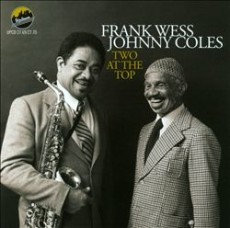
Daily Dose Of Jazz…
Reginald Volney Johnson was born December 13, 1940 in Owensboro, Kentucky. After playing trombone with school orchestras and army bands, he switched to double bass and started working with musicians such as Bill Barron and recording with Archie Shepp in the mid–1960s, before joining Art Blakey’s band for a month-long residency at the Five Spot Café in 1965.
In 1966 Johnson traveled with the Blakey band to The Lighthouse in Hermosa Beach, California and recorded Buttercorn Lady alongside Frank Mitchell, Chuck Mangione and Keith Jarrett.
Reggie’s playing and/or recording in America reads like a who’s who list not limited to Bill Dixon, Sun Ra, Burton Greene, Lonnie Liston Smith, Stanley Cowell, Bobby Hutcherson,, Harold Land, Blue Mitchell, Walter Bishop Jr., Sonny Rollins, Sonny Stitt, Sarah Vaughan, Carmen McRae, Art Pepper, Clark Terry, The Crusaders, Charles Mingus, Eddie “Lockjaw” Davis, Johnny Coles, and Frank Wess.
Equally so is his mid–1980s he move to Europe working with Johnny Griffin, Horace Parlan, Monty Alexander, Kenny Barron, Tom Harrell, Phil Woods, Cedar Walton, Alvin Queen, Jesse Davis, Freddie Redd and Alvin Queen.
As a leader double-bassist Reggie Johnson released one album titled First Edition in 1985 on the JR Record label and he continues to be the consummate sideman performing all over the world.
Discography[edit]
Take A Dose On The Road
More Posts: bass
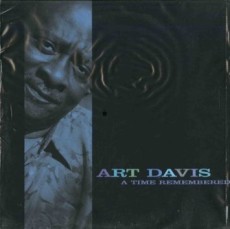
Daily Dose Of Jazz…
Art Davis was born in Harrisburg, Pennsylvania on December 5, 1934 where he began studying the piano at the age of five, switched to tuba, and finally settled on the bass while attending high school. He studied at Juilliard and the Manhattan School of Music, but graduated from Hunter College.
Davis earned a Ph.D in clinical psychology from New York University in 1982 and four years later he moved to Southern California, where he balanced his teaching as a professor at Orange Coast College and practicing of psychology with jazz performances.
Art recorded three albums as a leader with Herbie Hancock, Hilton Ruiz, Greg Bandy, John Hicks, Idris Muhammad, Pharoah Sanders, Ravi Coltrane, and Marvin Smith.
As a sideman he performed and recorded with Joe Albany, Gene Ammons, Count Basie, Art Blakey, John Coltrane, Curtis Fuller, Dizzy Gillespie, Eddie Harris, Freddie Hubbard, Elvin Jones, Etta Jones, Clifford Jordan, Roland Kirk, Abbey Lincoln, Booker Little, Lee Morgan, Tisziji Munoz, Dizzy Reece, Max Roach, Lalo Schifrin, Shirley Scott, Clark Terry, McCoy Tyner and Leo Wright.
He also launched a legal case that led to the current system of blind auditions for orchestras. Double bassist Art Davis passed away from a heart attack on July 29, 2007.
Inspire A Young Mind
More Posts: bass
Daily Dose Of Jazz…
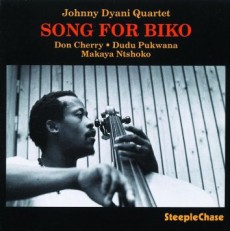
Johnny Mbizo Dyani was born on November 30, 1945 and grew up in the township of Duncan Village in East London, South Africa. In the early 1960s, the bassist was a member of South Africa’s first integrated jazz band, The Blue Notes with trumpeter Mongezi Feza, Dudu Pukwana on alto saxophone, Nikele Moyake on tenor saxophone, Chris McGregor on piano, and Louis Moholo on drums. Though the first integrated band they had to flee South Africa In 1964 to seek musical and political freedom.
In 1966, Dyani toured Argentina with Steve Lacy’s quartet and recorded with Lacy and Moholo The Forest and the Zoo. He moved to Copenhagen, Denmark in the early 70’s, and about ten years later to Sweden and recording many albums under his own name. He recorded with Dolar Brand aka Abdullah Ibrahim, Don Cherry, David Murray, Joseph Jarman, Clifford Jarvis, Don Moye, Han Bennik, Brotherhood of Breath, Mal Waldron, Pierre Dorge, Jukka Syrenius, Leo Smith and numerous others.
After his death of double bassist and pianist Johnny Dyani on October 24, 1986 in West Berlin, Germany, the remaining members of The Blue Notes reunited to record a moving tribute album, entitled Blue Notes for Johnny.
Jazz Is Global – Share
More Posts: bass