

Daily Dose Of Jazz…
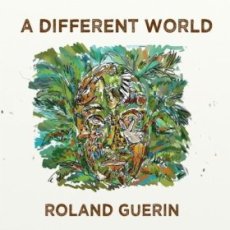
Roland Guerin was born on November 15, 1968 into a musical family, first learning music from his bass playing mother. Her sage wisdom taught him that you can’t make it in music without a strong groove and feeling.
While studying marketing at Southern University in Baton Rouge he joined legendary jazz educator Alvin Batiste’s band, The Jazztronauts. Following this stint he toured the world with jazz guitarist Mark Whitfield and during this period he further explored the jazz genre in which he found success.
While exploring his spiritual side, Guerin created a new instrument – a hollow-bodied acoustic six string bass guitar that enabled him to write music for an entire spectrum of genres including pop, rock, R&B, classical, folk, and country.
Roland made his debut as a bandleader in 1998 with his acclaimed “The Winds of the New Land”, and then released four successful albums in the next decade. From 1994 to 2010 Roland was a member of the Marcus Roberts Trio, also regularly enhanced by symphony orchestras.
He would go on to perform with George Benson, Jimmy Scott, Frank Morgan, Vernel Fournier, Gerry Mulligan, Brian Blade, John Scofield, Herlin Riley and Dr. Michael White while recording with Ellis Marsalis, Marcus Roberts, and Allen Toussaint among others.
When he is not touring around the world, Roland is very active on the New Orleans music scene, and has released his last album “A Different World” in 2011.

Inspire A Young Mind
More Posts: bass,bass guitar
Daily Dose Of Jazz…
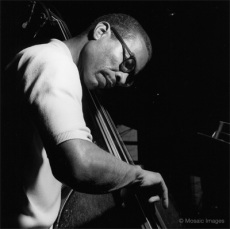
Wendell Marshall was born into a musical family on October 24, 1920 in St. Louis, Missouri. He took up the bass in emulation of and receiving his first lessons from his cousin Jimmy Blanton. He began playing professionally around his hometown in the late ‘30s and played with Lionel Hampton in ’42. Graduating from Lincoln University, he then served in the Army during World War II.
After his discharge, Marshall played and recorded with Stuff Smith, relocated to New York City and played with Mercer Ellington prior to his tenure with Duke Ellington from 1948 to 1955, appearing in several films with the orchestra.
Departing from Duke, Wendell played in pit orchestras on Broadway, freelanced with Mary Lou Williams, Art Blakey, Donald Byrd, Milt Jackson and Hank Jones among others. He was the house bassist for Prestige Records known for his rich tone, reliable sense of time and fine technique making him a popular collaborator.
It is estimated that he recorded with a prodigious list of musician with albums numbering over 150 including his own in 1955 as a leader, Wendell Marshall with the Billy Byers Orchestra. He was also a part of the Jazz Lab quintet led by Donald Byrd and Gigi Gryce.
However, by 1968 he retired from music and returned to St. Louis where he set up his own insurance business. Double bassist Wendell Marshall passed away of colon cancer on February 6, 2002 in his hometown of St. Louis.
Put A Dose In Your Pocket
More Posts: bass
Daily Dose Of Jazz…
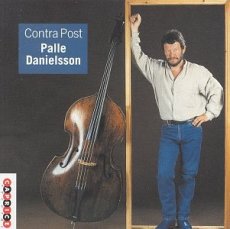
Palle Danielsson was born October 15, 1946 in Stockholm, Sweden and his childhood was an especially musical one. His first instrument he started playing at two was the harmonica and by age eight he was playing violin, which he continued to play and study for roughly five years. Around 13 he became interested in jazz music and started to play the double bass. By the time he was fifteen Palle was playing professionally.
Danielsson studied at the Stockholm Royal Academy of Music from 1962 to1966 and then began playing with Scandinavian musicians such as Eje Thelin, Bobo Stenson and Jan Garbarek and with Americans Lee Konitz and Steve Kuhn.
Perhaps most notable work was done with Keith Jarrett from 1974 to 1979 when he was a member of his European quartet. Over the years he has worked with Bill Evans, Kenny Wheeler, Geri Allen, Michel Petrucciani, Charles Lloyd, Peter Erskine, Ben Webster, George Russell and others.
Palle Danielsson has led and co-led several bands in Sweden, has recorded and released several albums and continues to perform and tour.
Take A Dose On The Road
More Posts: bass
Daily Dose Of Jazz…
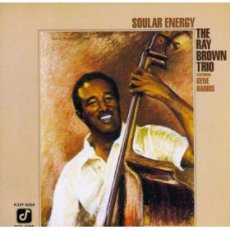
Raymond Matthews Brown was born on October 13, 1926 in Pittsburgh, Pennsylvania and started piano lessons at age eight. By high school he noticed a proliferation of pianists, unable to afford his first choice of trombone, took the upright bass vacancy in the high school jazz orchestra.
Influenced early by bassist Jimmy Blanton, the young Brown started making a name for himself around Pittsburgh playing with Jimmy Hinlsey and Snookum Russell. After graduating from high school he bought a one-way ticket to New York, met up with hank Jones, met Dizzy Gillespie who hired him on the spot and started working alongside Art Tatum and Charlie Parker.
During his five-year tenure with Gillespie he met and married Ella Fitzgerald, then worked with Jazz At The Philharmonic, recorded with Blossom Dearie on her first five albums between ‘57 and ‘59, joined Oscar Peterson in 1951 becoming a mainstay for the next 15 years.
In 1966 Ray moved to Los Angeles where he was in high demand by several television show orchestras, worked with Frank Sinatra, Billy Eckstine, Tony Bennett, Sarah Vaughan and Nancy Wilson. Becoming a manager and promoter as well as a performer, Brown managed the Modern Jazz Quartet and a young Quincy Jones, produced shows at the Hollywood Bowl, wrote jazz bass instruction books and developed a jazz cello.
Over the course of his career he has recorded prolifically with a luminary list of musicians, was award a Grammy for his composition Gravy Waltz, reunited with the legendary Oscar Peterson Trio and subsequent albums earned no less than four Grammys. He continued to tour and perform up until the time of his death. Double bassist Ray Brown passed away in his sleep on July 2, 2002 after having played a round of golf in Indianapolis, Indiana. The following year he was inducted into the Down Beat Jazz Hall of Fame.
Inspire A Young Mind
Daily Dose OF Jazz…
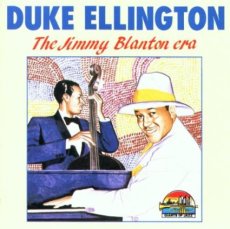
Jimmy Blanton was born on October 5, 1918 in Chattanooga, Tennessee and originally learned to play the violin but took up the bass while at Tennessee State University. During his matriculation in the mid-thirties he performed with the Tennessee State Collegians, and during the vacations with Fate Marable. Blanton left school to play full time in St. Louis with the Jeters-Pillars Orchestra. Making his first recordings with the orchestra, he then went on to join Duke Ellington’s band in 1939.
Though he stayed with Ellington for only two years, Blanton made an incalculable contribution in changing the way the double bass was used in jazz. Moving from quarter notes in ensemble or solos to soloing more in a ‘horn like’ fashion, Blanton began sliding into eighth and sixteenth-note runs, introducing melodic and harmonic ideas that were totally new to jazz bass playing.
His virtuosity put him in a different class from his predecessors, making him the first true master of the jazz bass and demonstrating the instrument’s unsuspected potential as a solo instrument. Such was his importance to Ellington’s band at the time, together with the tenor saxophonist Ben Webster, that it became known as the Blanton-Webster band.
In 1941, Blanton was diagnosed with tuberculosis, cutting short his tenure with Ellington. However, he recorded a series of bass and piano duets with Ellington. Double bassist Jimmy Blanton, credited as the originator of pizzicato and bowed bass solos, died the following year on July 30, 1942 after retiring to a sanatorium in California at the age of 23.
Give A Gift Of Jazz – Share
More Posts: bass