

Daily Dose Of Jazz…
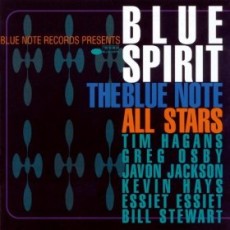
Essiet Okon Essiet was born on September 1, 1956 in Omaha, Nebraska to Nigerian parents. His father worked for the U.S. and Nigerian governments, moving the family from city to city. While living in Wisconsin he began studying violin at age 10 later switching to bass viola at 14.
As a child, his wide travels with his family gave him early exposure to many cultures, folkways, languages, and religions fostered his worldview of strength through diversity. This gave Essiet the ability to fluently mix styles, though he predominantly plays in the modern idiom.
Essiet was Art Blakey’s last bassist, playing with him for 2 years and recording on three sessions. He has performed with Freddie Hubbard, Cedar Walton, Benny Golson, Mulgrew Miller, Jeff “Tain” Watts, Bobby Watson, Billy Higgins, Kenny Kirkland, Joe Henderson, Johnny Griffin, Kevin Mahogany, Kurt Elling and Geri Allen and the Blue Note All Stars to name a few.
Since 1985 he has been at the Conservancy in The Hague as a lecturer. One of the most in demand bassist in jazz, Essiet currently leads Ibo, a Nigerian jazz project.

Dose A Day – Blues Away
More Posts: bass
Daily Dose Of Jazz…
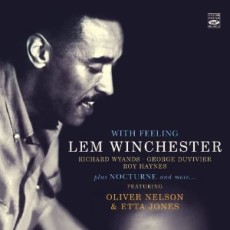
George Duvivier was born on Aug 17, 1920 in New York City. He took up the cello and also the violin while in high school before settling on the bass. He also learned composition and scoring before going out on the road with Lucky Millinder and then with the Cab Calloway bands of the early 40s after a stint in the army. An excellent composer, George scored many tunes for those two big bands.
George was a freelance bassist for most of his life, never belonging to any one particular group for any extended period of time, but has played with some of jazz’s greatest, such as Bud Powell, Eddie “Lockjaw” Davis, and Shirley Scott.
A prolific sideman, Duvivier recorded more than 100 albums with the likes of Kenny Burrell, Gene Ammons, Mildred Anderson, Art Farmer, Jimmy Forrest, San Getz, Etta Jones, Oliver Nelson, Lalo Schifrin and Johnny Lytle among numerous others. In 1956, Duvivier played in the movie orchestra in the film, “The Benny Goodman Story”.
During the 1970s he was a member of Soprano Summit and one of his last performances was on Late Night with David Letterman in 1983, accompanying singer/songwriter Tom Waits.
Double-bassist George Duvivier died of cancer in his Manhattan home on Jul 11, 1985.
Dose A Day – Blues Away
More Posts: bass
Daily Dose Of Jazz…
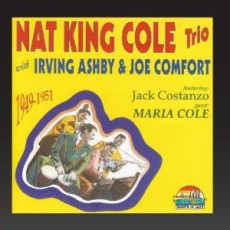
Joe Comfort was born on July 18, 1917 in Los Angeles, California into a musical family. Influenced by Jimmy Blanton, Paul Chambers and Ray Brown, he taught himself to play the bass and began performing with Lionel Hampton’s orchestra in the late Twenties. Later he would perform with Nat King Cole, a partnership that would endure until the early 1950s.
Comfort participated in numerous studio dates in the late fifties and early 1960s, with such luminaries as Sammy Davis Jr., Benny Carter, Nancy Wilson and Frank Sinatra but his fear of flying kept him grounded in and around Los Angeles.
According to Mingus’ biography, Joe taught Charles Mingus how to play in Watts where he grew up. His studio credits include working with Nelson Riddle, as well as pop and vocal projects. He was also a part of the M Squad band that highlighted jazz on television.
His beautiful wife, Mattie, was the inspiration for Billy Strayhorn’s “Satin Doll.” Joe Comfort, jazz bassist, passed away on October 29, 1988.
Give A Gift Of Jazz – Share
More Posts: bass
Daily Dose Of Jazz…
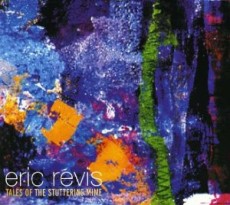
Eric Revis was born on May 31, 1967 in Los Angeles, California. He grew up listening mostly to funk and rock music and it was not until when he was 14 years of age that he picked up an electric bass and taught himself how to play. He attended Southern University as biology major for a year, Eric relocated to San Antonio, TX where he got a regular gig playing 6 nights a week.
While working the gig Revis got turned onto jazz, notably Kind Of Blue, which influenced him to switch to acoustic bass. He studied under Ellis Marsalis at the University of New Orleans but came to prominence attending the legendary school of Betty Carter in the mid-1990s.
In 1997, Eric met Branford Marsalis at a recording session with Russell Gunn. So impressed with the young bassist asked he Eric to join him on his recording, Bug Shot along with Kenny Kirkland and Jeff “Tain” Watts. The rest is history and the jazz bassist and composer has been a member of Branford Marsalis’s ensemble since 1997.
He released his debut album as a leader in 2004 titled Tales of the Stuttering Mime, has a sideman catalogue of thrity albums performing with Branford Marsalis, Kurt Rosenwinkel, Jeff “Tain” Watts, Joe Locke, Ralph Peterson, Orrin Evans, Frank McComb, J.D. Allen, Winard Harper, Sherman Irby and Russell Gunn among others. He has directed the Jazz Ensemble at Trinity University, in San Antonio, Texas from 2007/2008. He continues to perform, record and tour.
Put A Dose In Your Pocket
More Posts: bass
Daily Dose Of Jazz…
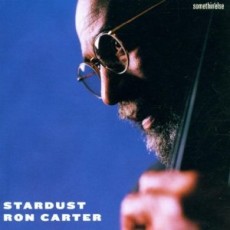
Ron Carter was born May 4, 1937 in Ferndale, Michigan and started playing the cello at the age of 10, but when his family moved to Detroit, he ran into difficulties regarding the racial stereotyping of classical musicians and instead moved to bass. He attended Cass Technical High School and later the Eastman School of Music, played in the later Philharmonic Orchestra. He received his bachelor’s degree at Eastman in 1959, and in 1961 a master’s degree in double bass performance from the Manhattan School of Music.
His first jobs as a jazz musician were with Jaki Byard and Chico Hamilton and made his first records were made with Eric Dolphy and Don Ellis in 1960. Ron led his first date as leader, “Where?”with Dolphy and Mal Waldron and a date “Out There” with Dolphy, George Duvivier and Roy Haynes playing advanced harmonies and concepts were in step with the third stream movement. He truly came to fame in the early ‘60s in the second great Miles Davis quintet with Herbie Hancock, Wayne Shorter and Tony Williams.
Over the course of his career, Carter who is also an acclaimed cellist has appeared on over 2,500 albums make him one of the most-recorded bassists in jazz history. He has played with Sam Rivers, Freddie Hubbard, Duke Pearson, Lee Morgan, McCoy Tyner, Andrew Hill, Horace Silver, Joe Henderson, Hank Jones and too many more to name.
He was a member of the New York Jazz Quartet, the Classical Jazz Quartet, was a Distinguished Professor Emeritus of the Music Department of The City College of New York after twenty years teaching and received an honorary Doctorate from the Berklee College of Music. He is currently on the faculty of the Julliard School teaching bass in the school’s Jazz Studies program, sits on the Advisory Committee of the Board of Directors of The Jazz Foundation of America.
Inspire A Young Mind