

Three Wishes
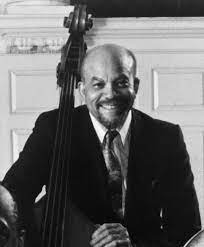
When the subject of three wishes was broached, Willie Ruff told Nica he had only one that he would like to be granted and that was:
-
-
“I wouldn’t have three wishes. I would only have one and that’s to be forty. Because by then I will have everything I need.”
-
*Excerpt from Three Wishes: An Intimate Look at Jazz Greats ~ Compiled and Photographed by Pannonica de Koenigswarter
Willie Ruff: September 1, 1931 | French Horn, Double BassMore Posts: baroness,bass,french horn,history,instrumental,jazz,music,pannonica,three,wishes
Requisites
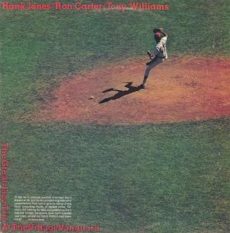
The Great Jazz Trio At The Village Vanguard | By Eddie Carter
This morning’s subject submitted for your consideration is a recent addition to the library by one of the quintessential small groups in jazz. The Great Jazz Trio At The Village Vanguard (East Wind EW-8053) is the first of three live albums by Hank Jones on piano, Ron Carter on bass, and Tony Williams on drums recorded over two nights at the venue in 1977. My copy used in this report is the 1978 US Stereo release (Inner City Records IC 6013).
Side One starts the set with a speedy rendition of Moose The Mooche by Charlie Parker. The trio takes off on a lively opening chorus, succeeded by Hank who accelerates quickly on the first solo. Tony takes over for the closing statement with a fierce attack of intense heat preceding the trio’s swift climax.
Up next is Naima, John Coltrane’s beautiful ballad named for his first wife. The trio’s rendition begins with a delicately graceful piano introduction segueing into a breathtaking collective theme. Jones opens the first solo luxuriously, gaining momentum into an enticing ending. Carter displays his abundant skills on a delightful finale complemented by Williams’ gentle brushwork leading to a warm, expressive exit.
Side Two gets underway with a pretty tune by Claus Ogerman, Favors. The ensemble begins with an easygoing midtempo opening chorus. Hank is up first and lets his ideas unfold at a leisurely pace. Ron follows with a relaxing message on the second solo, then Hank and Tony share a carefree conversation leading to the ensemble’s theme reprise and soft close.
The set closes with a blues by Ron Carter, 12 + 12. After the ensemble’s happy melody, Jones kicks off the solos with an utterly joyful performance. Carter also says plenty on an impressively buoyant statement, followed by Williams who speaks last in an exchange with Jones into the theme’s reprise and Tony’s introductions of the group. The album was produced by Kiyoshi Itoh and Yasohachi Itoh. Co-Producer David Baker also was the recording engineer. He’s done a phenomenal job because the sound quality is splendid with an exquisite soundstage placing the listener’s sweet spot in the crowd as the trio’s performing. The only issue is a small typo appearing on the back cover and the Side Two record label of both the Japanese and US releases, Claus Ogerman’s name is mispronounced.
Hank Jones was regarded by critics and fans alike as one of the most gifted musicians in jazz with an extensive discography and a career lasting sixty-six years including thirty-six as a member of The Great Jazz Trio. He passed away on May 16, 2010, at age ninety-one. Ron Carter is a living legend and the most recorded jazz bassist in history. He also plays the cello, is still performing and recording, and just celebrated his eighty-fifth birthday. Tony Williams was one of the best drummers in jazz and for five years provided the power behind The Miles Davis Quintet. He passed away at age fifty-one on February 23, 1997; but leaves a lasting legacy of music as a leader and sideman. If you enjoy live jazz and are a fan of these great musicians, I invite you to check out The Great Jazz Trio At The Village Vanguard. It’s a terrific jazz album with superb performances that is sure to please novice and seasoned jazz fans alike!
~ The Great Jazz Trio At The Village Vanguard, Volume 2 (East Wind EW-8055), ~ The Great Jazz Trio At The Village Vanguard Again (East Wind UCCJ-4001) – Source: Discogs.com ~ Naima – Source: JazzStandards.com ~ Moose The Mooche – Source: Wikipedia.org © 2022 by Edward Thomas Carter

More Posts: bass,choice,classic,collectible,collector,drums,history,instrumental,jazz,music,piano

Daily Dose Of Jazz…
Thomas Bryant was born May 21, 1930 in Philadelphia, Pennsylvania and grew up in a musical family. His mother was a choir director, his brother Ray was a pianist, and another brother, Len Bryant, is a vocalist and drummer. He began playing bass at the age of 12 and played in many local outfits.
The late Forties saw Bryant join Elmer Snowden’s band, staying there until 1952, when he took a tour of duty during the Korean War. In 1956 he returned and formed his own trio, though he never recorded as a leader, he recorded seventeen albums as a sideman.
He is better known for his work with his brother Ray, as well as Jo Jones, Charlie Shavers, Roy Eldridge, Dizzy Gillespie, Barney Wilen, Benny Golson, Big Joe Turner, Hank Mobley, Curtis Fuller, Lee Morgan, Billy Root and Coleman Hawkins.
In the last ten years of his life he played in the follow-up band to The Ink Spots. Double bassist Tommy Bryant, who also recorded with Mahalia Jackson under the name Tom Bryant, transitioned on January 3, 1982.

More Posts: bandleader,bass,history,instrumental,jazz,music
Three Wishes
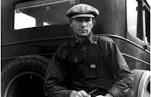
Carl Pruitt had three simple answer to the question of three wishes posed by Pannonica:
-
-
“Health.”
-
“Wealth.”
- “Power.
-
*Excerpt from Three Wishes: An Intimate Look at Jazz Greats ~ Compiled and Photographed by Pannonica de Koenigswarter

More Posts: baroness,bass,history,instrumental,jazz,music,pannonica,three,wishes
Daily Dose Of Jazz…
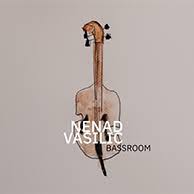
Nenad Vasilic was born on May 8, 1975 in Niš, Serbia and started playing piano at the age of 5. By twelve he received his first bass guitar and at the age of 15 he enrolled in the Secondary Music School in Niš. When he was 19 he studied contrabass and bass guitar at the Jazz Academy in Graz, Austria.
In 1998 he formed his own band Vasilić Nenad Balkan Band and 1999 saw him in Austria recording his debut album as a leader titled Jugobasija. Since that first outing he has produced albums as a band leader, double bass player and composer, collaborating with jazz singers Mark Murphy and Sheila Jordan, as well as Ritchie Beirah, Peter Ralchev, Vlatko Stefanovski, Wolfgang Puschnig, Bojan Zulfikarpasic, John Hollenbeck, Martin Lubenov, Stjepko Gut, Bilja Krstić, Tamara Obrovac, Lori Antonioli, Amira Medunjanin and others.
Bassist, composer and bandleader Nenad Vasilic continues to explore the possibilities of his music creativity.
More Posts: bandleader,bass,history,instrumental,jazz,music