

The Jazz Voyager
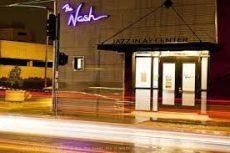
The Jazz Voyager is departing NOLA for the Mountain Time Zone of Phoenix, Arizona with the next destination being a jazz spot called The Nash. Named for internationally renowned drummer and Phoenix native Lewis Nash. As one of the reat jazz venues in the world, the club is not only a music room but an education facility that is a community of jazz enthusiasts and musicians who build on the past to create a modern musical experience.
Taking the stage for this Saturday’s performance is Beth Lederman with her group Jazz Con Alma. They feature jazz that grooves and draws from latin rhythms, taking standards and pop music and adding their own special twists. From Coltrane and Gershwin to the Beatles and Stevie Wonder, they play anything that embraces the creativity which embodies jazz is fair game. Jazz Con Alma consists of saxophonist Mary Petrich, bassist Jon Murray, Adam Clark on drums and percussionist Frank Valdes.
The Nash is located at 110 E. Roosevelt Street 85004 . For more information visit https://notoriousjazz.com/event/beth-lederman.
More Posts: adventure,clarinet,club,genius,jazz,music,piano,preserving,travel
The Jazz Voyager
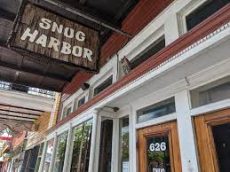
The Jazz Voyager’s next destination is the Big Easy and a venerable jazz nightclub called Snug Harbor. Located in three rooms of a renovated 1800’s storefront situated in the Faubourg Marigny. The venue offers a dining room, a bar, and a music room.
Tonight I’ll be in the audience to witness once again the genius of New Orleans-bred saxophonist, clarinetist, composer and educator Victor Goines. He’ll be taking the stage as the guest bandleader of Snug’s “E-Day” Series. This is when musicians close to their late great Ellis Marsalis present their tribute concerts to his musical legacy on the night of the week that was Ellis’ Snug residency for over 30 years.
Snug Harbor features music 7 nights a week, primarily New Orleans modern jazz. The venue is located just outside the French Quarter, at 626 Frenchmen Street, New Orleans, LA 70116. For more information visit https://notoriousjazz.com/event/victor-goines.

More Posts: adventure,clarinet,club,genius,jazz,music,preserving,saxophone,travel
Daily Dose Of Jazz…
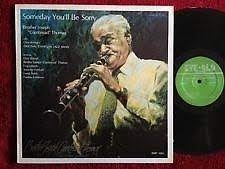
Joseph William Thomas was born on December 3, 1902 in New Orleans, Louisiana. His first professional gig was in his home city with trombone player Joe Harris in 1923. Soon after that, he worked with Jack Carey, Chris Kelly, and Kid Rena. He recorded with Charles Derbigny in 1941, but the recordings were not publicly released until the 1960s, by which time Thomas had become a figure in the Dixieland revival movement.
He led his own ensemble at New Orleans’s H&J Tavern for much of the 1940s, then in 1951, he became a sideman for Papa Celestin. He worked with this ensemble for years, including after Papa French and Eddie Pierson had taken over as leader.
Other associations in the 1950s and 1960s included work with Freddie Kohlman, Punch Miller, the Olympia Brass Band, and on Swedish television with Sweet Emma Barrett in 1968. In the 1970s he worked with the Legends of Jazz, replacing Joe Darensbourg.
Clarinetist and vocalist Joe Thomas, also known as Brother Cornbread and was closely associated with the New Orleans jazz scene, February 18, 1981 in New Orleans at 78.


Daily Dose Of Jazz…
Robert Edward McCracken was born on November 23, 1904 in Dallas, Texas. Early in his career he played with local Dallas musicians like Jack Teagarden, Eddie Whitley, the Southern Trumpeters, and Doc Ross’s Jazz Bandits.
From 1926 to 1928 he lived in New York City where McCracken worked with Johnnie Johnston and Willard Robison’s Levee Loungers. After returning to Dallas, he worked with Ligon Smith, Joe Gill, and Ross again. He went on to tour with Joe Venuti and Frankie Trumbauer, before moving to Chicago, Illinois in 1939.
While in Chicago he played with Bud Freeman, and in the Forties he worked with Jimmy McPartland, Wingy Manone, Benny Goodman, Russ Morgan, and Wayne King. He substituted for Barney Bigard in the Louis Armstrong All-Stars international tour in 1952–53. Bob then toured internationally with Kid Ory and Red Allen throughout the 1950s.
During his later years in Los Angeles, California he played in several Dixieland revival groups, working with Ben Pollack, Pete Daily, Wild Bill Davison, and again with Teagarden, Ory, and Allen.
Clarinetist Bob McCracken, who is on many recordings including Kid Ory’s album, This Kid’s the Greatest, transitioned on July 4, 1972.

More Posts: clarinet,history,instrumental,jazz,music

ANAT COHEN & MARCELLO GONÇALVES
The perennial winner of “Clarinetist of the Year” titles from DownBeat, JazzTimes, and the Jazz Journalists Association, Fresh Air’s Terry Gross credits Cohen with “bringing the clarinet to the world” and The New York Times hails her a “Master.”
Acclaimed clarinetist Anat Cohen and 7-string guitarist Marcello Gonçalves team together in a series of intimate, lyrical duets. Breathtaking melodies, Brazilian grooves, and elements of jazz highlight the intricate talents of both Cohen and Gonçalves. In their second duo album, Reconvexo, Brazilian 7-string guitar player Gonçalves and New York-based clarinetist Cohen turn their attention to music from the Música Popular Brasileira (MPB) songbook. Against the backdrop of a country and world turning inward, the duo set out to record an album inspired by the beauty of Brazil and the spirit of its people. The result is at once intimate and virtuosic, mournful and hopeful, soaked with the feeling expressed uniquely in the Portuguese language as saudade – bittersweet, at once deeply happy and sad, and full of emotion.
More Posts: adventure,clarinet,concert,genius,guitar,jazz,music,preserving,travel