


Daily Dose Of Jazz…
Zoltan Sagi was born in Hungary on February 10, 1956. He attended the Guildhall School of Music studying clarinet with Robert Earle and later Frank Allen at Warwick University. Self-taught on saxophone, he draw much of his inspiration from Johnny Hodges, Cannonball Adderley and Stan Getz.
His early career was spent playing in dance bands and in New Orleans jazz genre playing in festivals stateside and overseas. This was followed by a period as an educator as Director of Music and a country music service manager. He spent two and a half years extensively touring the world with Chris Barber.
Zoltan has recorded numerous CD’s and other recordings as a freelance session musician and has also appeared with such musicians as Earl Warren, Benny Waters, Kenny Davern, Bob Humphrey Lyttleton, Marty Grosz, Digby Fairweather, Duncan Swift, , Janusz Carmello, Bill Coleman, Greg Abate, Alan Barnes, Paul Degville and John Barnes among many others.
Has worked extensively both in this country and abroad. His experience spans from New Orleans jazz to jazz fusion. Sagi has been a part of several groups including Harlem, Swing Syndicate and The Charleston Chasers. Clarinetist Zoltan Sagi also plays all saxophones and currently performs with the Sticky Wicket Big Band, the Big Chris Barber Band, the Stars of British Jazz and with his own quartets and trios.

Inspire A Young Mind
Daily Dose Of Jazz…
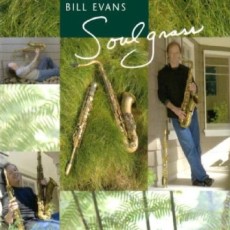
Bill Evans was born William D. Evans on February 9, 1958 in Claredon Hills, Illinois to a father who was a classical piano prodigy. Until junior high school he studied classical clarinet but early in his studies he was able to hear such artists perform live as Sonny Stitt and Stan Getz at the jaz Showcase in Chicago. He attended Hinsdale Central High School and studied with tenor saxophonist Vince Micko. His stylistic influences include Sonny Rollins, Joe Henderson, John Coltrane, Steve Grossman and Dave Liebman.
Evans attended the University of North Texas and William Patterson University where he studied with Miles Davis alum Dave Liebman. His move to New York City in 1979 saw him spending countless hours in lofts playing jazz standards and perfecting his improvisational style. By the age of 22 he joined Miles Davis and was part of his musical comeback in the early to mid-1980s, recording on The Man With The Horn, We Want Miles, Star People and Decoy.
During the 1980s and 1990s Bill was a member of the jazz fusion group Elements. Beginning in 1990 Evans has been touring with his own band playing close to 90 concerts a year worldwide. He has recorded over 17 solo CD’s, received two GrammyAward nominations for his albums Soul Inside and Soulgrass, and recorded an award-winning CD called Bill Evans – Vans Joint with the WDR Orchestra in 2009.
Tenor and soprano saxophonist Bill Evans has played a wide variety of music with his solo projects including bluegrass influenced jazz, funk and contemporary groove and has played, toured and recorded with Herbie Hancock, Michael Franks, Gil Evans, Willie Nelson, Mick Jagger, Les McCann, Mark Egan, Danny Gottlieb, Ian Anderson, Randy Brecker, The Allman Brothers and Medeski, Martin and Wood to name a few. He continues to perform, tour and record.
Give A Gift Of Jazz – Share
Daily Dose Of Jazz…
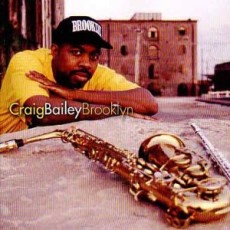
Craig Bailey was born on February 3, 1960 in Cincinnati, Ohio. His interest in music began at age 8, learning to play the recorder with a small group of classmates. Following that, he became a part of the All City Boys Choir. He enrolled in the beginning band program in junior high and took up the clarinet, saxophone and flute, perfecting his skills in playing all three instruments in high school and college.
Bailey earned his undergraduate degree from the University of Miami and headed to New York in 1985. He worked with drummer Charlie Persip’s Superband. He went on to join the world-renowned group of Panama Francis and his Savoy Sultans, learning traditional swing music and traveling to Europe for the first time.
Two years later Craig landed an audition with Ray Charles and became his lead alto saxophonist from 1988-2004. During this period he collaborated the Tana Reid Quintet, Bobby Watson’s Tailor Made Big Band, Nancy Banks Orchestra and the Tom Harrell Big Band among others. He developed his small group writing and playing style, leading him to his own arranging and composing.
Bailey dropped his debut album, A New Journey in 1995 to critical acclaim and is referenced in The Encyclopedia of Jazz. His sophomore release, Brooklyn, received favorable review. He is one of the most consistently inventive and potentially significant reed players of his generation. In between his performing duties Craig Bailey currently holds the position of Assistant Professor of Music in Jazz Saxophone at the University of Cincinnati.
Inspire A Young Mind
Daily Dose Of Jazz…
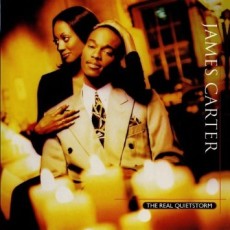
James Carter was born January 3, 1969 in Detroit, Michigan and learned to play under the tutelage of Donald Washington, becoming a member of his youth jazz ensemble Bird-Trane-Sco-NOW!! As a young man, he attended Blue Lake Fine Arts Camp and become the youngest faculty member at the camp. He first toured Europe (Scandinavia) with the International Jazz Band in 1985 at the age of 16.
By 1988, while at the Detroit Institute of Arts, Carter was a last-minute addition for guest artist Lester Bowie, which turned into an invitation to play with his new quintet in New York that following November at the now defunct Carlos 1 jazz club. This New York invite was pivotal in his career, putting him in musical contact with the world, and he moved to the city two years later.
James has won Down Beat magazine’s Critics and Readers Choice award for baritone saxophone several years in a row. He has performed, toured and played on albums with Lester Bowie, Julius Hemphill, Frank Lowe & the Saxemble, Kathleen Battle, the World Saxophone Quartet, Cyrus Chestnut, Wynton Marsalis, Dee Dee Bridgewater and the Mingus Big Band. On his 2000 album Chasin’ the Gypsy, he recorded with his cousin, jazz violinist Regina Carter.
An authority on vintage horns, Carter owns an extensive collection of them. He continues to be a prominent force as a performer and recording artist on the jazz scene since the late 1980s, playing saxophones, flute and clarinets.
Jazz Is Global – Share
Daily Dose Of Jazz…
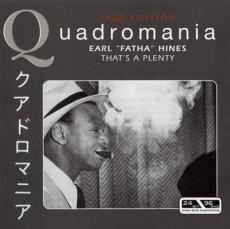
Cecil Irwin was born December 7, 1902 in Chicago, Illinois. Learning to play clarinet and tenor saxophone, his career began playing with Carroll Dickerson, Erskine Tate and Junie Cobb. He would then join Earl “Fatha” Hines in 1928 in the reed section and arranging for the big band.
During this period Cecil recorded on more than a dozen sessions with Hines in a variety of ensembles with which his playing and arranging is prominent. Irwin also freelanced as a sideman working and recording with New Orleans notables Johnny Dodds, Jabbo Smith, King Oliver, and also with Stephane Grappelli and Joe Venuti.
While on tour driving outside Des Moines, Iowa, tenor saxophonist and arranger Cecil Irwin perished in a car accident at the age of 32 on May 3, 1935, cutting short a promising career.
Dose A Day – Blues Away