

Daily Dose Of Jazz…
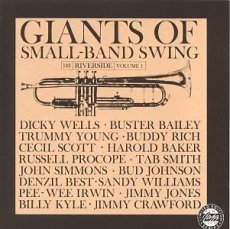
Cecil Scott was born in Springfield, Ohio on November 22, 1905 and played clarinet and tenor saxophone as a teenager with his brother, drummer Lloyd Scott. They played together as co-leaders through the end of the 1920s, holding residencies in Ohio, Pittsburgh, Pennsylvania and in New York City at the Savoy Ballroom. Among the members of this ensemble were Dicky Wells, Frankie Newton, Bill Coleman, Roy Eldridge, Johnny Hodges and Chu Berry.
By 1929 Cecil took full music control over the group in 1929, though Lloyd continued to manage the group. However, he was seriously injured in an accident in the early 1930s that temporarily sidelined his career. After recovery, he would play in different groups through the Thirties with Ellsworth Reynolds, Teddy Hill, Clarence Williams and Teddy Wilson accompanying Billie Holiday.
The early 1940s saw Scott playing with Albert Socarras, Red Allen, and Willie “The Lion” Smith prior to reassembling his band that hired at times Hot Lips Page and Art Hodes and towards the end of the decade worked with Slim Gaillard.
In 1950 Cecil disbanded the group, worked with Jimmy McPartland as a sideman, occasionally led groups and continued to play as a sideman up until the time of his death on January 5, 1964 in New York City. The clarinetist, tenor saxophonist and bandleader is credited on some 75 albums.

Inspire A Young Mind
Daily Dose Of Jazz…
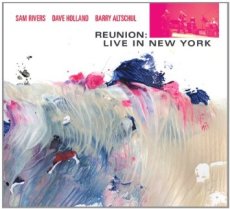
Samuel Carthorne Rivers was born September 25, 1923 in Enid, Oklahoma, the son of a gospel musician who sung with the Fisk Jubilee Singers and the Silverstone Quartet which exposed a young Sam to music at an early age. By 1947 he was in Boston studying Alan Hovhaness at the Boston Conservatory.
Active in jazz since the early 1950s, by the end of the decade he was performing with then 13 year-old drummer Tony Williams. In the mid Sixties he held a short-lived tenure with Miles Davis, producing the album Miles In Tokyo. He went on to sign with Blue Note leading four dates, his first being Fuschia Swing Song and contributing many more as a sideman.
A multi-instrumentalist, Rivers who plays soprano and tenor saxophones, bass clarinet, flute, harmonica and piano, is also a composer. Rooted in bebop and equally adept at free jazz he has performed and recorded with the likes of Quincy Jones, Herb Pomeroy, Tadd Dameron, Jaki Byard, Freddie Hubbard, Herbie Hancock, Andrew Hill, Larry Young and many others.
The 70s saw the rise of the loft era and Rivers ran RivBea in New York’s NoHo district where numerous performance lofts emerged. He continued to perform and record for a variety of labels including several albums for Impulse Records, two big band albums for RCA Victor, and joined Dizzy Gillespie’s band near the end of the trumpeter’s life.
With a thorough command of music theory, orchestration and composition, Rivers has been an influential and prominent artist in jazz music. He performs regularly with his RivBea Orchestra and Trio and is currently recording new works. Sam Rivers, who played soprano and tenor saxophones, bass clarinet, flute, harmonica and piano in the avant-garde and free jazz arenas, passed away on December 26, 2011 in Orlando, Florida at age 88.
Put A Dose In Your Pocket
Daily Dose Of Jazz…
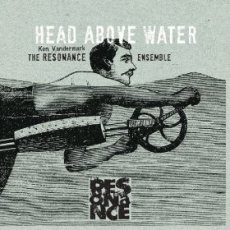
Ken Vandermark was born September 22, 1964 in Warwick, Rhode Island but grew up in Boston, Massachusetts. Mostly a self-taught musician, the saxophonist studied intermittently under George Garzone in the early 80s. He performed and led groups while in high school and at McGill University in Montreal, graduated in 1986.
Returning to Boston Ken co-led the groups Lombard Street, Mr. Furious and Barrage Double incorporating “suite forms” into his arrangements and composing pieces dedicated to other Boston bands, thus, developing broad, free-ranging charts as his signature especially in large ensemble settings.
Vandermark moved to Chicago in 1989 and has performed or recorded with many musicians such as Fred Anderson, Joe Morris, Fredrik Ljungkvist and Yakuza to name a few. He first gained widespread attention working with the NRG Ensemble from 1992 to 1996, went on to co-lead DKV Trio, Free Fall, Territory Band, the Vandermark Five and some six more groups, collaborated with Joe Harriott, released his album Furniture Music in 2002 marking his debut as an accomplished soloist and has since concentrated on his own compositions.
A fixture on the Chicago music scene Vandermark plays tenor and baritone saxophone, clarinet and bass clarinet and has received critical praise for his performing multilayered compositions that typically balance intricate orchestration with passionate improvisation. He was awarded a 1999 MacArthur Fellowship, won the Cadence magazine poll for Best Artist and Best Recording. He continues to perform and record.
Dose A Day – Blues Away
Daily Dose Of Jazz…
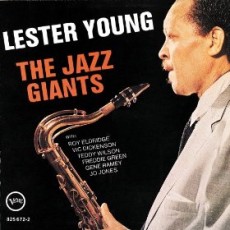
Lester Willis Young was born on August 27, 1909 in Woodville, Mississippi and grew up in a musical family. His father, Willis Handy Young, was a respected teacher, his brother Lee Young was a drummer, and several other relatives performed music professionally. His family moved to New Orleans, Louisiana when he was an infant, then later to Minneapolis, Minnesota. His father was a musician, who would teach his son to play the drums, trumpet and violin in addition to the saxophone.
Playing in his family’s band, known as the Young Family Band, vaudeville and carnivals were their circuit but in 1927 he left, refusing to play the Southern states under the racial segregation of Jim Crow laws.
Settling in Kansas City, Missouri in 1933, he briefly played in several bands, then rose to prominence with Count Basie. He would leave Basie to replace Coleman Hawkins in the Fletcher Henderson orchestra, followed by a stint with Andy Kirk, then back to Basie. Lester made small group recordings for Commodore Records, and the sessions became known as the Kansas City Sessions by the Kansas City Seven, playing clarinet and tenor.
After Young’s clarinet was stolen in 1939, he abandoned the instrument until about 1957. He left the Basie band in late 1940, subsequently led a number of small groups that often included his brother, accompanied Billlie Holiday in a couple of studio sessions in 1940 and 1941 and also made a small set of recordings with Nat King in June 1942. It was Holiday who gave Young the nickname “Pres”, short for President.[
In December 1943 Young returned to the Basie fold for a 10-month stint, drafted into the army during WWII and after discharge joined Norman Granz’s Jazz at the Philharmonic troupe in 1946 and for the next 12 years toured regularly with them. He recorded for Verve, Aladdin and Savoy records through the Forties.
From around 1951 Young’s level of playing declined more precipitously as his drinking increased. His playing showed reliance on a small number of clichéd phrases and reduced creativity and originality. His playing and health went into a crisis, culminating in a 1955 hospital admission following a nervous breakdown, emerging improved in 1956. He recorded and toured with Miles Davis and the Modern Jazz Quartet through Europe and had a successful stint in Washington, DC with the Bill Potts Trio.
By 1957 Lester appeared with Billie Holiday, at a time when both were in their declining years, but both gave brilliant and moving performances with Holiday’s tune “Fine and Mellow”. By this time his alcoholism had a cumulative effect and he was eating significantly less, drinking more and more, and suffering from liver disease and malnutrition.
He made his final studio recordings and live performances in Paris in 1959 with drummer Kenny Clarke at the tail end of an abbreviated European tour during which he ate next to nothing and virtually drank himself to death. He died in the early morning hours of March 15, 1959, only hours after arriving back in New York, at the age of 49.
Give The Gift Of Knowledge
Daily Dose Of Jazz…
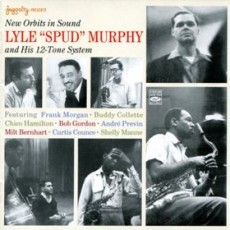
Lyle Stephanovic was born Miko Stefanovic to Serbian émigré parents in Berlin, Germany on August 19, 1908. Better known in the jazz world as Spud Murphy, he grew up in Salt Lake City, Utah where he took the name of a childhood friend. Murphy studied clarinet and saxophone when young and took trumpet lessons from Red Nichol’s father.
He worked with Jimmy Joy in 1927-28 and with Ross Gorman and oboist Slim Lamar in 1928. He worked the early 1930s as saxophonist-arranger for Austin Wylie, Jan Garber, Mal Hallett and Joe Haynes, and then became a staff arranger for Benny Goodman from 1935 to 1937. At the same time he also contributed charts to the Casa Loma Orchestra, Isham Jones, Les Brown and many others.
From 1937 to 1940 Murphy led a big band and recorded for Decca and Bluebird Records in 1938-39. In the 1940s he relocated to Los Angeles where he did work in the studios and with film music, in addition to authoring and teaching the 1200-page “System of Horizontal Composition” also known as the “Equal Interval System”. The Equal Interval System is a modern system of music composition, developed by Murphy over a lifetime of research.
Spud recorded two jazz albums in the 1950s, but his later career was focused on classical and film music. In 2003, orchestra leader Dean Mora, a close friend of Murphy’s, recorded some two dozen of his arrangements in a tribute CD, “Goblin Market”.
Multi-instrumentalist, bandleader and arranger Spud Murphy died in Los Angeles, two weeks short of his 97th birthday on August 5, 2005.
Give The Gift Of Knowledge