

Requisites
Nancy Wilson/Cannonball Adderley | By Eddie Carter
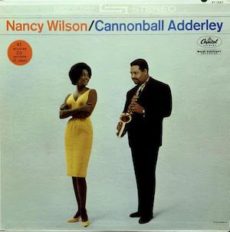
I’ve been a fan of Nancy Wilson and Cannonball Adderley since I was a kid, and the album up for discussion to begin December is one of my absolute favorites. It features one of the most beautiful voices in jazz coupled with a dynamic quintet that was becoming one of the best small ensembles and very popular with the public. This morning’s choice from the library is a 1961 album, Nancy Wilson/Cannonball Adderley (Capitol Records T-1657/ST-1657). Backing the duo are Nat Adderley on cornet, Joe Zawinul on piano, Sam Jones on bass, and Louis Hayes on drums. My copy used in this report is the 1962 US Stereo reissue (the Capitol Records logo is at the noon position on the label). This record holds a special place in my heart because it was the first album, I ever owned that was autographed by everyone in the group.
The quintet came to Leo’s Casino (Cleveland Ohio’s premier jazz club for many years) for a weekend performance, and my uncle Ben went to see them. After their first set had concluded and during the break, he let Cannonball know I was a big fan of his album, Somethin’ Else (1958). As a result, everyone signed it and he gave it to me for Christmas; once I opened the package, I forgot all about the toys. When Nancy came to the club a year later, he got her to sign it also. I had that autographed copy from 1962 to 1996 and it was my most prized possession until a fire destroyed my Mom’s home. Though a devastating loss, her and my Stepdad’s lives were spared, and that became a significant blessing to both my sister and me. Also, the memory is still a treasured one that always makes me smile whenever I play my current copy. That’s enough about me, gang, let’s get to the report.
Side One starts with Save Your Love For Me by Buddy Johnson. The rhythm section introduces the song delicately, then Nancy entices the listener with a seductive opening chorus tastefully trailed by Nat on muted cornet. Cannonball comes in on the next verse with a perfect example of soft and silken tenderness. The rhythm section’s reflective accompaniment is quite beautiful behind Nancy’s vocals leading to a gentle ending. Teaneck by Nat Adderley was initially known as A Little Taste and first heard on Portrait of Cannonball (1958). The ensemble takes off at a fast gallop on the spirited introduction and theme. Cannonball is a bundle of energy on the lead solo. Nat is as resourceful on the second reading with radiant intensity and Zawinul says plenty on an assertive, hard-driving solo preceding the group’s vigorous exit.
Never Will I Marry by Frank Loesser made its debut in the Broadway musical fantasy, Greenwillow (1960). Nancy and the quintet present a lighthearted rendition with her voice as an additional horn to the agile beat of the front line. In between her blissful vocals on the opening and closing chorus, Cannonball makes quick work of a concise, lively contribution in an equally effective fashion. I Can’t Get Started by Ira Gershwin and Vernon Duke first appeared in the musical, Ziegfeld Follies of 1936. This jazz standard is one of the most beautiful songs from The Great American Songbook. Adderley unfolds the attractive melody slowly, accompanied by the trio’s soft support, then continues with a daintily polite opening statement. Zawinul responds with a delicately pretty touch on the finale ahead of the altoist’s elegant reprise and ending.
The Old Country by Nat Adderley and Curtis Lewis is the story of a sad, lonely individual in the twilight of his life. Nancy is the narrator whose lyrics recall all he had and lost because of his choice to remain isolated and alone. This tune begins at midtempo by Nancy and Nat who equals her lyrics with meticulous skill on the muted cornet. Cannonball kicks off the solos with a chorus of uncluttered swinging. Joe adds a concise performance that flows smoothly into the climax. One Man’s Dream by Charles Wright and Joe Zawinul begins at a brisk pace with a zesty melody in unison. Cannonball is out of the gate first with an invigorating opening statement, succeeded by Nat who delivers the second solo with sheer vitality. Zawinul takes a short reading, then the front line shares a final conversation ahead of the reprise and ending.
Happy Talk by Richard Rodgers and Oscar Hammerstein II comes from South Pacific (1949). It starts Side Two with an upbeat treatment by Nancy and the ensemble. Nat’s muted cornet leads the quartet on the introduction into her jubilant lyrics. Cannonball also shines on a short comment. Never Say Yes by Nat Adderley starts with a muted introduction and opening solo that’s handled with finesse. Cannonball comes next with a lively presentation that adds to the exhilaration. Zawinul wraps up the conversation with youthful exuberance, ahead of Nat’s graceful finale. Nancy sings one of the prettiest jazz standards next, The Masquerade Is Over by Herbert Magidson and Allie Wrubel. She’s the dominant presence here and presides with an intimate sincerity in a tender expression of love lost. Zawinul, Jones, and Hayes follow her into a soft summation.
Sam Jones’ Unit 7 became the closing theme for Cannonball’s groups during their live performances, and the bassist recorded another version on Down Home (1962). The quintet opens with a bluesy beat by both horns leading the group on the theme. Cannonball builds the first solo with melodic inventiveness. Nat follows with a sweet tone and impeccable intonation. Joe struts through the closing statement with a joyfulness that’s extremely revealing. The finale is A Sleepin’ Bee by Harold Arlen and Truman Capote. It premiered in the musical House of Flowers (1954) and starts innocently with a brief piano introduction by Zawinul. Nancy shares the spotlight with Jones for the first verse before the ensemble joins in for the melody. Nancy’s voice is in superb form on this midtempo gem and Cannonball turns in a brief solo of incredible emotion and feeling. She closes the song as she began, in a duet with Jones that ends softly.
Nancy Wilson/Cannonball Adderley is exactly as stated on the cover; forty-one minutes, and fifty-nine seconds of some of the best jazz you’ll hear. It was produced by Andy Wiswell and Tom Morgan who were the men behind many great Capitol albums during the sixties. This reissue has an excellent soundstage that still stands up well sixty years later. Nancy’s vocals are splendidly interpreted, and she holds your attention on every song. She made thirty-seven albums over a two-decade career at Capitol Records. Cannonball also flourished at Capitol after leaving Riverside, recording seventeen albums from 1964 to 1970. Here, they demonstrate their vibrant improvising in a swinging, straight-ahead set that’s right on target. If you’re a fan of Hard-Bop and great vocals, Nancy Wilson/Cannonball Adderley is a happy session that’s sure to thrill old and young fans and one of the best things you can do for your turntable!
~ Down Home (Riverside RLP 432/RLP 9432), Portrait of Cannonball (Riverside RLP 12-269), Somethin’ Else (Blue Note BLP 1595/BST 81595) – Source: Discogs.com ~ A Sleeping Bee, Happy Talk, I Can’t Get Started, Never Will I Marry – Source: Wikipedia.org © 2021 by Edward Thomas Carter

More Posts: choice,classic,collectible,collector,history,instrumental,jazz,music,saxophone,vocal
Requisites
Tune~Up! ~ Sonny Stitt | By Eddie Carter
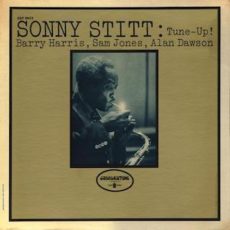
Sonny Stitt was equally fluent on alto sax (tracks: A2, A4, B2, B3) and tenor sax (tracks: A1, A3, B1, B3) with a pure tone that could be carefree, fiery, or seductive. This morning’s choice from the library is a superb example of him at his best. Tune-Up! (Cobblestone CST 9013) is an excellent 1972 quartet session anchored by Barry Harris on piano, Sam Jones on bass, and Alan Dawson on drums. Stitt’s birth name was Edward Hammond Boatner, Jr. and he came from a musical family. Sonny’s father sang baritone, was a composer, and was a college music professor. His mom taught piano, and his brother was a classically trained pianist. He was later adopted by a family named Stitt and gave himself the name Sonny. The musicians he’s played with reads like the encyclopedia of jazz. Stitt’s also recorded over one hundred albums as a leader and sideman. My copy used in this report is the original US Stereo album.
Side One opens with a speedy rendition of Tune-Up by Miles Davis. Sonny’s tenor sax is emotionally charged from the start of the melody. He launches a ferocious workout on the first statement at breakneck speed. Barry is up next for a vigorously energetic reading leading to a final heated discussion by the leader before the quartet’s exit. I Can’t Get Started by Vernon Duke and Ira Gershwin is a gorgeous song from the film, Ziegfeld Follies of 1936. Stitt’s on alto sax for this tune and shows profound respect to the standard beginning with a thoughtfully tender opening chorus and lyrically beautiful serenade. Harris indulges in nostalgic reminiscing and reflection on the second interpretation and Jones follows with a delicately pretty performance. Stitt makes a genuinely touching and gracefully poignant presentation into the group’s charming climax.
Idaho by Jesse Stone was composed in 1942 and pays homage to the state. This original starts at a jaunty tempo with a cheerful melody. Sonny steps up first with a high-spirited opening statement. Barry takes the reins next for a concise performance of nimble agility. The saxophonist adds a brief bit of fire to the tune with a fitting closer ahead of the quartet’s exit. Side One closes on an upbeat note with a popular song about two lovers who are now Just Friends. It was written in 1931 by John Klenner and Sam M. Lewis. Stitt leads the group through a brisk melody, then kicks it up a notch on the opening chorus with combustible bop chops. Harris fills the second solo with a restless, bristling energy, matched by the rhythm section’s swinging support. Stitt brings out the best on a few final vivacious thoughts preceding the quartet’s closing moments.
Side Two opens on the saxophonist’s slow blues tribute to Lester Young and Charlie Parker, Blues For Prez and Bird. The trio begins with a soulful introduction, then Sonny applies an appropriately warm tone to the melody and first interpretation. Barry is especially endearing on a short statement that swings softly. Stitt arrives at a beautiful conclusion after speaking with deep emotion on the finale. Dizzy Gillespie’s Groovin’ High is a 1945 uptempo standard from the book of Bebop. The quartet comes out cooking on the opening chorus, then Stitt shifts into another gear with a dazzling reading of sheer exuberance. Harris also shows remarkable nimbleness on the second performance matching the saxophonist step for step. Stitt slices through the closing statement with razor-sharpness before the ensemble’s vigorous climax.
I Got Rhythm by George and Ira Gershwin is a jazz standard that was introduced in the musical Girl Crazy (1930). The ensemble deceptively starts slowly at the song’s bridge, rather than the beginning. Sonny has the first solo, erupting on tenor sax with the dynamic force of an active volcano. Barry takes over on the second statement with a fierce intensity, then Stitt kicks up a storm on alto sax for the next presentation. Jones makes a concise comment preceding Stitt ending the song on tenor the way it began. Tune-Up! was produced by Don Schlitten and recorded by Paul Goodman. The album has an exceptionally good soundstage with great clarity throughout the highs, midrange, and bass. If you’re in the mood for an outstanding album of alto and tenor sax, I proudly recommend and submit for your consideration, Tune-Up! by Sonny Stitt. He’s in top form here, and every track’s a winner!
~ I Can’t Get Started, Just Friends, Groovin’ High, I Got Rhythm – Source: JazzStandards.com © 2021 by Edward Thomas Carter
More Posts: choice,classic,collectible,collector,history,instrumental,jazz,music,saxophone
Requisites
Can’t See For Lookin’ ~ Red Garland | By Eddie Carter
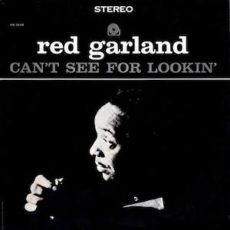
I was in the mood for some nice soothing music to enjoy after dinner a few nights ago when I came across this morning’s choice from the library by Red Garland. Can’t See For Lookin’ (Prestige PRLP 7276/PRST 7276) is his twelfth album and was recorded in 1958 but not released until 1963. William “Red” Garland was born in Dallas, Texas, and began playing the clarinet and alto sax before taking up the piano. He became famous in The Miles Davis Quintet from 1955 to 1958 and was well versed in the styles of Bebop, Hard-Bop, and straight-ahead jazz. After leaving Miles, he formed a trio and has recorded albums with Arnett Cobb, John Coltrane, Curtis Fuller, Jackie McLean, Charlie Parker, Art Pepper, Sonny Rollins, and Phil Woods. Here, he’s joined by Paul Chambers on bass and Art Taylor on drums. My copy used in this report is the 1972 US Stereo reissue (Prestige PRT-7276) by Fantasy Records.
Side One starts with a pretty song from the forties, I Can’t See For Lookin’ by Nadine Robinson and Dock Stanford. The trio begins an enchanting collective melody then Red glides into the first solo with a gracious amount of warmth and elegant simplicity. Paul walks through the second statement with a dreamy, rich tone revealing some intimate thoughts ahead of the trio’s delightful ending. Soon by George and Ira Gershwin began as a show tune from the musical, Strike Up The Band (1927). The ensemble gets things underway with a lively theme that’s passionate, enthusiastic, and extremely confident. Garland gives a stunning account on the opening solo with an energy that tweaks some new insights out of this old warhorse. Chambers makes his mark on the second reading with a showcase of incisively nostalgic ideas, and Taylor becomes a friendly sparring partner to the pianist on the closing statement.
Side Two opens with Blackout, a tune from the pen of Avery Parrish and Sammy Lowe beginning with an easy, caressing style by the ensemble on the melody. Red steps up first, establishing a nice momentum with a gorgeous opening statement. Paul approaches the next interpretation with great sensitivity and delicacy. Red returns to share a polite conversation with Art on the closing reading into a tender exit. Castle Rock by Al Sears brings the trio back to a brisk beat on the melody in unison. Garland leads off the opening statement with a light and nimble performance, then Chambers cooks up a tasty treat of cool jazz on the second solo. Taylor enters the spotlight last with Garland in a brief exchange into the closing chorus and happy ending.
Can’t See For Lookin’ was supervised by Prestige founder Bob Weinstock and Rudy Van Gelder was the man behind the dials. Both men are at the top of their game with a tremendous soundstage and incredible definition of each instrument. The piano has an amazing sound, and the bass and drums are perfectly balanced as if we’re in the studio while the musicians are recording. Red Garland recorded forty-six albums as a leader and was always good regardless of the setting or bandmates he appeared with. His career lasted over forty years and he continued recording until he suffered a heart attack, passing away on April 23, 1984, at age sixty. If you’re a Hard-Bop fan, enjoy Red Garland or jazz piano, I submit for your consideration, Can’t See For Lookin’. It’s thirty-five minutes of great music that you can file under “T” for terrific and perfect to enjoy while relaxing!
~ Soon – Source: Wikipedia.org © 2021 by Edward Thomas Carter
More Posts: <!-- wp:paragraph --> <p><strong>choice,classic,collectible,collector,history,instrumental,jazz,music,piano
Requisites
John Jenkins, Cliff Jordan, Bobby Timmons | By Eddie Carter
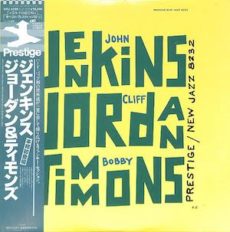
I begin this morning’s discussion with the 1960 collaborative album, Jenkins, Jordan, and Timmons (New Jazz NJLP 8232) by John Jenkins, Clifford Jordan, and Bobby Timmons. Joining them on this date are Wilbur Ware on bass and Dannie Richmond on drums. My copy used in this report is the 1981 Japanese Mono reissue by Victor Musical Industries (New Jazz SMJ-6299). John Jenkins’ approach to Hard-Bop and standards on the alto sax was distinctively tasteful. His solos always showed respect and affection for the tunes he played, and he could bring imaginatively unique lines even to well-worn standards. His other album as a leader is the self-titled release, John Jenkins (1957). Clifford Jordan’s interpretations on the tenor sax were the perfect characterization of his sound, sometimes growling, sometimes purring, but always with a formidable technique and a passionately assertive tone. Here, Jordan is in great form with another horn to joust with.
Pianist Bobby Timmons was one of the most talented yet neglected figures in the annals of Jazz. He composed two songs that are etched in the minds of many Jazz fans, Dat Dere, a mainstay in the early days of The Cannonball Adderley Quintet and Moanin’ that became a huge hit for The Jazz Messengers. Timmons appeared on the landmark album, Art Blakey and The Jazz Messengers (1958). On this date, he approaches each tune with a melodic and rhapsodic touch that’s irresistible. Wilbur Ware was an extraordinary soloist on the bowed bass; he possessed a beautiful sound that could be fat, resonant, and fluid without any loss of body on any of the songs he played. Dannie Richmond is best known for his many albums with Charles Mingus, he’s a very pleasant surprise on this record with an energetic liveliness in his playing. He also recorded with many jazz greats including George Adams, Pepper Adams, Chet Baker, Ted Curson, Booker Ervin, Duke Jordan, Herbie Nichols, Horace Parlan, and Don Pullen.
Clifford Jordan’s Cliff’s Edge starts Side One at midtempo with both saxes flexing their muscles in unison on the opening chorus. Cliff is up first with a very satisfying opening solo at an easy, unhurried pace. John continues the conversation with a pleasant zest on the second performance. Bobby tells his story last with a charming interpretation that comes across effectively anchored by Wilbur and Dannie’s support into the quintet’s ending. Up next is the 1946 jazz standard Tenderly by Walter Gross and Jack Lawrence. Timmons opens the song with a soothing introduction, then Jordan steps up first for a deeply compassionate melody and an opening statement exhibiting sensitive delicacy. Timmons comes in next, gently caressing each note of an exceptionally tasteful interpretation. Ware deftly captures the song’s subtle mood on a gorgeously warm solo, followed by Jenkins who concludes the readings and the song with a beautifully tender interpretation.
The first of two tunes from Jenkins’ pen, Princess begins with a collective mid-tempo groove. John starts the opening solo with an articulate tone dispensing absolute joy. Cliff takes the listener for a comfortable joyride on the next statement. Bobby is consistently inventive on the closing performance preceding the quintet’s exit. Side Two starts with Soft Talk by Julian Priester, an energized swinger from the start of the ensemble’s electrically charged theme. Jenkins speaks first to start this scintillating conversation with an aggressive fierceness. Jordan continues the dialogue, making every note count with high voltage power. Jenkins and Jordan soar to great heights in an invigorating exchange over the next few verses. Timmons adds his voice to the discussion next on a heated reading, then Ware walks briskly on an abbreviated statement. Richmond has the last word with energetic drumming in an exciting conversation between both saxes into the reprise and abrupt climax.
Jenkins’ Blue Jay is a laid-back midtempo blues that begins with an unaccompanied lively introduction by Ware, segueing into the quintet’s collective theme. John starts the soloing with an easy-going opening statement. Clifford responds with a marvelous interpretation. Bobby cruises into the third reading with a strong beat and Wilbur steps last into the spotlight for a concise comment that flows effortlessly to the ensemble’s closing chorus and finale. The remastering of Rudy Van Gelder’s original recording has been superbly recreated by Victor Musical Industries with all five instruments full of body, presence, and a vibrant soundstage. If you enjoy good Hard-Bop and are a fan of John Jenkins, Cliff Jordan, and Bobby Timmons, I offer for your consideration, Jenkins, Jordan, and Timmons. An excellent album that in my opinion, no library should be without!
~ Art Blakey and The Jazz Messengers (Blue Note BLP 4003/BST 84003), John Jenkins (Blue Note BLP 1573), Them Dirty Blues (Riverside RLP 12-322/RLP 1170) – Source: Discogs.com ~ Tenderly – Source: JazzStandards.com © 2021 by Edward Thomas Carter
More Posts: choice,classic,collectible,collector,history,instrumental,jazz,music,piano,saxophone
Requisites
View Post
Impressions ~ Buck Hill Quartet | By Eddie Carter
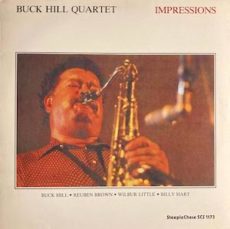
The Buck Hill Quartet steps into the spotlight for this morning’s discussion with the second of two live albums from The North Sea Jazz Festival. Impressions (SteepleChase Records SCS 1173) is a 1983 release that was recorded on July 11 & 12 during the quartet’s 1981 performance. The remainder of their concert appears on Easy To Love (1982). The tenor saxophonist is working again with Reuben Brown on piano, Wilbur Little on bass, and Billy Hart on drums. Buck began his professional career in 1943 while working as a mailman in Washington D.C. He’s collaborated with Charlie Byrd, Miles Davis, Dizzy Gillespie, Shirley Horn, Alan Houser, Max Roach, Shirley Scott, and Sonny Stitt, and was also proficient on the clarinet and soprano sax. My copy used in this report is the 1983 Netherlands Stereo album sharing the Danish catalog number.
Side One begins with the jazz standard, Alone Together by Arthur Schwartz, and Howard Dietz. It was written in 1932 and began life as a show tune in the Broadway musical, Flying Colors. The quartet takes off with a brisk workout on the melody. Buck swings swiftly into the opening statement. Reuben speaks his peace next vigorously. Billy has a brief conversation with both soloists, then generates some heat on the closer into the reprise and exit. Hill makes a few announcements anchored by just the piano, then the group travels to Penn Station, a medium-paced blues by Reuben Brown. The ensemble comes into the station leisurely on the melody. Brown starts the soloing with a comfortable groove. Hill emanates a funky, down-home feeling on the second statement. Little sparkles on the third reading with a thoroughly relaxed performance into piano and tenor sharing an exchange before the closing chorus.
Side Two gets underway with Yesterdays by Jerome Kern and Otto Harbach. The trio makes a brief introduction, then Buck begins the opening chorus at midtempo. He turns the temperature up with a scintillating reading of concentrated heat. Reuben starts the next statement at a slow pace, then proceeds to an aggressive workout. Wilbur wraps up the solos with a concise comment ahead of the ensemble’s climax. John Coltrane’s Impressions ends the set on an uptempo note with the foursome swinging from the opening notes of the high-spirited melody. Buck and Reuben are the featured soloists and Brown energetically prances through the first solo with authority. Hill delivers the final word with an intense interpretation of astonishing voracity and electrically charged passion leading to the quartet’s exit and crowd’s ovation.
Impressions was produced by Nils Winther and Ronald Prent was the recording engineer on this album and its companion, Easy To Love. The sound is stunning throughout the album and the record is quiet until the music starts. Buck Hill was a tremendous talent on the tenor sax that could swing hard in an uptempo setting but could also show his tender side with a gorgeous tone on a ballad or standard. A tribute mural of him playing his sax in his mailman uniform by artist Joe Pagac resides at 1925 14th Street, NW in Washington, D.C. He passed away at age ninety on March 20, 2017. If you’re just discovering the music of Buck Hill and enjoy the tenor sax, I invite you to check out Impressions by The Buck Hill Quartet. It’s an album that’s sure to make you smile and if you’re already a fan should make a welcome addition to your jazz library!
>~ Easy To Love (SteepleChase Records SCS-1160) – Source: Discogs.com
~ Alone Together, Yesterdays – Source: JazzStandards.com
~ Impressions – Source: Wikipedia.org
© 2021 by Edward Thomas Carter
More Posts: choice,classic,collectible,collector,history,instrumental,jazz,music,saxophone