

Daily Dose Of Jazz…
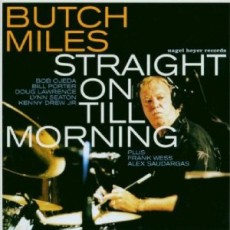
Butch Miles was born Charles J. Thorton, Jr. on July 4, 1944 in Ironton, Ohio. He began playing snare drum at the age of 9 and went on to major in music at West Virginia State University from 1962–1966. After his matriculation he toured with the Iris Bell Trio.
Miles joined the Count Basie Orchestra in 1975 and the association lasted for four years and then returned for ten years from 1997–2007. He led his own group, Jazz Express, in the 1980s and ’90s.
Besides performing with the Count Basie Orchestra, Butch has played with Dave Brubeck, Ella Fitzgerald, Sammy Davis Jr., and Frank Sinatra among others as well as hitting the stage of the Newport and Montreux Jazz Festivals.
HE cites Buddy Rich, Gene Krupa and Jo Jones as favorite drummers and is currently a professor in the School of Music at Texas State University-San Marcos.

Inspire A Young Mind
More Posts: drums

Daily Dose Of Jazz…
Raymond Mantilla was born on June 22, 1934 in New York City and his early drumming inspiration came from Afro-Cuban jazz. He played with a number of Latin jazz ensembles from the 1950s including the La Playa Sextet, Xavier Cugat, Lou Perez, Rene Touzet, Miguelito Valdez and Monguito Conjunto.
He played behind Eartha Kitt in 1955 and by 1960 was touring with Herbie Mann and recording with Max Roach. He recorded with Al Cohn, Freddie Hubbard, Buddy Rich and Larry Coryell in the early Sixties and then led his own band in Puerto Rico from ’63 to ’69. This was followed with Ray becoming a founding member of Max Roach’s M’Boom percussion ensemble in 1970.
Mantilla was a member of Art Blakey’s Jazz Messengers in the 70s and toured the U.S., Europe, and Japan. He then recorded with Gato Barbieri, Joe Farrell, Richie Cole, Don Pullen, Charles Mingus, Walter Bishop, Jr., and Morgana King and toured Cuba with Dizzy Gillespie.
By the end of the decade he once again founded his own ensemble, the Ray Mantilla Space Station, and through the 1980s toured or recorded with Muhal Richard Abrams, Kenny Burrell, Shirley Scott and Warren Chiasson. In 1991 the noted session player and bandleader put together a new ensemble, the Jazz Tribe and has been recording, performing and touring ever since.
Take A Dose On The Road
More Posts: drums
Daily Dose Of Jazz…
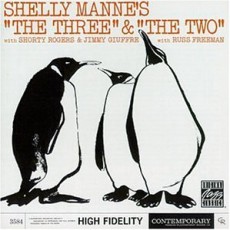
Shelly Manne was born Sheldon Manne in New York City on June 11, 1920. His father and uncles were drummers, he got tips from drummer Billy Gladstone as a teenager and soon he rapidly developed his style in the 52nd Street clubs in the late 30s and 40s. He got his first professional job with the Bobby Byrne Orchestra and was soon recording with Coleman Hawkins, Charlie Shavers, Don Byas, Duke Ellington, Johnny Hodges, Harry Carney and Rex Stewart.
Manne rose to stardom when he became part of the bands of Woody Herman and Stan Kenton in the late 1940s and early 1950s, winning awards and developing a following at a time when jazz was the most popular music in the United States. When the bebop movement began to change jazz in the 1940s, Manne loved it and adapted to the style rapidly, performing with Dizzy Gillespie, Charlie Parker, Flip Phillips, Charlie Ventura, Lennie Tristano and Lee Konitz.
In the early 1950s, Manne left New York, settled permanently on a ranch outside Los Angeles, where he and his wife raised horses. This began his important role in the West Coast school of jazz, performing on the Los Angeles jazz scene with Shorty Rogers, Hampton Hawes, Red Mitchell, Art Pepper, Russ Freeman, Frank Rossolino, Chet Baker, Leroy Vinnegar and many others.
Shelly led a number of small groups that recorded under his name and leadership, recording his now famous live Black Hawk sessions and for Contemporary Records. He played in styles of Dixieland, swing, bebop, avant-garde jazz and fusion, as well as contributing to the musical background of hundreds of Hollywood films and television programs, collaborating with Henry Mancini on such films as Breakfast At Tiffany’s, Hatari and The Pink Panther and tv shows like Peter Gunn and Mr. Lucky.
Shelly Manne passed away of a heart attack on September 26, 1984 shortly before the popular revival of interest in jazz had gained momentum.
Give A Gift Of Jazz – Share
More Posts: drums
Daily Dose Of Jazz…
Gordon “Specs” Powell was born June 5, 1922 in New York City. He started out musically on the piano but by the late 1930s he became exclusively a drummer. He began in the swing era working with Edgar Hayes in 1939, Benny Carter in 1941-42 and Ben Webster.
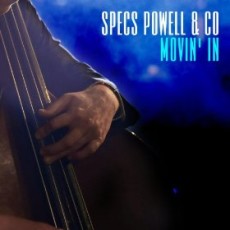
He started working as a staff musician for CBS in 1943 and by the early 60s he was lead drummer on The Ed Sullivan Show. He only led one recording session for Roulette Records in 1957 titled “Movin’ In”.
Remaining active until the 1970s, Specs Powell, jazz drummer and percussionist that worked in the bebop and hard bop idioms was honored by the Big Band and Jazz Hall of Fame in 2004.
Though he passed away three years later on September 15, 2007 at the age of 85, Specs Powell selected discography lists his orchestra and big band albums, “Movin’ In” and “Big Band Jazz” and left behind an impressive albeit a selected collection of recordings with Teddy Wilson, Jess Stacy, Red Norvo, Erroll Garner, Shirley Scott, Reuben Wilson, Bernard Purdie and Billy Butler among others.
Dose A Day-Blues Away
More Posts: drums
Daily Dose Of Jazz…
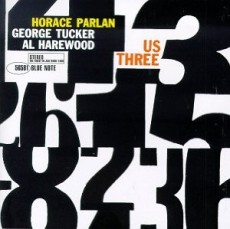
Al Harewood was born on June 3, 1923 and as a child Harewood was a gifted tap dancer that gave recitals and was affiliated with Bill “Bojangles” Robinson’s school of dance. With his older brother’s drum unoccupied when he was drafted into the Army during WWII, He began his apprenticeship. Having contracted pneumonia as a child and exempted from military service, Al began his illustrious career as a jazz drummer.
While working at a munitions armory during the war, Harewood taught himself the drums, finding uncommon aptitude for playing the traps with fire and swing. He began listening to the major percussion innovators of the time: Max Roach, Art Blakey, Philly Joe Jones, and the new bop styling’s of Kenny Clarke and began playing club dates around New York.
Harewood plays very melodically with rhythmic punches, a talent that made him an expert at feeding and supporting each soloist while never getting in the way of a horn player’s melodic development. He has worked with J. J. Johnson, Kai Winding, Art Farmer, Gigi Gryce, Benny Golson, Horace Parlan, Ike Quebec, Grant Green, Lou Donaldson, Curtis Fuller, Stan Getz, Carmen McRae, Mary Lou Williams, Stanley Turrentine, Shirley Scott and Dexter Gordon to name a few.
By age 88, Al Harewood maintained a wonderful sense of humor, dignity and courage as one of the original creators of modern jazz drumming. He played in New York’s clubs each and every night at the very least in spirit if not influence. He spent his time between New York and his family home in Barbados until his passing on March 13, 2014 at the age of 90.
Give A Gift Of Jazz – Share
More Posts: drums