

Daily Dose Of Jazz…
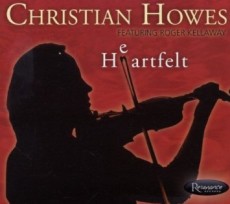
Christian Howes was born on February 21, 1972 in Rocky River, Ohio but grew up in Columbus. From the age of five he studied classical violin and by 16 was performing with the Columbus Symphony Orchestra. He would go on to matriculate through Ohio State University with a degree in philosophy.
When Christian turned twenty he began playing at regular gospel church services and his interest turned to becoming a jazz voice. Over the next few years he became one of the world’s most respected jazz violinists. He worked with Les Paul for eleven years. Since 2001 he has become an in-demand violinist on the New York jazz scene collaborating with Greg Osby, D.D. Jackson, Frank Vignola, Joel Harrison, Dafnis Prieto, Dave Samuels, Spyro Gyra and a 4-year chair in Bill Evans “Soulgrass” band.
Howes has been recognized by Jazz Times as one of three top violinists, Down Beat Critics Poll’s #2 Rising Star and the Minneapolis-St. Paul Star Tribune called him the fiercest violinist since Billy Bang.
As an educator he has taught as an Associate Professor at Beklee College of Music and established the Creative String Workshop and Festival. Teacher, composer, producer and violinist Christian Howes also plays the viola, guitar and bass guitar and continues to perform and record.

Give The Gift Of Knowledge
Daily Dose Of Jazz…
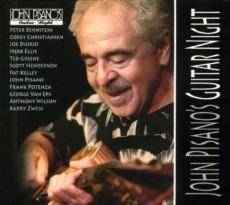
John Pisano was born February 6, 1931 in Staten Island, New York. He began his musical career on the East Coast playing the piano. At age 14 he took up the guitar. In the 1950’s, he entered the service, played guitar with the Air Force Band, then after discharge he followed Howard Roberts and Jim Hall into the guitar chair in the Chico Hamilton quintet. His first significant recordings were made with Hamilton with the quintet in ’57 and South Pacific in 1958.
Pisano’s work with Hamilton and Katz established him as a significant guitarist and arranger and an integral component of the Los Angeles jazz scene. He published some of his own compositions while with the Herb Alpert band. He composed So, What’s New that appeared as the B-side of Herb Alpert’s hit single Flamingo in 1966.
Though he has been a leader in his own right, for most of his career John has resided in his comfort zone as a sideman working with Paul Horn, Fred Katz, Burt Bacharach, Tony Bennett, Herb Alpert, Natalie Cole, Michael Franks, Diana Krall, Peggy Lee, Julie London, Joe Pass, Frank Sinatra, Barbra Streisand, Billy Bean and many more in performance or recordings. He has recorded for Decca,
Starting in the ’90s, John performed with his wife singer Jeanne Pisano in a group called The Flying Pisanos. Today John Pisano continues to influence the jazz guitar community and further the value of jazz guitar with his fabled Guitar Nights and his duet recordings Among Friends, Conversation Pieces, Affinity with Ray Walker, and Homage with Adrian Ingram.
Give The Gift Of Knowledge
More Posts: guitar
Daily Dose Of Jazz…
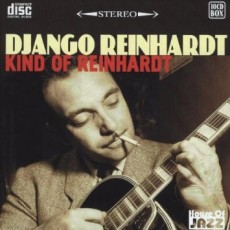
Jean Reinhardt better known as “Django” was born on January 23, 1910 in Liberchies, Pont-a-Celles, Belgium into a French family of Manouche Romani descent. His family made cane furniture for a living but it was comprised of several good amateur musicians. He spent most of his youth in Romani encampments close to Paris, where he started playing violin, banjo and guitar.
Reinhardt was attracted to music at an early age, first playing the violin. At age 12, he received a banjo-guitar as a gift and quickly learned to play by mimicking the fingerings of musicians he watched. By age 13, Reinhardt was able to make a living playing music. He received little formal education and acquired the rudiments of literacy only in adult life. His first known recordings, made in 1928, were of him playing the banjo.
At age 18 in 1928 Reinhardt was injured in a fire started by a knocked over candle. Over half his body suffered burns, two fingers and one leg were paralyzed and it was thought he would never walk or play again. But with therapy and practice he re-learned to play differently and walked with a cane.
The years between 1929 and 1933 were formative musically for Django when he became attracted to jazz listening to Louis Armstrong. Shortly thereafter he met Stephane Grappelli who had similar interests. The two became musical partners. In 1934, with an invitation by Hot Club de France secretary Pierre Nourry, he and Grappelli formed the Quintette du Hot Club de France. Over the years it hosted different players and adding a singer but for the most part allowed only stringed instruments.
In 1933, Reinhardt recorded two takes each of vocal numbers “Parce-que je vous aime” and “Si, j’aime Suzy”, continued to record into 1934, and in 1935 he and Stephane recorded sides for Decca Records. He played and recorded with Adelaide Hall, Coleman Hawkins, Benny Carter, Rex Stewart, Louis Armstrong, Dizzy Gillespie, and Duke Ellington.
By 1946, he was debuting at the Cleveland Music Hall as a special guest soloist with Duke Ellington and His Orchestra. As part of the U.S. tour Django also played two nights at Carnegie Hall, then secured an engagement at Café Society Uptown, where he played four solos a day, backed by the resident band drawing large audiences.
Returning to France in ’47, Reinhardt became re-immersed in Gypsy life, finding it difficult to adjust to the postwar world. Missing sold-out concerts, showing up without guitar or amplifier and wandering off were commonplace. However, during this period he continued to attend the R-26 artistic salon in Montmartre, improvising with his devoted collaborator, Stéphane Grappelli.
From 1951 until his death at age 43 on May 16, 1953 of a brain hemorrhage, Reinhardt retired to Samois-sur-Seine near Fontainbleau. He had continued to play in Paris jazz clubs and began playing electric guitar. (He often used a Selmer fitted with an electric pickup, despite his initial hesitation about the instrument.) His final recordings made with his “Nouvelle Quintette” in the last few months of his life show him moving in a new musical direction; he had assimilated the vocabulary of bebop and fused it with his own melodic style.
Give The Gift Of Knowledge
More Posts: guitar
Daily Dose Of Jazz…
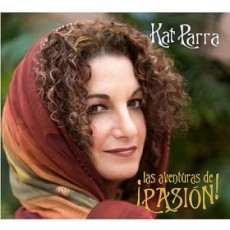
Kat Parra was born on January 13, 1962 in San Francisco, California and spent part of her teenage years in Chile. Upon her return, she move to southern California to attend University of California at Los Angeles where she studied classical flute and voice for a year. Moving to the Silicon Valley area she shifted her educational focus to jazz, studying voice at San Jose State University alongside singer Patti Cathcart of Tuck & Patti, who was a major influence.
Kat spent five years as a lead vocalist for the Bay area salsa band Charanga Nueve, and they opened for the likes of Celia Cruz and Los Van Van of Cuba. But despite all that musical activity, she still had a “day gig” working for the tech giant Cisco Systems. In 2006 she left Cisco to be a full-time singer and concentrate on music exclusively.
That very same year Parra recorded her first solo album, Birds In Flight produced by Bay Area-based trombonist Wayne Wallace on JazzMa Records. After that, she signed with Wallace’s indie label, Patois Records, releasing her second solo album, Azucar de Amor (Sugar of Love) in 2008.
Kat is a flexible and broad-minded jazz vocalist who has very strong Latin leanings but has also been affected by Middle Eastern, Arabic, and North African music as well as greatly influenced by Afro-Cuban jazz. She has also combined jazz with everything from Brazilian samba to Afro-Peruvian music. She plays flute, guitar, and piano, and continues to perform in several different languages, including English, Spanish (which she speaks fluently), Portuguese, French, and Ladino, which is the language of Sephardic Jews and is considered one of the romance languages.
Dose A Day – Blues Away
Daily Dose Of Jazz…
Paco de Lucía was born Francisco Sánchez Gómez in Algeciras, Cadiz, Spain on December 21, 1947. His father introduced him to the guitar at a very young age and was extremely strict in his upbringing, forcing him to practice up to 12 hours a day, every day. Combined with natural talent, he soon excelled and in 1958, at age 11, he made his first public appearance on Radio Algeciras. A year later he was awarded a special prize in the Jerez flamenco competition.
At age 14 Paco was touring with the flamenco troupe of dancer Jose Greco and in 1964 he recorded the first of three albums with guitarist Ricardo Modrego. From 1968 to 1977 he would record 10 albums with flamenco singer Camaron de la Isla.
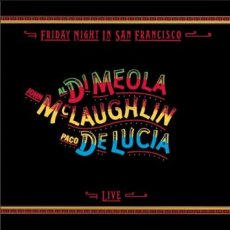
In 1979, de Lucía along with John McLaughlin and Larry Coryell formed The Guitar Trio, briefly toured Europe and released Meeting of the Spirits, a video recorded at London’s Royal Albert Hall. Al Di Meola later replaced Coryell and since 1981 the trio has recorded three albums.
Over the course of his career, Paco De Lucia, considered one of the finest guitarist in the world, has appeared in the western film Hannie Caulder, recorded on the soundtrack of Don Juan DeMarco, led his own sextet with brothers Ramón and Pepe, continues to record jazz, classical and flamenco albums, has won the Prince of Austrias Award, and has been awarded doctorates from the University of Cadiz and Berklee College of Music. On February 25, 2014 he passed away of a heart attack at age 66 in Playa de Carmen, Mexico. He was posthumously award a Latin Grammy for Album of the Year for his album Canción Andaluza the same year.
Inspire A Young Mind
More Posts: guitar