

Daily Dose Of Jazz…
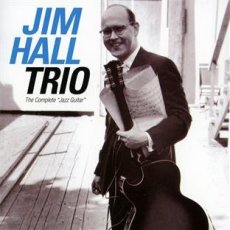
Jim Hall was born James Stanley Hall on December 4, 1930 in Buffalo, New York. Learning to play guitar as a child, he was educated at the Cleveland Institute of Music. After his matriculation he moved to Los Angeles, California and began to attract national then international attention in the late 50s. It was during this period that he further studied classical guitar with Vincente Gomez.
Hall would play with the Chico Hamilton Quintet and Jimmy Guiffre in the Fifties, Ella Fitzgerald in the early 60s, then played with Ben Webster, Hampton Hawes, Bob Brookmeyer, John Lewis, Zoot Sims, and Lee Konitz, among others. A move to New York led him to work with Sonny Rollins and Art Farmer and his live and recorded collaborations there with Bill Evans, Paul Desmond and Ron Carter have become legendary.
Formal recognition as a composer came in 1997, when Jim won the New York Jazz Critics Circle Award for Best Jazz Composer/Arranger. His pieces for string, brass, and vocal ensembles can be heard on his “Textures and By Arrangement” recordings. He has been commissioned to compose for guitar and orchestra, awarded an NEA Jazz Masters Fellowship, was one of the first musicians to join the fan-funded label ArtistShare.
Hall changed the way jazz guitar sounded, with his innovation, composition, and improvisation. Apart from Metheny, he influenced other contemporary artists such as Bill Frisell, Mick Goodrick, John Scofield, and John Abercrombie. He continued to perform, tour and record up until he passed away in his sleep on December 10, 2013 in his Manhattan apartment.

Jazz Is Global – Share
More Posts: guitar
Daily Dose Of Jazz…
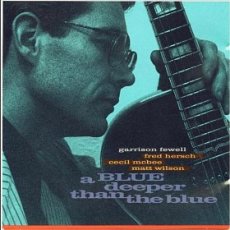
Garrison Fewell was born on October 14, 1953 in Charlottesville, Virginia but was raised in Philadelphia, Pennsylvania. He started playing the stride guitar when he was 11 years old and becoming interested in acoustic blues, he turned to the music of Reverend Gary Davis, Fred McDowell, and Mississippi John Hurt. During the early ’70s, Fewell embarked on a tour that took him to Pakistan, Iran, Turkey, and Afghanistan. Three years later he returned to the States, became a jazz student of Pat Martino and Lenny Breau, earned a degree from Berklee College of Music and by 1977 was teaching at his alma mater.
As part of a new exchange program set up between Berklee and Holland’s Rotterdam Conservatory in 1988, Garrison also taught in Rotterdam, worked with Dutch musicians and performed at the North Sea Jazz Festival. The guitarist settled in Paris the following year, playing jazz and teaching at the American School of Modern Music and played the Umbria Jazz Festival. For the next several years he taught and performed around Europe gaining more and more popularity.
In 1993 his relative obscurity at home changed with the recording of his album A Blue Deeper Than the Blue, bringing him to the attention of jazz lovers. It also bestowed upon him a number of honors with inclusion into the Coda Magazine and United Press International lists of the year’s ten best and the Boston Music Awards named the debut Best Jazz Album of the Year. Guitarist Garrison Fewell continues to perform, record, teach and tour.
Dose A Day – Blues Away
More Posts: guitar
Daily Dose Of Jazz…
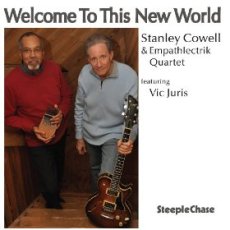
Vic Juris was born Victor E. Jurusz, Jr. on September 26, 1953 in New Jersey and started to play guitar around age 10, inspired by rock and roll legend Chuck Berry. He was self taught and played in many local rock and R&B bands around New Jersey as soon as he could.
Not long after he started playing professionally did he discover jazz and classical music and from then on it was a love affair with jazz. With an impeccable fluid approach to harmony and accompaniment, great writing style, a nice “blend” within the band, phenomenal chops, unique phrasing, advanced rhythmic ideas and concepts for improvisation Juris easily gained the respect of jazz musicians on the circuit and was not at a loss for work.
In the early 70s Vic played with Lyn Christie, made his first recordings with Eric Kloss, then joined Barry Miles working with him well into the Eighties. He recorded with Richie Cole, released his first album as a leader in the late 70s, and played with Don Patterson, Wild Bill Davis, Jimmy Smith, and Mel Torme.
He put together his own quartet in 1981, recorded for Muse and Steeplechase record labels, then became increasingly in demand as a sideman working with Bireli Lagrene, Larry Coryell, Dave Liebman, Jeanie Bryson, Gary Peacock, Judi Silvano, Lee Konitz and the list goes on.
As an educator Juris has held teaching positions at The New School for Jazz and Contemporary Music, Mason Gross School of the Arts, William Patterson and Lehigh Universities. Also a composer, his “Horizon Drive” was sampled in 1994 by Gang Starr on their Mass Appeal song. Guitarist and educator Vic Juris continued to perform, record and teach until his transition on New Year’s Eve, December 31, 2019 in Livingston, New Jersey at the age of 66.
Jazz Is Global – Share
More Posts: guitar,history,instrumental,jazz,music
Daily Dose Of Jazz…
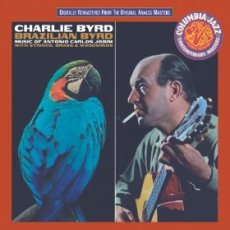
Charlie Lee Byrd was born on September 16, 1925 in Suffolk, Virginia but grew up in Chuckatuck, Virginia and his father taught him to play the acoustic steel guitar at age 10. He went on to Virginia Polytechnic Institute, served in the Army and played in the Special Services band in Paris. Returning to New York he studied composition at Hamett National Music School, taking up classical guitar.
Charlie moved to Washington, D.C. in 1950 and studied classical guitar with Sophocles Papas, then with Andre Segovia. By 1957 he teamed up with bassist Keter Betts and started gigging around D.C. for two years, joined Woody Herman for a State Department goodwill tour.
Byrd was first introduced to Brazilian music by his friend radio host Felix Grant who was well known in Brazil in 1960. A subsequent tour of Brazil and he returned home with recordings from Joao Gilberto and Antonio Carlos Jobim. He met with Stan Getz who convinced Creed Taylor, then at Verve Records to produce the album, recording “Jazz Samba” in 1962 in a building adjacent to All Souls Unitarian Church because of the excellent acoustics found there. And his love affair with Brazilian music began.
Over the course of his career he has toured the world, performed at numerous festivals, played with such jazz legends as Les McCann, Zoot Sims, Vince Guaraldi, his brother bassist Joe Byrd, Chuck Redd, Herb Ellis, Barney Kessel and the list goes on.
Charlie Byrd died of lung cancer on December 2, 1999 at his home in Annapolis, Maryland. He was deemed a Maryland Art Treasure in 1997 and knighted by the government of Brazil as the Knight of the Rio Branco.
Take A Dose On The Road
More Posts: guitar
Daily Dose Of Jazz…
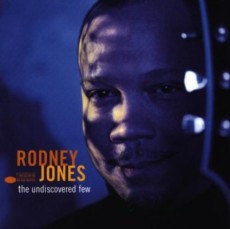
Rodney Jones was born on August 30, 1956. Mastering his instrument during his youth he performed with Jaki Byard and recorded with Chico Hamilton. An underrated cool-toned guitarist best in straight-ahead settings, by the time he was in his early twenties he was working with Dizzy Gillespie.
After moving on from Gillespie, he began working with Lena Horne as her accompanist. Jones put on the leader hat in 1977 with his debut on the the Strata East label, “The Liberation of the Contemporary Jazz Guitar “. This was followed up with his “Articulation” on the Timeless label and then another four sessions took place through 2001 for Muse, R7R and Minor Music labels.
Rodney has been cited as a jazz guitarist who uses modern quartal harmony. He also believes his journey is also one of spiritual awakening that is not separated by theology or music. He investigates the relationship between the art and science of jazz and helps musicians discover their own doorways to development and evolution of their music. He continues to perform, study and tour.
Give A Gift Of Jazz – Share
More Posts: guitar