

Daily Dose Of Jazz…
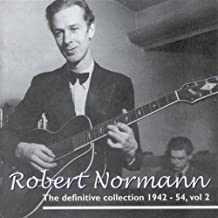
Robert Uno Normann was born on June 27, 1916 in Borge, Østfold, Norway. An autodidact performer on the banjo, accordion and tenor saxophone, he would eventually make the guitar as his main instrument. He was one of the swing era’s most sought after guitar soloists in Norway and was also a pioneer of the electric guitar.
He began his musical career as a wandering street and backyard musician at age 12 and became a professional musician in 1937. As a part of the Oslo jazz scene, he performed in several swing jazz groups, Freddy Valier, String Swing, and Gunnar Due. He simultaneously led his own quartet. During this period he played tenor saxophone with the Pete Brown Big Band from 1945 and various random jazz groups such as Frank Ottersen, and Willy Andresen. He got several career offers from international artists, including from Benny Goodman and Barney Kessel, that he turned down.
He never listened to recordings by Django Reinhardt but got his inspiration from listening to Teddy Wilson and Leon Chu Berry, and various accordionists. From 1955, he was less active in the jazz context because of significant alcohol problems. As a studio musician, Robert participated in close to 1300 productions, composed music to multiple folk texts, film, theater, and small pieces of music inspired by jazz and traditional Norwegian folk music.
Normann retired as an active musician in 1982 and devoted his time to small scale farming and inventions. Guitarist and jazz guitar pioneer Robert Normann, who made his first electric guitar in 1939 by constructing a pickup of copper wire, magnets and pitch stolen from public phones, passed away at the age of 81 on May 20, 1998 in Kvastebyen, Sarpsborg, Østfold, Norway.
More Posts: accordion,bandleader,banjo,guitar,history,instrumental,jazz,music,tenor saxophone
Daily Dose Of Jazz…
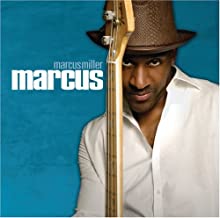
Marcus Miller, born William Henry Marcus Miller Jr. on June 14, 1959 in Brooklyn, New York and raised in a musical family. Classically trained as a clarinetist, he also plays keyboards, saxophone and guitar. He began to work regularly in New York City, eventually playing bass and writing music for jazz flutist Bobbi Humphrey and keyboardist Lonnie Liston Smith.
Spending 15 years as a session musician, he arranged and produced frequently, was a member of the Saturday Night Live band from 1979 to 1981, and co-wrote Aretha Franklin’s Jump To It along with Luther Vandross. He has played bass on over 500 recordings, appearing on over 500 albums by such artists as Herbie Hancock, The Crusaders, Wayne Shorter, McCoy Tyner, Frank Sinatra, George Benson, Michael Jackson, Beyoncé, Mariah Carey, Eric Clapton, Dr. John, Aretha Franklin, Elton John, Joe Walsh, Jean-Michel Jarre, Grover Washington Jr., Donald Fagen, Bill Withers, Bernard Wright, Kazumi Watanabe, Chaka Khan, LL Cool J, and Flavio Sala.
He won the Most Valuable Player award given by NARAS to recognize studio musicians three years in a row and was subsequently awarded Player Emeritus status and retired from eligibility. In the nineties, Miller began to write his own music and make his own records, putting a band together and touring regularly.
Between 1988 and 1990 he appeared regularly both as a musical director and as the house band bass player in the Sunday Night Band during two seasons of Sunday Night on NBC late-night television, hosted by David Sanborn.
As a composer, Miller co-wrote and produced several songs on the Miles Davis album Tutu, including its title track. He also composed Chicago Song for David Sanborn and co-wrote ‘Til My Baby Comes Home, It’s Over Now, For You To Love, and Power of Love for Luther Vandross and wrote Da Butt, which was featured in Spike Lee’s School Daze.
Miller hosts a jazz history show called Miller Time with Marcus Miller, is a film score composer, was nominated and won several Grammy Awards. Bassist Marcus Miller continues to perform, record and tour.
More Posts: bass,clarinetist,guitar,history,instrumental,jazz,keyboards,music,saxophone,vocal
Daily Dose Of Jazz…
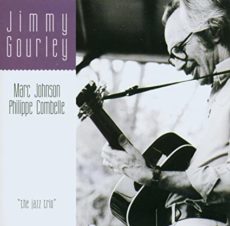
James Pasco Gourley, Jr. was born on June 9, 1926 in St. Louis, Missouri. He met saxophonist Lee Konitz in Chicago, Illinois when both were members of the same high school band, crediting Konitz with encouraging him to become a serious musician.
Jimmy’s father started the Monarch Conservatory of Music in Hammond, Indiana, and though he didn’t teach, he bought him his first guitar. Taken his first guitar classes at the school. He became interested in jazz while listening to the radio, enjoying in particular Nat King Cole. For his first professional experience as a performer, he dropped out of high school to play with a jazz band in Oklahoma City, Oklahoma.
From 1944 to 1946, Gourley served in the U.S. Navy then returned to Chicago, where he met guitarist Jimmy Raney and wanted to play like him. He worked in bars and clubs with Jackie Cain & Roy Kral, Anita O’Day, Sonny Stitt, and Gene Ammons. Through the G.I. Bill, he received tuition for three years to any college in the world.
By 1951, he spent the rest of his life in France, working with Henri Renaud, Lou Bennett, Kenny Clarke, Richard Galliano, Stéphane Grappelli, Bobby Jaspar, Eddy Louiss, Martial Solal, and Barney Wilen. He played with American musicians who were passing through, including Bob Brookmeyer, Clifford Brown, Stan Getz, Gigi Gryce, Roy Haynes, Bud Powell, Zoot Sims, Lucky Thompson, Lester Young and his friend Lee Konitz. Guitarist Jimmy Gourley passed away on December 7, 2008 in Villeneuve-Saint-Georges, France at the age of 82.
More Posts: bandleader,guitar,history,instrumental,jazz
Daily Dose Of Jazz…
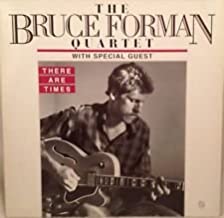
Bruce Forman was born in Springfield, Massachusetts on May 14, 1956 and first took piano lessons at an early age before picking up the guitar at age thirteen. In 1971, his family moved to San Francisco, California where he led his own groups in the area and performed with local jazz musicians, such as Eddie Duran, Vince Lateano, and Eddie Marshall.
He would go on to perform and record with nationally renowned musicians, such as Ray Brown, George Cables, Joe Henderson, Freddie Hubbard, Bobby Hutcherson, and Woody Shaw.
He performed regularly at the Monterey Jazz Festival and played with Richie Cole from 1978 to 1982. Bruce recorded his first of sixteen albums to date, Coast To Coast, in 1981. His most successful album as a leader was 1992’s Forman on the Job, which hit #14 on the U.S. Billboard Top Jazz Albums chart.
As a sideman he has recorded with Richie Cole, Clint Eastwood, Dan Hicks, Roger Kellaway, Mark Murphy, Charlie Shoemake, Lanny Morgan, Tom Harrell, Rare Silk, Dave Eshelman, Lorez Alexandria, Geoff Muldaur, Les DeMerle, Tony Monaco, Molly Ringwald, Chuck Deardorf. Guitarist Bruce Forman continues to perform, record and tour.

More Posts: bandleader,composer,guitar,history,instrumental,jazz,music
Daily Dose Of Jazz…
Jack Bland was born on May 8, 1899 in Sedalia, Missouri and learned to play the banjo. In 1924 he co-founded the Mound City Blue Blowers with Red McKenzie in St. Louis, Missouri. Their first hit record was Arkansas Blues, a success in Chicago and the American midwest. After Eddie Lang joined the group towards the end of 1924, they toured England.
The late 1920s saw Bland playing more cello and guitar and in 1929, Lang left the group, replaced by Gene Krupa. Also in 1929, the Blue Blowers appeared in a 1929 short film, The Opry House. Muggsy Spanier, Coleman Hawkins, and Eddie Condon would all play in the ensemble in the 1930s, which moved to more of a Dixieland sound.
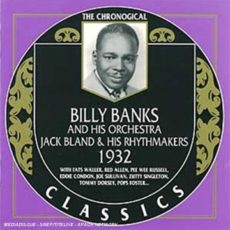
Bland did session work in New York City with the Billy Banks Orchestra in the 1930s, with Pee Wee Russell, Red Allen, and Zutty Singleton. Following this, he recorded with a group called the Rhythmakers that included Pops Foster and Fats Waller at times.
By the 1940s Jack was playing on 52nd Street at Jimmy Ryan’s Club, playing with Allen and Singleton as well as Edmond Hall, Vic Dickenson, Ike Quebec, and Hot Lips Page. Some of their sessions were recorded by Milt Gabler and released on Commodore Records. From 1942 to 1944 he played with Art Hodes and also with Muggsy Spanier; he led his own band from 1944 to 1950.
In the 1950s, guitarist and banjoist Jack Bland moved to Los Angeles, California, retired from performing, and worked as a taxicab driver until he passed away in August 1968.
More Posts: banjo,cello,guitar,history,instrumental,jazz,music