

Daily Dose Of Jazz…
Ray Biondi was born Remo Biondi on July 5, 1905 in Cicero, Illinois. As a child he started with violin and his early training was classical under the supervision of several teachers from the American Conservatory of Chicago. Mandolin followed at age 12 and it became his gateway into the world of string bands, and added guitar and then trumpet into his musical arsenal.
In 1926 he began playing professionally with the Blanche Jaros Orchestra, based out of Cicero, and the next year he started an eight-year period of heavy freelancing in Chicago, enjoying new contacts such as trumpeter Wingy Manone, reedman Bud Freeman, and Earl Burtnett put Biondi in his lineup as a violin and trumpet double. This band took him on a series of tours Kansas City, Cincinnati and New York. this led to a gig with clarinetist and saxophonist Joe Marsala and playing guitar whenever Eddie Condon double booked himself.
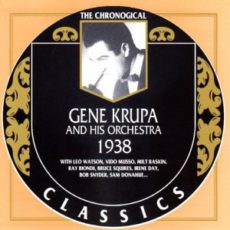
In 1938, Gene Krupa hired Ray solely as a guitarist except on an orchestra project where he double as a violinist. A year later he left the band and formed a series of small groups as a leader and one band had a long residency at Chicago’s 606 Club. He then opened a short-lived club himself, and Krupa took him back on the road in the early ’50s. He then began to get session guitar and mandolin work in some genres outside of straight jazz. With Pat Boone and the Crew Cuts as doo wop became a new musical style.
By 1961, he had begun a serious shift to teaching all of his instruments except the trumpet, but continued gigging with groups both large and small, including the orchestra of Dick Schory in the former case and stride pianist Art Hodes in the latter. Violinist Ray Biondi passed away on January 28, 1981 in Chicago, Illinois.
Sponsored By


#preserving genius
Daily Dose Of Jazz…
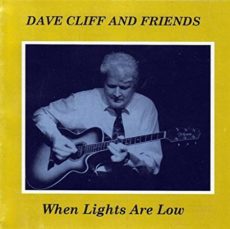
Dave Cliff was born David John Cliff on June 25, 1944 in Hexham, Northumberland, United Kingdom. He began his music career playing rhythm and blues in the Newcastle area. In 1967 he matriculated through Leeds College of Music with a degree in jazz studies, while studying with bassist Peter Ind and Bernie Cash.
Moving to London, England in 1971 Cliff established himself on the local scene and during 1976-1977 he toured Holland, Denmark, Italy and the UK with the Lee Konitz/Warne Marsh Quintet. The following year he toured the UK with the Soprano Summit alongside Kenny Davern and Bob Wilber. From the 1980s on he worked increasingly as a freelance.
His debut album as a leader was The Right Time, recorded in 1987, featured alto saxophonist Geoff Simkins and was the first of a number of albums with Simkins, with whom he has collaborated extensively.Dave has also recorded with Warne Marsh, Allan Ganley, Phil DeGreg and Bruce Adams.
Cliff has appeared frequently at Ronnie Scott’s Jazz Club in varied settings including Georgie Fame’s Blue Flames, Mike Carr Trio, Irene Reid and the Dick Pearce Sextet. He has worked extensively with visiting American musicians, including Slide Hampton, Nina Simone, George Masso, Spike Robinson, Herb Geller, Lanny Morgan, Harry Allen, Buddy Childers, Lew Tabackin, Mundell Lowe, Bucky Pizzarelli, Jack McDuff, Eddie “Lockjaw” Davis, Richie Cole, and Ken Peplowski.
As an educator he has been teaching jazz guitar at London Trinity College of Music, The Royal Welsh College of Music and Drama, the Birmingham Conservatoire, as well as at the Original UK Jazz Summer School, and has taught at the Jamie Aebersold Summer School in London and at the Christiansand jazz course in Norway.
Guitarist and educator Dave Cliff, whose influences from Charlie Christian and Wes Montgomery can be heard in his playing, continues to perform, record and teach.
Sponsored By

www.whatissuitetabu.com
#preserving genius
More Posts: guitar
Daily Dose Of Jazz…
Koby Hayon was born June 5, 1972 in Jerusalem, Israel and studied guitar at the Rimon School of Jazz and Contemporary Music in Tel Aviv. While there he gained experience as a guitarist with the DGK Trio, Hulon Big Band, and many other notable groups.
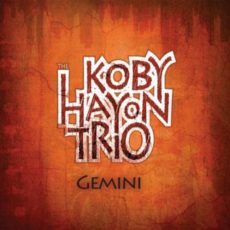
Moving to the United States in 2001, he earned his BFA in Jazz Performance at SUNY Purchase, was a recipient of the Ullendorff Memorial Foundation Scholarship, and studied with John Abercrombie, Hal Galper, Todd Coolman, and Jon Faddis. In 2009, Hayon formed the Koby Hayon Jazz Trio. With bandmates Kermit Driscoll and Jerome Morris, he fuses his heritage with his vast musical training by performing classic Israeli songs in a jazz setting, as well as his own compositions. In addition he is part of Trio Shalva with pianist Assaf Gleizner and percussionist Nadav Snir-Zelniker.
As a sideman, Hayon has performed and toured throughout Western New York and Canada, playing and recording with countless bands, from Dixie/Swing Band, led by the legendary Sol Yaged, to playing alongside bassist Bill Crow and with various bands playing traditional Israeli music.
In addition to playing live music where he can be heard regularly at the 55bar, Cornelia St. Cafe, Watercolor Cafe, Birdland and other reputable New York clubs. Hayon is the musical director of “Nigunim – A Festival of New Improvised Jewish Music” and through his efforts, the festival became a recipient of the Arts Project Grant from Westchester Arts Council.
Sponsored By
Voices From The Community
#preserving genius
More Posts: guitar
Daily Dose Of Jazz…
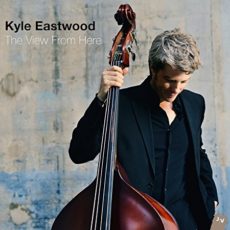
Kyle Eastwood was born on May 19, 1968 in Los Angeles, California and is the son of actor Clint Eastwood. Growing up with a father’s love of jazz for the music of Miles Davis, Dave Brubeck, Thelonious Monk and the Stan Kenton Big Band, he developed a similar love for jazz that was prominent in the home. This was coupled with a father and mother who played piano and a and grandmother who taught music at Northwestern University. Attending several Monterey Jazz Festivals in his youth with his dad, got him access backstage to meet people who a great influence on him like Dizzy Gillespie and Sarah Vaughan.
Eastwood began playing electric bass in high school, learning R&B, Motown, and reggae tunes by ear. After studying with French bassist Bunny Brunel, he began playing gigs around the New York and Los Angeles areas, eventually forming the Kyle Eastwood Quartet. In 1996 he contributed to Eastwood After Hours: Live at Carnegie Hall performance and ultimate recording, then two years later released his debut CD as a leader, From There to Here, on the Sony label. He moved on to record with the UK’s Candid Records and then to Rendezvous.
He has contributed music to nine films The Rookie, Mystic River, Million Dollar Baby, Flags of Our Fathers, Changeling, Gran Torino, Invictus and J. Edgar and has been nominated for a Chicago Film Critics Association Award for Original Score for the film Letters from Iwo Jima. He has also contributed to the score of the documentary Homme Less about homeless photographer Mark Reay. Bassist and bass guitarist Kyle Eastwood currently has eight albums released, tours around the world playing clubs and festivals and continues to write, compose, arrange and perform.
Sponsored By

#preserving genius
Daily Dose Of Jazz…
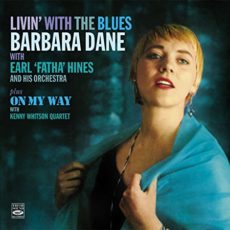
Barbara Dane was born May 12, 1927 in Detroit, Michigan. Out of high school she began singing regularly at demonstrations for racial equality and economic justice and while still in her teens, she sat in with bands around town and won the interest of local music promoters. Getting an offer to tour with Alvino Rey’s band, she turned it down in favor of singing at factory gates and in union halls.
Moving to San Francisco,California in 1949, Dane began raising her own family and singing her folk and topical songs around town as well as on radio and television. When a jazz revival was then shaking the town by the 1950s she became a familiar figure at clubs along the city’s Embarcadero with her own versions of women’s blues and jazz tunes. New Orleans jazz musicians like George Lewis and Kid Ory and locals like Turk Murphy, Burt Bales, Bob Mielke and others regularly invited her onto the bandstand.
Her first professional jazz job was with Turk Murphy at the Tin Angel in 1956. Ebony Magazine did a seven page spread on the alto voiced songstress who would moan of trouble, two-timing men and freedom aided and abetted by some of the oldest names in jazz who helped give birth to the blues, with photos of her performing with Memphis Slim, Willie Dixon, Muddy Waters, Clara Ward, Mama Yancey, Little Brother Montgomery and others.
By 1959 she appeared with Louis Armstrong on the Timex All-Star Jazz Show hosted by Jackie Gleason. She went on to tour the East Coast with Jack Teagarden, appeared in Chicago with Art Hodes, Roosevelt Sykes, Otis Spann and others, played New York with Wilbur De Paris and his band, and appeared on The Tonight Show Starring Johnny Carson as a solo guest artist. She would guest perform on The Steve Allen Show, Bobby Troop’s Stars of Jazz, and Alfred Hitchcock Presents.
In 1961, the singer opened her own club, Sugar Hill: Home of the Blues, on San Francisco’s Broadway in the North Beach district, with the idea of creating a venue for the blues in a tourist district where a wider audience could hear it. There Dane performed regularly with her two most constant musical companions: Kenny “Good News” Whitson on piano and cornet and Wellman Braud, former Ellington bassist.
During the Sixties while working as a solo performer on the coffeehouse circuit Barbara also became an activist in the peace and civil rights movements, touring around the nation and performing at demonstrations and anti-war establishments worldwide and became the first U.S. musician to tour post-revolutionary Cuba.
In 1970 Dane founded Paredon Records with husband Irwin Silber, a label specializing in international protest music. She produced 45 albums, including three of her own, over a 12-year period. The label was later incorporated into Smithsonian-Folkways, a label of the Smithsonian Institution, and is available through their catalog. Arhoolie Records, Tradition Records, Runt Distribution, and DBK Works label have issued a compact discs of her music within the last twenty years. She as well has released her earlier blues and jazz recordings on CD on the Barbara Dane CDs site.
At 90 years old vocalist Barbara Dane has retired from music but has left these accolades in her wake: Jazz critic Leonard Feather wrote “Bessie Smith in stereo,” in the late 1950s, Time Magazine stated “The voice is pure, rich … rare as a 20 karat diamond” and quoted Louis Armstrong’s exclamation upon hearing her at the Pasadena Jazz Festival: “Did you get that chick? She’s a gasser!”
Sponsored By
#preserving genius