

Daily Dose Of Jazz…
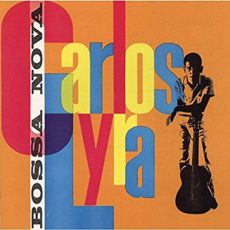
Carlos Lyra was born on May 11, 1939 in Botafogo, Rio de Janeiro, Brazil. His first song to be recorded was Menina (Girl) in 1954, released as a single by Sylvia Telles in 1955, with Foi a noite (It Was The Night)by Antonio Carlos Jobim on the other side of the record. The composers met for the first time because of this single, when Jobim called Lyra, the other side of the record. Both were composing their own music and writing lyrics and created a colloquial and completely new style. Writing about their own experiences and feelings was a completely different lyrical style from most songs written at that time.
His first compositions from 1954 to 1956 included Quando chegares (When you Arrive), Barquinho de Papel (Paper Boat), Ciúme (Jealuosy), Criticando (Criticizing) and Maria Ninguém (Maria Nobody). By 1957 Carlos began collaborating with the lyricist Ronaldo Bôscoli, songs such as Lobo bobo, Saudade fez um samba (Saudade Made A Samba) and Se é tarde me perdoa (If it’s Late Forgive Me).
In 1958 wrote Aruanda and Quem quiser encontrar o amor (Whoever Want To Find Love), with Geraldo Vandré. In 1960 he started to compose together with Vinicius de Moraes, songs as Você e eu (You And Me), Coisa mais linda (Most Beautiful Thing), Sabe você? (Do You Know), Samba do Carioca (Samba From Rio), Maria Moita (Maria Bush) and many others. They wrote together a musical play in 1962 called Pobre Menina Rica (Poor Little Rich Girl Blue).
In 1959 Carlos and Antonio Carlos Jobim, were the first two music composers, together with lyricists Vinicius de Moraes and Ronaldo Boscoli, to be recorded by João Gilberto on his first LP titled Chega de Saudade, (Enough Of Saudade) which was called the first generation of Bossa Nova.
1961 saw Lyra as one of the five founders of Center of Popular Culture aka CPC, where he started to write songs for cinema and theater. He also wrote the song Influência do Jazz (Influence Of Jazz), one of the songs he sang at the Bossa Nova Concert at Carnegie Hall in 1962.
Composer, lyricist, guitarist and vocalist Carlos Lyra, who penned many bossa nova and Música popular brasileira classics, continues to compose, record, and perform today.
Sponsored By


#preserving genius
More Posts: guitar
Daily Dose Of Jazz…
Alton Reynolds Hendrickson was born May 10, 1920 and grew up in Eastland, Texas before moving to the West Coast. In 1940 he worked for Artie Shaw and performed in Fred Astaire ‘s second chorus. By the mid-1940s he was in the coast guard but in the post-war period he played guitar in the bands of Freddie Slack, Ray Linn and Benny Goodman, whose sextet he also belonged to.
As a baritone Hendrickson was recorded on Goodman’s On a Slow Boat to China , which became a big hit in the USA in 1947. The 1950s saw him as a busy studio session player for both film and television soundtracks, The Danny Kaye Show, as well as for pop productions from Columbia Records since 1959. He worked in the productions of The Weavers and The Monkees, with country singer Sheb Wooley and jazz pianist Dodo Marmarosa.
In the field of jazz and popular music his was involved from 1940 to 1986 to 493 recording sessions with Rosemary Clooney, Bing Crosby, Doris Day, Lee Hazlewood, Eartha Kitt, Frankie Laine, Henry Mancini, Ann-Margret, Dean Martin, Ella Mae Morse, Harry Nilsson, Louis Prima, Elvis Presley Shorty Rogers, Bud Shank and Frank Capp’s Juggernaut big band.
Retiring to Oregon in the late Eighties he authored the Encyclopedia of Bass Chords, Arpeggios and Scales and Al Hendrickson Jazz Guitar Solos: Complete Book. Guitarist Al Hendrickson, who also played banjo, mandolin and was a vocalist, passed away on July 19, 2007 in North Bend Oregon.
Sponsored By

#preserving genius
More Posts: guitar
Daily Dose Of Jazz…
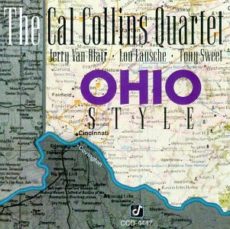
Cal Collins was born on May 5, 1933 in Medora, Indiana and first played the mandolin professionally as a bluegrass musician in the early 1950s. After service in the Army, a move to Cincinnati, Ohio that lasted twenty years, saw him switching to jazz guitar after hearing swing guitarists Charlie Christian, Irving Ashby, and Oscar Moore.
Benny Goodman hired him in 1976 at the age of 43 and he spent three years with the orchestra and then three years making albums for Concord Records. As a sideman, Cal worked with Scott Hamilton, Warren Vache, Rosemary Clooney, Ross Tompkins, Woody Herman, John Bunch, and Marshal Royal.
By the early 1980s, Collins returned to Cincinnati and slowed down his career. He joined the Masters of the Steel String Guitar Tour in 1993 with Jerry Douglas and Doc Watson and recorded his last album in 1998.
Guitarist Cal Collins, who recorded from eleven albums as a leader, passed away of liver failure on August 27, 2001
Sponsored By

#preserving genius
More Posts: guitar
Daily Dose Of Jazz…
April Barrows was born on April 28, 1954 in Milford, Connecticut and grew up in the San Francisco Bay area where she moved with her family when she was five. The first music she heard came from listening to her mother’s collection of boogie-woogie 78s by such pianists as Meade “Lux” Lewis, Albert Ammons and Pinetop Smith. Singing along with the records and imitating the sounds she learned the formats. She became a record collector herself as a teenager and was always interested in older styles.
She played violin for a few years and in high school sang and played rhythm guitar. Barrows performed duets with a country singer, frequently performing roots music, and learned both steel guitar and electric bass. For a time she had a regular day job as a chemist but her main dream was to become a professional musician.
In the late ’70s she spontaneously quit her job and headed for Nashville where her talents were quickly recognized. She played electric bass in a variety of bands for the next six years working with the Judds’ first band, the Memphis Horns, Vassar Clements, and even Woody Herman. In 1985 she switched her focus and became a songwriter and while she had success writing country, bluegrass, and blues songs, her true love was writing and performing her own new swing tunes.
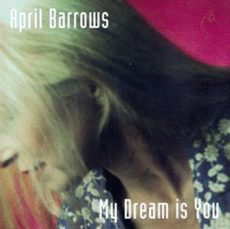
In addition to her jazz inspirations of Ella Fitzgerald, the Boswell Sisters, Mildred Bailey, Louis Armstrong, Ivie Anderson, Bing Crosby, Ruth Etting, Annette Hanshaw and Cliff Edwards, she listened to Bob Dylan, country music and rock of the ’60s. While continuing in the commercial field, she has recorded as a leader, her debut release of original swing tunes on My Dream Is You followed by her sophomore project All You Need Is the Girl. Vocalist, guitarist and composer April Barrows is currently working on a third project with clarinetist Evan Christopher and cornetist Duke Heitger, and continues to compose and perform.
Sponsored By
#preserving genius
More Posts: electric bass,guitar,vocal
Daily Dose Of Jazz…
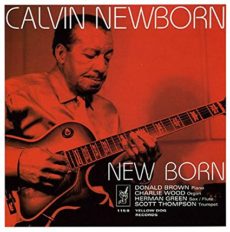
Edwin Calvin Newborn (was born on born April 27, 1933 in Whiteville, Tennessee and is the brother of pianist Phineas Newborn Jr. with whom he recorded between 1953 and 1958. They formed an R&B band, with their father Phineas Newborn Sr. on drums and Tuff Green on bass, trumpeter Willie Mitchell and tenor saxophonist Ben Branch. The group was the house band at the Plantation Inn Club in West Memphis, Arkansas, from 1947 until 1951 and recorded as B. B. King’s band on his first recordings in 1949, and also the Sun Records sessions in 1950.
Calvin gave guitars lessons to Howlin’ Wolf and was friends with Elvis Presley, who frequented his gig at the Plantation Inn Club two nights a week. Presley also used to eat at the Newborns’ house and browse their music store for gospel records. The group left West Memphis in 1951 to tour with Jackie Brenston as the Delta Cats in support of the record Rocket 88. It was considered by many to be the first rock and roll record ever recorded, and was the first Billboard number one record for Chess Records.
Following his R&B period he transitioned into jazz and played with Earl Hines starting in 1959. The early Sixties saw him touring with Lionel Hampton, Jimmy Forrest, Wild Bill Davis, Al Grey, Freddie Roach, Booker Little, George Coleman. Frank Strozier, and Louis Smith. Newborn also worked with Ray Charles, Count Basie, Hank Crawford, Sun Ra, Lou Donaldson, Bobby Hutcherson and David “Fathead” Newman among others. His 1980 album Centerpiece hit No. 35 on the U.S. Billboard jazz albums chart, but much of his earlier material was not reissued on CD until 2005.
Since the 1970s he remained mostly in Memphis, Tennessee, where he played regularly in local clubs well into the 1990s. Guitarist Calvin Newborn currently resides in Jacksonville, FL and continued to perform throughout Northeast Florida until his transition on December 1, 2018, aged 85.
Sponsored By
#preserving genius
More Posts: guitar