

Daily Dose Of Jazz…
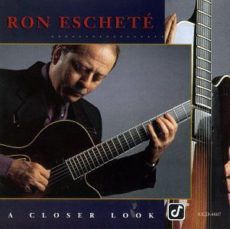
Ron Escheté was born in Houma, Louisiana on August 19, 1948 and after receiving his first guitar at the age of 14, he joined a quartet and was working clubs in Louisiana before he had even graduated from high school. Attending Loyola University he majored in classical guitar and minored in flute, studying with classical guitarist Paul Guma. Shortly after leaving Loyola he toured with Buddy Greco, setting his sites on the Los Angeles, California music scene.
In 1970 Ron moved to California, working and recording with vibist Dave Pike. By 1975 he joined pianist Gene Harris and quickly establish his reputation as a premier accompanist. However, it was in 1988 that he stepped into the spotlight as a leader during a gig in San Diego. That pivotal moment would lead to a contract with Concord Records and the release of his debut solo recording A Closer Look in 1994. Since then he has released more than a dozen albums as a leader.
As an educator Escheté has dedicated nearly twenty-five years teaching music at many colleges and universities, not limited to North Texas State University, Utah State University, Loyola University, Louisiana State University at New Orleans, California State Universities at Long Beach and Fullerton, and Musicianís Institute in Hollywood. He has authored three books: Melodic Chord Phrases, The Jazz Guitar Soloist and a book of Howard Roberts solos titled Super Solos.
Over the decades the consummate sideman has worked and recorded some 30 albums with among others Ella Fitzgerald, Sarah Vaughn, Diana Krall, Dizzy Gillespie, Milt Jackson, Buddy Greco, Mort Lindsey, Dave Pike, Dewey Erney, Mort Weiss, Gene Harris, and Ray Brown. Guitarist Ron Escheté continues to perform, record and tour.

Dose A Day-Blues Away

More Posts: guitar
Daily Dose Of Jazz…
Arvin Charles Garrison was born on August 17, 1922 in Toledo, Ohio and taught himself ukulele at age nine and played guitar for dances and local functions from age twelve.
In 1941 Arv was leading his own band at a hotel in Albany, New York, then with Don Seat put together a trio that played on both the East and West coasts of the United States until 1948. After 1946 it was called the Vivien Garry Trio, after his wife and bassist.
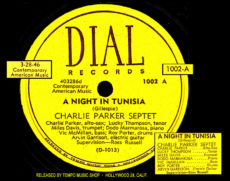
Garrison recorded on Dial Records with Charlie Parker and Dizzy Gillespie, and was actively at the forefront of the early New York City bebop scene in the 1940s. Jazz critic Leonard Feather interviewed him extensively about his time spent playing with Parker. In the 1950s he returned to his hometown of Toledo and played locally.
Some of his recordings can be heard on a few anthologies, such as, the Onyx 1974 release Central Avenue Breakdown, Vol. 1 shared with Teddy Edwards and Dodo Marmarosa and includes 6 of the 8 tracks that Arv and wife Vivien Garry’s quartet recorded for Sarco Records in 1945; Swing To Bop Guitar: Guitars In Flight 1939-1947 on the Hep label that includes Arv’s famous Five Guitars In Flight recorded for Black & White Records in 1946 with Earle Spencer’s Orchestra; and The Complete Dial Modern Jazz Sessions on Mosaic Records.
Guitarist Arv Garrison passed away on July 30, 1960 from drowning during an epileptic seizure.
Sponsored By
More Posts: guitar
Daily Dose Of Jazz…
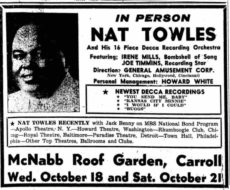
Nat Towles was born on August 10, 1905 in New Orleans, Louisiana the son of string bassist Phil “Charlie” Towles. Starting his musical career as a guitarist and violinist at the age of 11, he switched to the bass at the age of 13. Performing in New Orleans through his teenage years with Gus Metcalf’s Melody Jazz Band, he eventually played with a number of bands, including those of Buddie Petit, Henry “Red” Allen, Jack Carey, and the Original Tuxedo Jazz Orchestra.
In 1923 he formed The Nat Towles’ Creole Harmony Kings and this jazz band became one of the prominent territory bands in Texas, Oklahoma, Kansas, and Nebraska. By 1925 he was playing bass for Fate Marable, and the following year reformed his own band. 1934 saw him organizing a band of young musicians studying music at Wiley College in Austin, Texas.
Nat worked a club circuit in Dallas during this period, reportedly for a gangster who owned 26 nightclubs throughout the city. During this period T-Bone Walker and Buddy Tate worked for him. During the 1930s he transformed his band into The Nat Towles Dance Orchestra, signed with the National Orchestra Service, and focused on swing music through the 1930s and 1940s.
In 1934 Towles took up residence in North Omaha, Nebraska, where his band was stationed for the next 25 years. With this outfit he dueled with Lloyd Hunter for dominance over the much-contested Near North Side in North Omaha, where he was held over at the Dreamland Ballroom for several weeks. In 1936 and 1937 his band held residence at Omaha’s Krug Park.
In 1943 he also held a three-month stint at the Rhumboogie Club in Chicago, and later that year took up residency again with Billy Mitchell in tow in Omaha’s Dreamland Ballroom. He went on to play extensively throughout New York City, playing with trombonist Buster Cooper, saxophonists Red Holloway, Buster Bennett and Preston Love.
As their bandleader, Towles is credited with influencing a variety of musicians including Sir Charles Thompson and Neal Hefti, as well as superior saxophonists Jimmy Heath, Oliver Nelson and Paul Quinichette. As an educator he influenced many younger musicians such as pianist Duke Groner and trombonist Buddy McLewis, aka Joe McLewis.
Continuing to lead bands throughout the 1950s, in 1959 he retired to California and opened a bar. Bassist, guitarist and violinist Nat Towles, who feared the limelight would steal away his best players thus never sought national recognition and leaving no known recordings, passed away in January of 1963 in Berkeley, California of a heart attack.
Give A Gift Of Jazz – Share
More Posts: guitar,string bass,violin
Daily Dose Of Jazz…
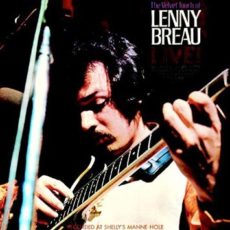
Lenny Breau was born Leonard Harold Breau on August 5, 1941 in Auburn, Maine. His francophone parents were professional country and western musicians who started their son playing guitar at the age of eight. At twelve he started a small band with friends and by the age of fourteen he was the lead guitarist for his parents’ band, billed as Lone Pine Junior, playing Merle Travis and Chet Atkins instrumentals and occasionally singing. He made his first professional recordings in Westbrook, Maine at the age of 15 while working as a studio musician. Many of these recordings were released posthumously on Boy Wonder.
In 1957 the family moved to Winnipeg, Manitoba,, and their new touring band became the CKY Caravan. It was at one of these shows that he met sixteen year old Randy Bachman and they soon became friends, eventually Lenny began informally teaching the young guitarist. Two years later he left his parents after his father slapped him in the face for using jazz improvisations on stage. He then sought out local jazz musicians and met pianist Bob Erlendson, who began teaching him more of the foundations of jazz.
1962 saw Breau leaving for Toronto and soon created the jazz group Three with singer/actor Don Francks and bassist Eon Henstridge. They performed in Toronto, Ottawa, and New York City, their music was featured in the 1962 National Film Board documentary Toronto Jazz, recorded a live album at the Village Vanguard and appeared on the Jackie Gleason and Joey Bishop shows. Returning to Winnipeg he became a regular session guitarist recording for CBC Radio, CBC Television and contributed to CBC-TV’s Teenbeat, Music Hop, and his own Lenny Breau Show.
An ensuing friendship with Chet Atkins resulted in Lenny’s first two LP issues, Guitar Sounds from Lenny Breau and The Velvet Touch of Lenny Breau. Live! on RCA. Moving around over Canada and the United States he finally settled in Los Angeles, California in 1983. There he spent years performing, teaching, and writing for Guitar Player magazine. Unfortunately he had continual drug problems stemming from the mid-1960s, which he managed to get under control during the last years of his life. However, on August 12, 1984 his body was found in the swimming pool at his apartment complex in Los Angeles and the coroner reported that he had been strangled. Though his wife Jewel was the chief suspect but was never charged with murder and the case is still unsolved.
Several tributes were created in honor of his contributions to guitar playing and jazz. A documentary titled The Genius of Lenny Breau was produced in 1999 by his daughter Emily Hughes that included interviews with Chet Atkins, Ted Greene, Pat Metheny, George Benson, Leonard Cohen, and Bachman. In 2006 the book One Long Tune: The Life and Music of Lenny Breau written by Ron Forbes-Roberts was published by the University of North Texas Press. CBC Radio presented a documentary-soundscape on Lenny Breau entitled On the Trail of Lenny Breau in 2009.
Sponsored By
More Posts: guitar
Daily Dose Of Jazz…
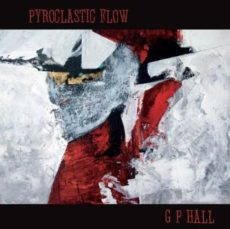
Graham Peter Hall, generally known as GP Hall, was born on July 15, 1943, and raised in Hampton Hill, London, United Kingdom, where he was schooled in classical, flamenco and jazz. As a teenager he went on to play in the Odd Lot Band and set up the Odd Lot Club as a venue for their music, which in turn attracted more established bands and players for concerts.
As he became better known, Hall went on to play at more celebrated London venues including The Roundhouse, the Middle Earth club and a residency at the 100 Club. He would back Deep Purple, The Hollies, Chris Farlowe and played with John Lee Hooker, Sonny Boy Williamson and with Casey Jones & The Governors.
His musical approach broadened in the early 1970s where he spent time studying with Romani musicians and flamenco guitarist Manitas de Plata, became involved in more avant-garde work, writing, producing and performing, and became the musical director for the multi-media performance art group Welfare State International.
By 1972 GP composed and recorded The Estates on Prototype Records, followed three years later by his sophomore project Manifestations. But around this time, his promising career fell into a fifteen-year depression due to personal trauma. It was until the Eighties that he re-emerged into the music world with his twenty-nine track Colors (Movements) a series of instrumental albums on the Kenwest label. The 90s saw the release of a solo album Imaginary Seasons on his own Imaginary Music label that was nominated for the Mercury Music Prize, followed by Figments Of Imagination in 1996 and an appearance on the Unknown Public compilation alongside guitarists Bill Frisell, Frank Zappa, John Zorn and Robert Fripp.
Into the new millennium the guitarist has continued to record new and old music combining them with live performances, created eclectic instrumental and industrial inclined works, recorded several unreleased albums and collaborated with percussionist Justin Ash, painter Alistair Michie, Lol Coxhill, Paul Rutherford, Jeff Clyne, John Ellis and Lyn Dobson, among others.
Hall invented the musical genre known as Industrial Sound Sculptures, draws on classical, rock, jazz, flamenco, folk and blues styles and performs mainly in the free jazz and avant-garde genres, though much more melodic. He uses a variety of techniques such as slides, fingerpicking and found implements like crocodile clips, palette knives, velcro strips, an antique psaltery bow and wind-up toy to create a variety of different sounds.
Guitarist GP Hall is adept with electric and electronic playing but is also known for his particular virtuosity as an acoustic guitarist, an expert flamenco guitarist, and an accomplished classical-style player. He also plays a customized Shergold six-string bass guitar featuring a half-fretted, half-fretless fretboard and has been known to dabble in playing other instruments such as double bass, piano, soprano saxophone and varied percussion, and vocals as he continues his musical journey.
Dose A Day-Blues Away
More Posts: guitar