


Daily Dose Of Jazz…
Magni Wentzel was born on June 28, 1945 in Oslo, Norway, the daughter of musicians Odd Wentzel-Larsen and Åse Wentzel. She began her career at the tender age of 6 in 1951 in Totenlaget Barneteater. She trained under opera singers Erna Skaug, Almar Heggen and professor Paul Lohmann in Wiesbaden. She took guitar lessons from 1956 and released her debut jazz album That Old Feeling in 1959.
Instead of attending the first year of the newly established Statens Operahøgskole in Oslo, by 1963 Wentzel took another path, choosing to study classical guitar in Spain, Switzerland and England. She was also taught the art of jazz song under Tete Montoliu.
Strongly influenced by Aretha Franklin, she was a member of the Geir Wentzel Band playing Club 7 in Oslo. Magni collaborated extensively with a series of Oslo based musicians, such as the quartets and quintets including Einar Iversen and Egil Kapstad. Peter Gullin dedicated the album Far, Far Away Where Longing Live to her and later she worked for Opera Mobile, then portrayed the mother in The Tales of Hoffmann by Offenbach.
She has performed and recorded with Niels-Henning Ørsted Pedersen, Roger Kellaway, Halvard Kausland, Ole Jacob Hansen, Carl Morten Iversen, Terje Venaas, Egil Johansen, Åse Wentzel, Art Farmer, Red Mitchell, Mads Vinding and many others.
Vocalist, guitarist and composer Magni Wentzel, the recipient of the Gammleng-prisen in 1988 and the Buddyprisen in 1998, continues to perform, compose and record at the age of 71.

Jazz Is Global – Share


Daily Dose Of Jazz…
Attila Cornelius Zoller was born on June 13, 1927 in Visegrád, Hungary and as a child was taught classical violin by his father, who was a professional violinist. By his teens, he switched to flugelhorn, then bass, and finally guitar.
Quitting school during the Russian occupation of Hungary following World War II, Attila began playing professionally in Budapest jazz clubs. He escaped Hungary in 1948 just before the permanent Soviet blockade of the country and began his serious music career after moving to Vienna in 1948. He formed a jazz group with accordionist and vibraphonist Vera Auer.
In 1954 Zoller left Austria for Germany in 1954, where he played with pianist Jutta Hipp, saxophonist Hans Koller and trombonist Albert Mangelsdorff. He was encouraged by Oscar Pettiford and Lee Konitz to move to America and did so in 1959 after winning a scholarship to the Lenox School of Jazz. There he studied with Jim Halland, roomed with Ornette Coleman and Don Cherry, whose influence sparked Zoller’s interest in free jazz.
Attila would go on to play and record with Chico Hamilton, Benny Goodman and Herbie Mann, Shirley Scott, Cal Tjader, Tony Scott, Jimi Hendrix, Stan Getz, Fred Nelson, Red Norvo, Jimmy Raney, Dave Pike, Herbie Hancock and Ron Carter, among others.
Zoller was the founding president of the Vermont Jazz Center (1985) where he also taught music until 1998. In 1995, he received the Lifetime Achievement Award from the New England Foundation for the Arts for his lifelong musical contribution to jazz. He was also a designer of musical instruments, patenting a bi-directional pickup for guitars in 1971 and helping to design his own signature line of guitars with different companies.
Guitarist Attila Zoller passed away on January 25, 1998 in Townshend, Vermont. He recorded more than two-dozen albums as a leader with Martial Solal, Hans Koller, Barre Phillips, Santi Debriano, Yoron Israel, Lee Konitz and Larry Willis among numerous others.
Enja Records released the tribute album of his music, Message To Attila in 2015 with Ron Carter, John Abercrombie, Mike Stern, Peter Bernstein, Pat Metheny, Jim Hall, Gene Bertoncini. He was awarded the Deutscher Filmpreis for Beste Filmmusik (best score) in Germany for the film Das Brot der frühen Jahre in 1962 and the Lifetime Achievement Award from the New England Foundation for the Arts.
Sponsored By

www.whatissuitetabu.com
More Posts: guitar
Daily Dose Of Jazz…
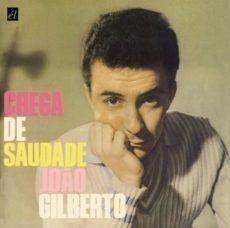
João Gilberto Prado Pereira de Oliveira was born on June 10, 1931 in Juazeiro, Bahia, Brazil. From an early age, music was a part of his life with his grandfather buying him his first guitar at the age of 14. During high school he teamed up with some of his classmates to form a small band and was influenced by Brazilian popular songs, American jazz, and even some opera, among other genres. After trying his luck as a radio singer in Salvador, Bahia he was recruited in 1950 as lead singer of the vocal quintet Garotos da Lua (Moon Boys) and moved to Rio de Janeiro. A year and a half later, he was dismissed from the group for his lack of discipline, showing up late to rehearsals or not at all.
João Gilberto’s first recordings were released in Brazil as two-song 78-rpm singles between 1951 and 1959. In the 1960s, Brazilian singles evolved to the “double compact” format, and João would release some EPs in this new format, which carried 4 songs on a 45-rpm record. For seven years, Gilberto’s career was at a low ebb. He rarely had any work, was dependent on his friends for living quarters, and fell into chronic depression. Eventually, in 1955 he was rescued from this rut by Luiz Telles, leader of the vocal group Quitandinha Serenaders, where he blossomed musically. His first bossa nova song was Bim-Bom, written as Gilberto watched passing laundresses on the banks of the Sao Francisco River balance loads of clothes on their heads.
This style, which Gilberto introduced in 1957, created a sensation in the musical circles of Rio’s Zona Sul, and many young guitarists sought to imitate it. It was first heard on record in 1958 in a recording of Chega de Saudade, a song by Jobim and Vinicius de Morais. With this success launching his career and the bossa nova craze, João featured new songs by a younger generation of performer/composers such as Carlos Lyra and Roberto Menescal on two more albums. By 1962, bossa nova had been embraced by North American jazz musicians such as Herbie Mann, Charlie Byrd, and Stan Getz, who invited Gilberto and Jobim to collaborate on what became one of the best-selling jazz albums of all time, Getz/Gilberto. Through this album, Gilberto’s then wife Astrud—who had never sung professionally prior to this recording session became an international star, and the Jobim/de Moraes composition The Girl from Ipanema became a worldwide pop music standard.
Gilberto went on to work with Claus Ogerman, Clare Fischer, Caetano Veloso, Gilberto Gil and Maria Bethânia among other collaborations. He won a Grammy Award for Best World Music Album in 2000 for his album João Voz E Violão. Singer, guitarist and composer João Gilberto continued to perform, record and composer until declining health and financial issues took their toll and on July 6, 2019 he transitioned at his apartment in Rio de Janeiro, Brazil. He was 88.
Daily Dose Of Jazz…
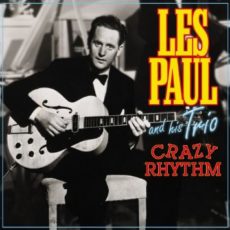
Les Paul was born Lester William Polsfuss on June 9, 1915 in Waukesha, Wisconsin. At the age of eight, he began playing the harmonica and after trying to learn the piano, he switched to the guitar, teaching himself how to play. It was during this time that he invented a neck-worn harmonica holder, allowing him to play both sides of the harmonica hands-free while accompanying himself on the guitar. By age thirteen, he was performing semi-professionally as a country music singer, guitarist, and harmonica player.
He began his first experiment with sound wanting to make himself heard by more people at the local venues, so he wired a phonograph needle to his guitar and connected it to a radio speaker, using that to amplify his acoustic guitar. As a teen Les created his first solid body electric guitar using a 2-foot piece of rail from a nearby train line. By age seventeen, he was playing with Rube Tronson’s Texas Cowboys and soon after he dropped out of high school and joined Sunny Joe Wolverton’s Radio Band in St. Louis, Missouri on KMOX.
Moving to Chicago in 1934 he continued to perform on radio, met pianist Art Tatum, whose playing influenced him. Paul formed a trio in 1937 with singer/rhythm guitarist Jim Atkins and bassist/percussionist Ernie “Darius” Newton. Four years later he was in New York in 1938 with a featured spot on Fred Waring’s Pennsylvanians radio show. Drafted into the Army working on the Armed Forces Radio Network, he backed Bing Crosby, The Andrews Sisters and performed as a leader. His guitar style was strongly influenced by the music of Django Reinhardt, whom he greatly admired, met and befriended after World War II and paid part of the funeral cost when Django died in 1953.
He would go on to play with Nat King Cole at the inaugural Jazz At The Philharmonic in 1944, record with Crosby and the Andrews Sisters and then nearly lose his career after his right arm was shattered in a near fatal car crash. Los Angeles doctors set his arm just under a ninety degree angle, giving him the ability to cradle and pick the guitar after a year and a half recovery.
Paul performed in the genres of jazz, country and blues, was also a songwriter, luthier, inventor and pioneer of the solid body electric guitar, utilized multi-tracking, overdubbing, tape delay and phasing effects in his recordings aided in his innovative playing style of licks, trills, chording sequences and fretting techniques that set him apart from his contemporaries and inspired many guitarists of the present day. With his wife Mary Ford he recorded in the 1950s, and together they sold millions of records.
Guitarist Les Paul has been honored with induction into the Rock and Roll Hall Of Fame, the National Inventors Hall of Fame, won several Grammy Awards, Grammy Trustees Award, with Mary Ford their How High The Moon was inducted into the Grammy Hall of Fame, National Medal of Arts, was inducted into the Big Band Hall of Fame and the Jazz Hall of Fame, received an Emmy Lifetime Achievement Award in Engineering, the Lifetime Achievement in Music Education from the Wisconsin Foundation for School Music, and a star on the Hollywood Walk of Fame, among numerous other honors.
Suffering from arthritis in the mid-1960s his condition worsened over his career and in his final years he lost the use of his right hand except for two fingers. On August 12, 2009 guitarist Les Paul passed away from complications from pneumonia at White Plains Hospital in New York.
Give The Gift Of Knowledge
More Posts: guitar
Daily Dose Of Jazz…
Paul Bollenback was born on June 6, 1959 in Hinsdale, Illinois. The guitarist first got his hands on a nylon stringed guitar when he was seven years old. It was a gift from his dad, who played trumpet, adored music as much as the his son. He developed a taste for the exotic over the course of the three-year period his family lived in India at the age of 11 years old.
At the age of 14, the budding guitarist returned to the states with his family, where he discovered the delights of rock & roll. Around this time he started to play the electric guitar, but it was when Paul discovered Miles Davis that his musical development took a major turning point.
Bollenback studied music at the University of Miami then went on to eight more years of private instruction under the tutelage of Asher Zlotnik in Baltimore. By 1993 he embarked on a European tour and received a National Endowment for the Arts grant in conjunction with the Virginia Commission on the Arts, for New Music for Three Jazz Guitars.
He was named 1997 Musician of the Year by The Washington Area Music Awards, SESAC honored two of his original pieces, Romancin’ the Moon and Wookies’ Revenge, both of which were included on the album Reboppin’ by Joey DeFrancesco. He joined the music faculty at American University, has been an artist-in-residence at the Litchfield Jazz Festival Summer Music School and is a featured artist on the bill of the Summer Guitar & Bass Workshop offered by Duquesne University. T
Throughout his career Paul has performed on among others Entertainment Tonight, The Tonight Show, The Today Show, Joan Rivers, and Good Morning America. He has shared the stage with a long list of musical artists, including Charlie Byrd, Arturo Sandoval, Herb Ellis, Stanley Turrentine, Spyro Gyra’s Scott Ambush, Della Reese, Carol Sloane and Gary Thomas among others.
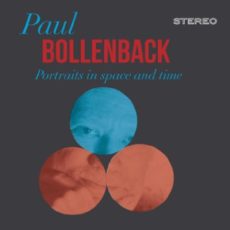
Guitarist Paul Bollenback, who uses modern quartal harmony, and has eight albums under his name as a leader to date since his debut of Original Vision in 1995, continues to teach, record and perform as both leader and sideman.
Jazz Is Global – Share
More Posts: guitar