

Requisites
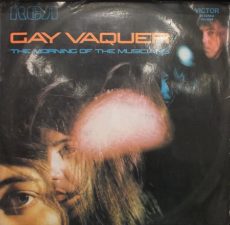
The Morning Of The Musicians was composed, arranged, produced and recorded by Brazilian guitarist Gay Vaquer on the RCA label in 1972. The photograph was taken by Enrico Neckheim and the cover design was by Joselito.
The album was comprised of seven compositions totaling a time of 34 minutes and 01 seconds. Side A consisted of 5:20, Peoples Blues, A Cybernetic Tragedy and Dimensions, and Side B is Awakening In Absolution Elsewhere, Fantastic Realism and Da Capo Al Fine.
The personnel on the recording session were Gay Vaquer on acoustic and electric guitar, Novelli on acoustic bass, drummer Bill French, percussionist Everaldo Ferreira, Paulo Moura on flute, alto and soprano saxophone, keyboardist Luiz Eça and vocals by Jane Vaquer.

More Posts: choice,classic,collectible,collector,guitar,history,instrumental,jazz,music,vocal
Requisites
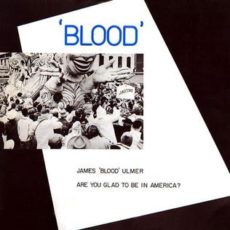
Are You Glad to Be in America? is an album by guitarist James Blood Ulmer recorded at the RCA Studios, New York City on January 17, 1980. It was originally released on the Rough Trade label in the UK in 1980, produced by Ulmer, with himself, Geoff Travis, Roger Trilling, and Mayo Thompson credited with the mix.
James Blood Ulmer composed all the songs on the album which include Layout, Pressure, Interview, Jazz Is the Teacher (Funk the Preacher), See-Through, Time Out, T.V. Blues, Light Eyed, Revelation March and the title track Are You Glad to Be in America?.
The musicians present during the recording session were James Blood Ulmer on guitar and vocals, David Murray on tenor saxophone, Oliver Lake – alto saxophone, Olu Dara – trumpet, Billy Patterson – rhythm guitar (track 4), Amin Ali – electric bass, and G. Calvin Weston or Ronald Shannon Jackson on drums.
A remixed version, credited to Ulmer and Bob Blank, was released by the Artists House label in the US in 1981. The album was released on CD with a new third mix by Joe Ferla, approved by Ulmer, on the Japanese DIW label in 1999.
More Posts: choice,classic,collectible,collector,guitar,history,instrumental,jazz,music,vocal
Requisites
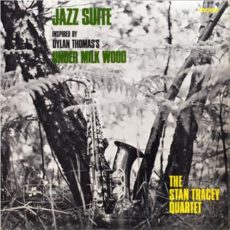
Jazz Suite Inspired by Dylan Thomas’ “Under Milk Wood” is a 1965 album by the English pianist Stan Tracey and his quartet, that was released by the Columbia subsidiary of EMI. The music was written in response to the 1953 BBC radio play Under Milk Wood, by the Welsh poet Dylan Thomas. It has often been cited as one of the best jazz recordings made in the United Kingdom.
Since the original 1965 mono LP on Columbia, the album has been released on a number of labels, including Blue Note. The album was reissued in 2010 on his son, Clark Tracey’s ReSteamed Records label as “Under Milk Wood: Jazz Suite”. A live version was recorded in 1976 on RCA records, which included a voice narration from the Welsh actor, Donald Houston.
The personnel on the session were Stan Tracey – piano, Bobby Wellins – tenor saxophone, Jeff Clyne – bass and Jackie Dougan – drums. The cover photograph and design are by Patrick Gwynn-Jones and Denis Preston, respectively.
All of the compositions are by Tracey and are Cockle Row, Starless and Bible Black, I Lost My Step in Nantucket, No Good Boyo, Penpals, Llareggub, Under Milk Wood and A.M. Mayhem.
More Posts: choice,classic,collectible,collector,history,instrumental,jazz,music,piano
Requisites
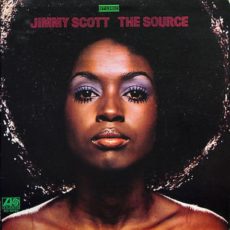
Jimmy Scott recorded The Source in 1969 and released it in 1970 for Atlantic Records consisting of eight compositions: Exodus, On Broadway, Our Day Will Come, I Wish I Knew, Unchained Melody, Day By Day, Sometimes I Feel Like A Motherless Child, This Love Of Mine.
Five songs on the album were arranged by Arif Mardin (tracks A1, A2, A4, B3, B4) and three by William Fischer (tracks A3, B1, B2). The string orchestras were directed and conducted by Gene Orloff and Selwart Clarke.
The personnel on the album consisted of bassist Ron Carter, drummer Bruno Carr, David Newman on flute and tenor saxophone (tracks A1, A2, A4 to B4), guitarists Eric Gale and Billy Butler (tracks A3, B3), pianist Junior Mance, Cissy Houston (vocals obbligato on track A2) and vocals by Jimmy Scott.
The cover photograph was taken by Joel Brodsky and designed by Loring Eutemey. The album was produced by Joel Dorn with engineers were Adrian Barber and William Arlt, remix engineers were Arif Mardin and Lewis Hahn and the liner notes were written by Nancy Wilson.
More Posts: choice,classic,collectible,collector,history,instrumental,jazz,music,vocal
Requisites
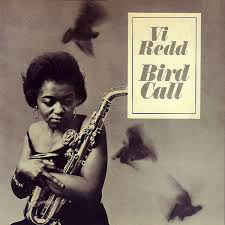
The album Bird Call was recorded by alto saxophonist, vocalist and educator Vi Redd on June 15, 1962 for United Artists. The design and cover photograph for the album was created and taken by Frank Gauna.
She recorded If I Should Lose You, Summertime, Anthropology, All The Things You Are, I Rather Have A Memory Than A Dream, Now’s The Time, Just Friends, Perhaps/Cool Blues, I Remember Bird and Old Folks for a total of ten compositions over 42 minutes and 44 seconds.
Vi is best known as a Charlie Parker-influenced altoist, though she also sings on the 1962 Bird Call studio sessions. She leads an excellent band that included pianist Russ Freeman, bassists Leroy Vinnegar or Bob Whitlock, guitarist Herb Ellis, trumpeter Carmell Jones, vibraphonist Roy Ayers, and her then-husband, Richie Goldberg, on drums.
More Posts: choice,classic,collectible,collector,history,instrumental,jazz,music,saxophone,vocal