

Daily Dose Of Jazz…
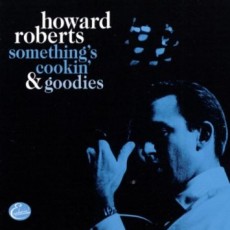
Howard Roberts was born on October 2, 1929 in Phoenix, Arizona and began playing guitar at the age of 8. By the time he was 15 he was playing professionally locally. He moved to Los Angeles in 1950 and with the help of Jack Marshall he began working with musicians, arrangers and songwriters including Neal Hefti, Henry Mancini, Bobby Troup, Chico Hamilton, George Van Eps and Barney Kessell.
Around 1956 Troup signed Howard to Verve Records as a solo artist and he he decided to concentrate on recording. He recorded both as a solo artist and “Wrecking Crew” session musician, a direction he would continue until the early 1970s. He would go on to play guitar on television themes such as The Twilight Zone, The Munsters, Bonanza, The Brady Bunch, Green Acres, Get Smart, Batman, Beverly Hillbillies, Andy Griffith, Peter Gunn, Mannix, Dick Van Dyke, I Dream of Jeannie, The Odd Couple and Mission Impossible among others. He also performed the theme for the classic Steve McQueen film Bullitt.
In 1961, Roberts designed a signature guitar, which was originally produced by Epiphone, a division of Gibson. The Howard Roberts signature was borne by two other models made by Gibson: the Howard Roberts Custom and the Howard Roberts Fusion III.
By 1963, Roberts recorded Color Him Funky and H.R. Is A Dirty Guitar Player, his first two albums after signing with Capitol Records. They both featured the same quartet with Roberts (guitar), bassist Chuck Berghofer, Earl Palmer on drums and Paul Bryant alternating with Burkley Kendrix on organ. He would go on to record nine albums with Capitol before signing with ABC Records/Impulse Records.
Over the course of his career he recorded with David Axelrod, June Christy, Buddy Collette, Milt Jackson, Hank Jones, John Klemmer, Charles Kynard, Herbie Mann, Thelonious Monk, Lalo Schifrin, Bud Shank, Bob Cooper, Gabor Szabo and Larry Williams, to name a few. As a member of the Wrecking Crew, he was a part of Phil Spector’s ‘Wall of Sound’ and played guitar on some of the most famous songs in pop music history.
From the late 1960s, Roberts began to focus on teaching rather than recording. He traveled around the country giving guitar seminars, and wrote several instructional books. For some years he also wrote an acclaimed column called “Jazz Improvisation” for Guitar Player magazine. he developed accelerated learning concepts and techniques, which led to the founding of Playback Music Publishing and the Guitar Institute of Technology. As a co-founder of GIT, now known as the Musicians Institute, his philosophy remains an integral part of the curriculum.
Guitarist Howard Roberts, who played rhythm and lead guitar, bass and mandolin, passed away of prostate cancer in Seattle, Washington on June 28, 1992. His life in music inspired the opening of Roberts Music Institute in Seattle, Washington, which is currently owned by his son, Jay Roberts.

Jazz Is Global – Share
Daily Dose Of Jazz…
Ray Biondi was born Remo Biondi on July5, 1905 in Cicero, Illinois. As a child, he started with violin and down a road that was not supposed to lead to ditties with suggestive titles. His early training was classical at the American Conservatory of Chicago. Mandolin was a natural double at age 12 and a gateway into the world of string bands. He remained focused mostly on violin but added guitar and then trumpet into his musical arsenal as he began thinking outside the classical idiom.
In 1926 Ray began playing professionally with the Blanche Jaros Orchestra, and the following year started an eight-year period of heavy freelancing in Chicago, enjoying sets with trumpeter Wingy Manone and reedman Bud Freeman and many others. He joined Earl Burtnett’s band as a violin and trumpet double, ending up on the road gigging in Kansas City, Cincinnati, New York and distant destinations.
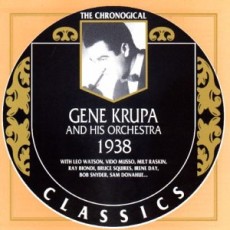
He played violin and trumpet with clarinetist Joe Marsala, often adding guitar when Eddie Condon double-booked himself. This relationship continued until 1938, when Gene Krupa hired Biondi to work solely as a guitarist. He left Krupa a year later and went on his own in a series of small groupings. He opened a short-lived club, rejoined Krupa on the road in the early ‘50s and became a guitar and mandolin session player outside straight jazz.
By 1961 Ray began made a serious shift to teaching all of his instruments except the trumpet, while continuing to perform with groups both large and small, including the Dick Schory orchestra and stride pianist Art Hodes in the latter. Multi-string instrumentalist Ray Biondi passed away on January 28, 1981 in Chicago, Illinois.